
 US
US Australia
 United Kingdom
 Europe
Does lifting a RAV4 affect gas mileage
Yes, lifting a RAV4 affects gas mileage, but less than most owners expect and almost never because of the lift itself. At 1.2 inches on the factory tire size the change is small. Heavier all-terrain tires, a taller rolling diameter and the speedometer error that comes with it do most of the damage.
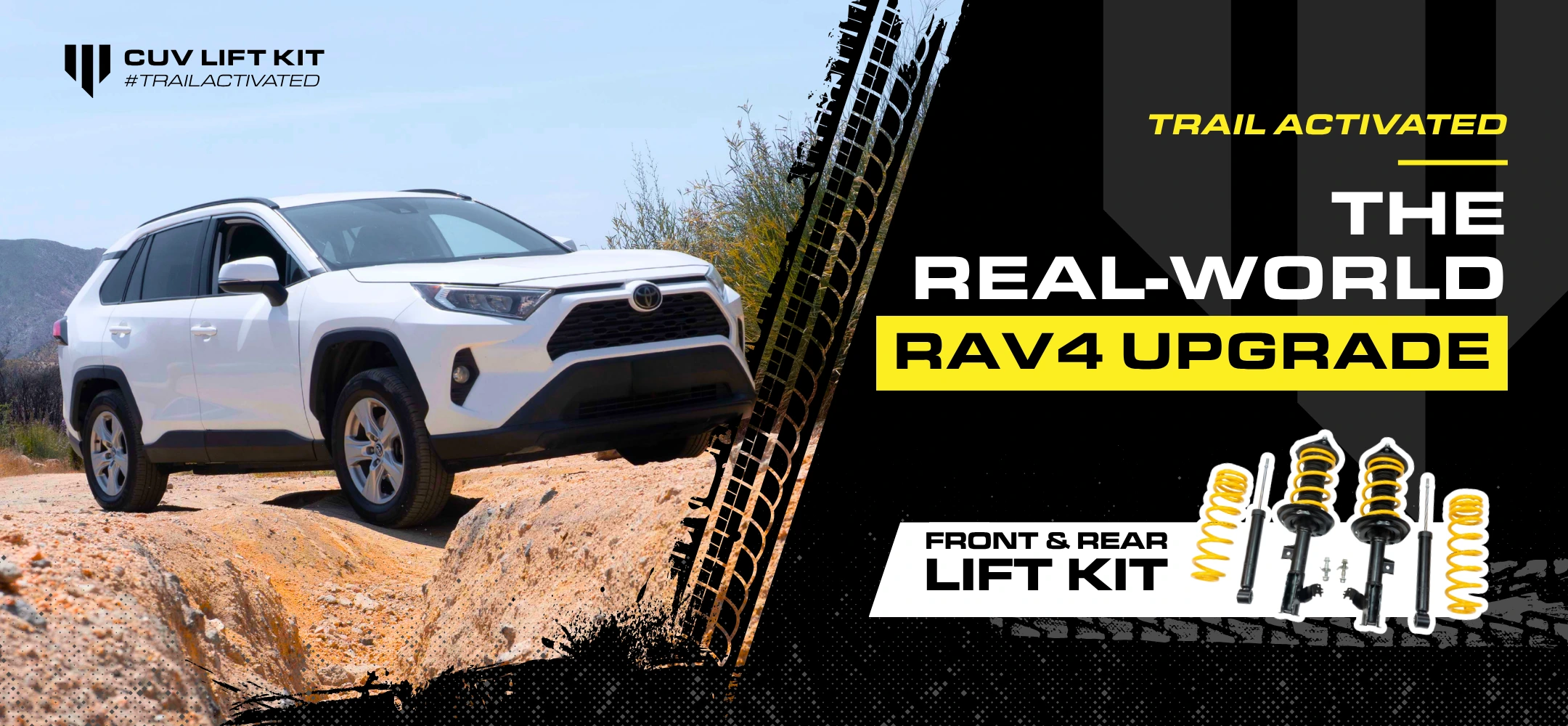
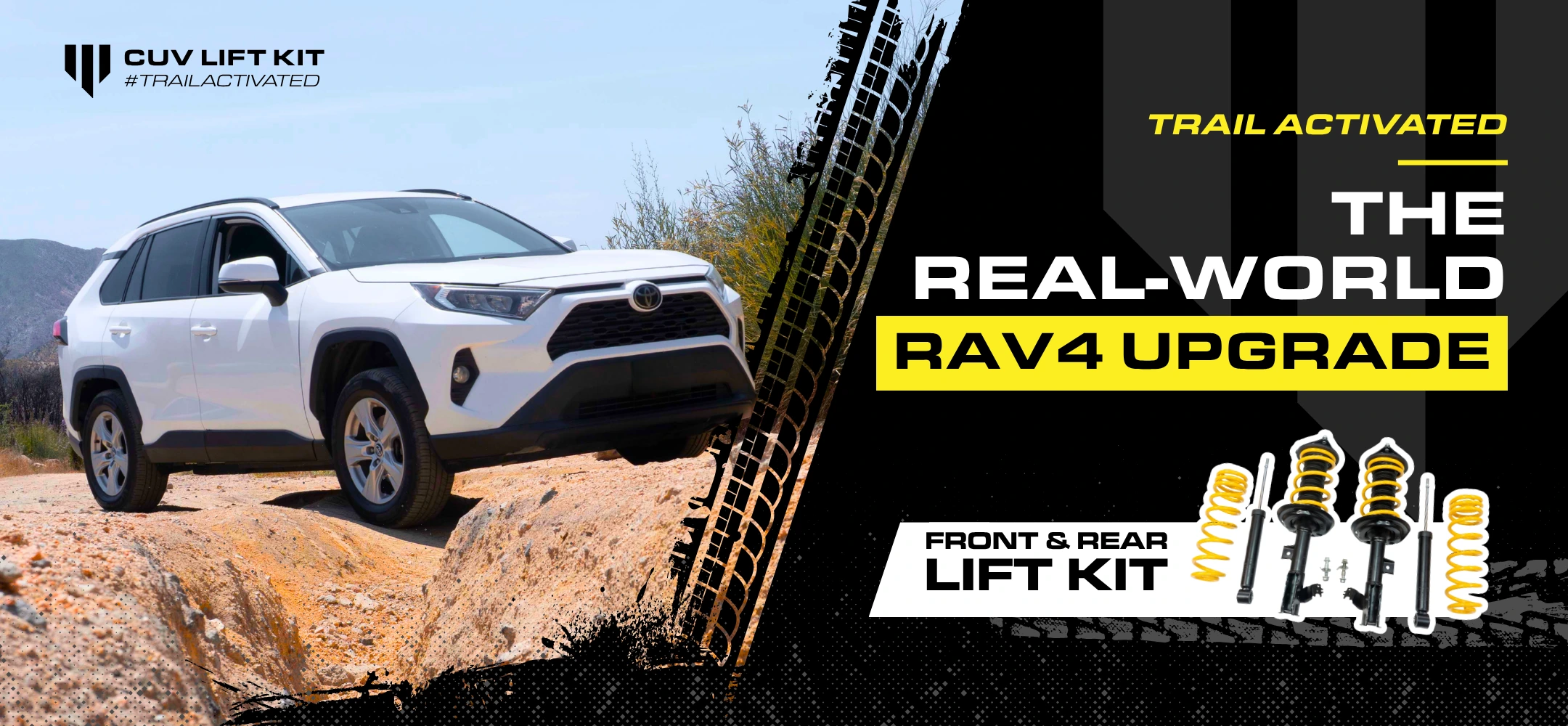
Ask whether lifting a RAV4 affects gas mileage and the results hand you articles about full size pickups on 35 inch tires, which tells you nothing useful about a crossover. Our Whiteline RAV4 A50 kit is a front and rear lift that raises the car 1.2 inches and keeps you on the factory tire size, so the real answer is more interesting than the one you have been given. Browse the crossover lift kits we build, then read on for the mechanism that lets you predict your own result.
Why the lift itself costs you very little
Raising the body adds frontal area and lets a little more air move under the floor, where it turns turbulent and unhelpful. Both are real aerodynamic penalties and both are tiny at 1.2 inches. Your route, your traffic, your right foot and the outside air temperature all swing a tank of gas further than the ride height does.
We are not going to hand you a percentage. No manufacturer publishes a validated gas mileage figure for a lifted crossover, and every number on the forums is one owner's before and after taken in different weather, on a different commute, usually on different tires. Inventing one would make this page easier to write and a lot less useful to read.
Where lift height does start to matter
Height matters mostly because of what it lets you fit. A taller car clears a taller tire, and the tire is where your gas actually goes. A 1.2 inch kit on stock rubber behaves nothing like a 3 inch build wearing a heavy all-terrain, even though both get filed under the same word.
Tire mass, rolling resistance and diameter do the real work
Mass, and the fact that it spins
Weight added at the wheel gets penalized twice. The engine has to push it down the road and spin it up to speed at the same time, so a few extra pounds per corner behaves like considerably more dead weight in the trunk.
Rolling resistance and tread pattern
An all-terrain carcass is stiffer, the tread blocks are bigger and the voids between them are deeper. All of that flexes and recovers thousands of times a minute, and every cycle turns a little of your gas into heat in the sidewall. Swapping tread pattern alone, with no lift at all, will move your economy.
Diameter, and why the dash starts lying to you
This is the part nobody explains. Fit a taller tire and the car covers more ground per wheel revolution than the factory calibration assumes, so the speedometer reads low and the odometer undercounts your miles. Your trip computer divides gallons burned by the miles it thinks you traveled, which means it credits you with fewer miles than you actually drove and reports worse gas mileage than you are getting. Part of the drop people report after a lift is arithmetic rather than physics. The standard guidance is to stay within 10 percent of the factory rolling diameter, which keeps that error small enough to live with.
What moves the needle on a lifted RAV4
|
Variable |
Direction of effect |
How much it matters |
What you can do about it |
|
Lift height alone at 1.2 inches |
Slightly worse |
Small |
Pick a conservative height and stop worrying about it |
|
Tire mass per corner |
Worse |
Large |
Compare published tire weights, since the size alone hides them |
|
Tread pattern and rolling resistance |
Worse |
Large |
Choose the least aggressive tread that suits your driving |
|
Rolling diameter |
Worse, and partly an illusion |
Moderate, plus a measurement error |
Stay within 10 percent of stock and correct your math |
|
Speedometer and odometer error |
Makes measured economy look worse |
Moderate |
Calculate a correction factor once, then apply it |
|
Alignment after the lift |
Worse if skipped |
Moderate, and it wears tires |
Our RAV4 kit calls for an alignment, so book it with the install |
How to measure your real gas mileage after a lift
Correct the odometer first
Cover a known distance by GPS or interstate mile markers, then note what your odometer recorded and divide true distance by indicated distance. If GPS says 10 miles and the dash says 9.7, your factor is roughly 1.03, and every mile figure the car gives you needs multiplying by it.
Then measure at the pump, over three tanks
Fill to the first click, zero the trip meter, drive normally, then refill at the same pump. Divide corrected miles by gallons added. One tank tells you about the weather, while three consecutive tanks tell you about the car. Baseline before the install if you can, on the same commute in the same season, because a July highway tank against a January stop and go tank proves nothing.
What to expect at 1.2 inches on the factory tire size
Two owners will get two different stories. Fit our kit and keep the original tires, and most people cannot separate the change from normal week to week variation. Fit the same kit and move to a heavy all-terrain in a taller size, and you should expect a noticeable and permanent drop, with a slice of it explained by an odometer that is now undercounting.
Understand that tradeoff before you order, because the lift buys clearance, control and a car that stops crashing through washboard. Our RAV4 A50 kit ships as four assembled strut and shock units with front camber correction, installs in around four hours, requires a wheel alignment and is backed by our Limited Lifetime warranty in the US at $1,349.99. The application covers the 2019 to 2025 RAV4 in standard and hybrid form. The PHEV is not covered, so check your model year, trim and drivetrain before ordering.
FAQs
Looking for more information about how a lift affects RAV4 fuel economy? Below we answer the most commonly asked questions
Does lifting a RAV4 affect gas mileage?
How much MPG will I lose with a 1.2 inch lift?
Do bigger tires or the lift hurt economy more?
Does a lift kit make my speedometer inaccurate?
Will my odometer undercount miles after a lift?
Can the speedometer be recalibrated on a RAV4?
Does a lift affect a RAV4 Hybrid's economy differently?
Does fitting a lift kit void my factory warranty?
What tire size can I run without wrecking my gas mileage?
Get the clearance without the guesswork: see our RAV4 A50 front and rear lift kit.


