
 US
 Australia
 United Kingdom
 Europe

Coil Spring Insulators with Fitting Position Front and Rear, Front, Rear for 2016 Chevrolet SS Base
IMPROVE GRIP, HANDLING & PERFORMANCE.
A coil spring ends in a flat steel coil sitting against a flat steel seat, and without something between them the two grind against each other every time the suspension moves. On your Chevrolet SS, that something is a coil spring insulator, and it is the cheapest part in the suspension to replace and the most commonly reused. What a Coil Spring ... Read more
A coil spring ends in a flat steel coil sitting against a flat steel seat, and without something between them the two grind against each other every time the suspension moves.
On your Chevrolet SS, that something is a coil spring insulator, and it is the cheapest part in the suspension to replace and the most commonly reused.
What a Coil Spring Insulator Is
An insulator is a molded pad that sits between the end of the coil spring and the seat it rests on.
Most vehicles use two per spring, one at the top where the spring meets the body or strut mount, and one at the bottom where it sits in the control arm or the spring pan.
The pad is shaped to match the end of the coil, usually with a step or a locating lug so the spring sits in a repeatable position rather than wandering around the seat.
It is a small, inexpensive part doing three jobs at once, which is why its failure produces several different complaints at the same time.
Coil Spring Isolator vs Insulator
They are the same part, and the terms get used interchangeably.
Insulator is the more common term in vehicle manufacturer parts catalogs. Coil spring isolator turns up more often in aftermarket listings, and spring isolator appears in industrial contexts where it describes something different entirely.
Spring pad, spring seat pad and coil spring cushion all describe the same component as well.
If a listing uses one term and your workshop manual uses another, you are looking at the same thing.
What a Coil Spring Insulator Does
Three functions, and each failure mode looks different from the driver's seat.
Noise isolation is the obvious one of the three. Steel on steel transmits every movement of the spring into the body as a creak or a groan, particularly at low speed over driveways and speed bumps.
Corrosion protection is the one people never think about. Water collects at the spring seat, and a bare coil sitting in a bare seat creates exactly the conditions that start rust. Most lower spring seats that have rotted through did so under a failed insulator.
Location of the spring is the third function. The pad holds the spring end in position so it cannot shift within the seat, which stops the coil rubbing against the seat edge and wearing a groove into it.
Bad Coil Spring Insulator Symptoms on Your Chevrolet SS
- A creak or groan from one corner over driveways and speed bumps
- Noise that appears at low speed and disappears as the vehicle gets faster
- A clunk as the suspension unloads
- Visible rust or paint damage where the spring contacts the seat
- The spring sitting out of position in its seat
- Rubber visibly cracked, flattened, missing or squeezed out
- A slight drop in ride height at one corner
- Noise that persists after new springs or shocks have been fitted
That last one is the most telling of the lot. A vehicle that still creaks after a spring or strut replacement very often has the original insulators back in place underneath the new parts.
Checking Insulators Without Removing the Spring
Diagnosis is possible from underneath, which saves dismantling a strut to confirm a suspicion.
Look at the gap where the spring end meets its seat. A healthy insulator shows as a visible layer of material between the two. A failed one shows steel contacting steel, often with bright metal or rust at the contact point.
Look for insulator material that has been displaced. A compressed insulator squeezes outward, so rubber visible beyond the edge of the seat means it has been flattened well past its design thickness.
Check the spring seat closely for witness marks. A spring that has been moving in its seat leaves a polished arc or a groove where it has rubbed, and that only happens once the insulator has stopped locating it.
Compare both sides of the axle against each other. One corner with steel contact and the other with material remaining tells you how far the failed side has gone.
The noise test is the simplest check of the lot. Push down hard on one corner and listen. A dry creak that matches the spring compressing rather than the damper moving usually points at the insulator.
Why Chevrolet SS Coil Spring Insulators Get Missed
This is the part worth being direct about.
When a strut or a spring is replaced, the insulator is right there and costs very little. It is also easy to overlook, because a flattened insulator looks much like a functioning one once it is out of the car.
The result is a job where everything expensive is new and the one part still making noise is twenty years old.
Rubber hardens, cracks and compresses down for good. An insulator that has carried the weight of the vehicle for a decade has lost most of its thickness and all of its give, even if it is still in one piece.
Anyone replacing springs, struts or doing anything that involves releasing the spring should be fitting new insulators at the same time.
Ride Height and Insulator Thickness
A detail worth knowing, since it catches people out.
The insulator sits in the load path, so its thickness contributes to ride height. A compressed or missing one lets the vehicle sit slightly lower at that corner.
That is small on its own and measurable when one side has failed and the other has not, which shows up as a vehicle sitting unevenly with no spring fault to explain it.
It also means removing insulators to lower a car is a poor idea, even though it technically works. You gain a few millimeters, you lose the noise isolation, the corrosion protection and the location, and the spring starts working directly against the seat.
If the goal is ride height, lowering springs are the answer and the insulators stay where they are.
Chevrolet SS Front and Rear Coil Spring Insulators
The two ends are different parts and both are worth checking.
A front coil spring insulator on a strut suspension sits at the top against the strut mount and at the base against the strut's spring perch. Access means dismantling the strut, so these are almost always replaced as part of strut work rather than on their own.
A rear coil spring insulator, or rear spring isolator depending on the catalog, on a separate spring and damper setup is far more accessible, since the spring can often be removed with the suspension lowered rather than requiring a spring compressor.
That accessibility is why rear insulators are the more common standalone coil spring insulator replacement, and why a rear creak is often cheap to put right.
A coil spring top insulator and a lower one are usually different shapes, so check which position a listing covers before ordering.
Polyurethane and Rubber Insulators
Material choice changes how long they last more than it changes how the car drives.
Factory insulators are rubber, which isolates well and perishes over time with heat, UV and road chemicals.
Polyurethane holds its shape under constant load far better, so the thickness stays consistent and the spring keeps its location. It also resists the oils and chemicals that degrade rubber at the lower seat.
The isolation difference between the two is small, since the spring itself is doing the springing and the insulator is only separating two surfaces.
For a vehicle that sees water, mud or salt, the longer service life is the argument rather than any change in feel.
Fitting Chevrolet SS Coil Spring Insulators
Access is the whole job here, and the insulator itself goes on in seconds.
Compressed coil springs hold serious stored energy and releasing one unexpectedly causes severe injury, so front strut work needs proper spring compressors or a pre assembled strut.
Clean the spring seat thoroughly before the new insulator goes in. Grit trapped underneath wears the new pad from the first mile, and surface rust should be treated while the seat is exposed.
Check the spring seat itself for corrosion damage. A seat that has rusted through under a failed insulator is a structural problem rather than a noise one.
Fit the insulator with its locating lug or step engaged correctly, so the spring end sits where the pad intends rather than perched on top of it.
Do both sides of the axle while you are there. An insulator that has failed on one side usually means the other is not far behind, since both have done the same mileage in the same conditions.
Find Coil Spring Insulators for Your Chevrolet SS
Coil spring insulators sit in our bushings lineup, along with coil spring spacers.
Select your Chevrolet SS to see the coil spring insulators available for it in front and rear, top and bottom positions. If anything is coming apart that involves the spring, fit new ones while the access is already paid for.
2 items
-
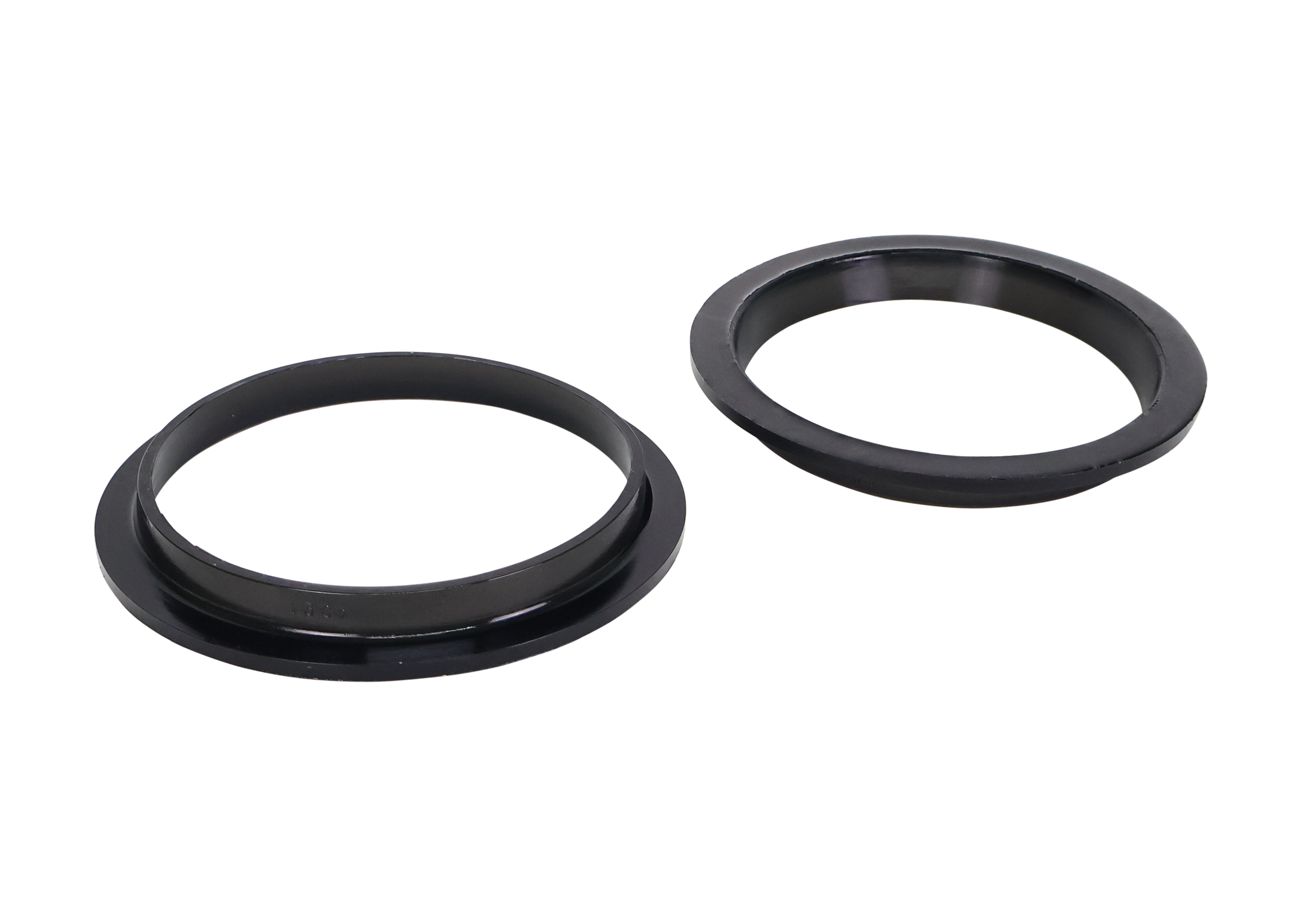
Front Upper Spring Seat Bushings
✅ Fits 2016 Chevrolet SS Base Pre-OrderAvailable for Preorder. Ships within 4-6 weeks.Available for Preorder. Ships within 4-6 weeks.SKU: W73880Front Upper Spring Seat Bushings
✅ Fits 2016 Chevrolet SS BasePre-OrderAvailable for Preorder. Ships within 4-6 weeks.Available for Preorder. Ships within 4-6 weeks.Qty Required 1Kit Contents 2 Bushings$40.88 -
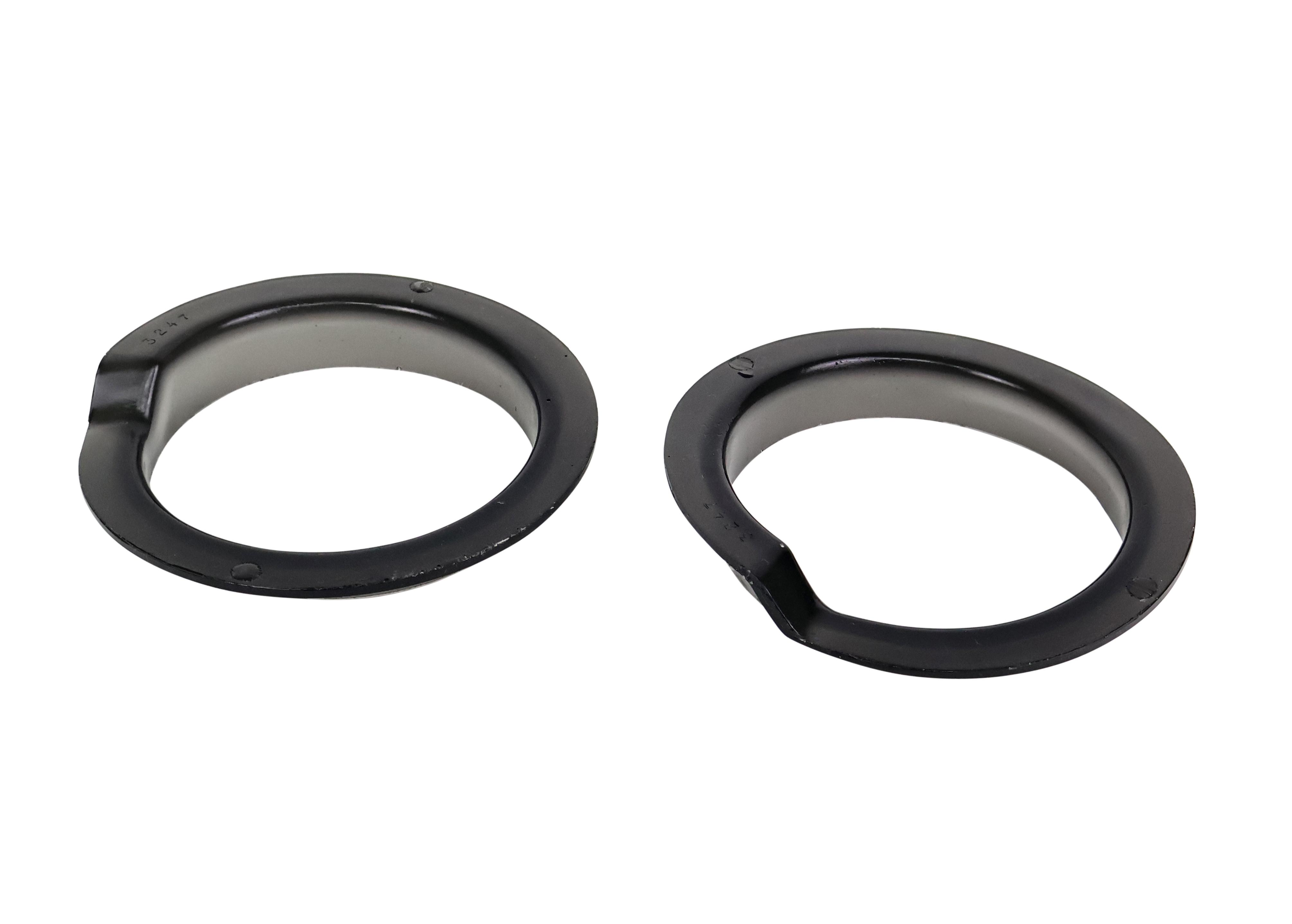
Rear Upper Spring Seat Bushings
✅ Fits 2016 Chevrolet SS Base In StockShips within 24hrs.Ships within 24hrs.SKU: W73879Rear Upper Spring Seat Bushings
✅ Fits 2016 Chevrolet SS BaseIn StockShips within 24hrs.Ships within 24hrs.Qty Required 1Kit Contents 2 Bushings$40.88
Your vehicle
Matching vehicles
No match — try selecting it below.
Refine your search
Clear all- Bushings 17
- Alignment Pins and Bushings 1
- Coil Spring Insulators 2
- Control Arm Bushings 3
- Differential Bushings 2
- Master Bushing Kits 1
- Radius Arm Bushings 1
- Shock Bushings 1
- Subframe Bushing 2
- Sway Bar Bushings 3
- Sway Bar Link Bushings 1
- Nuts, Bolts & Screws 1
- Control Arm Washer 1
- Strut Mount 2
- Strut Mount 2
- Sway Bar & Sway Bar Kits 8
- Sway Bar Link 4
No categories match.
Can’t find what you’re looking for?
Our team can help you find the right part — or tell us what was missing so we can improve the site.
Call Us +1 909-476-2860 Give Feedback (opens in a new tab)


