
 US
US Australia
 United Kingdom
 Europe
Why does my Tesla Model Y ride so rough? Four causes people keep confusing
"Rough ride" describes four different faults with four different fixes. Sharp harshness over small bumps is usually tires and pressure. A boomy, heaving sensation is body control. Floating at highway speed is damping. A knock from one corner is a worn component. Diagnose which one you have before spending anything.
Start by naming the symptom
Almost every guide to this treats a rough Model Y as one problem with one answer, which is normally to buy whatever the author is selling, and most of the time, this isn’t actually the case.
|
What you feel |
When you feel it |
Most likely cause |
What fixes it |
|
Sharp, brittle impacts over small bumps and expansion joints |
Constantly, worse on 21 in wheels |
Tire pressure and tire sidewall |
Pressure adjustment, smaller wheel with taller sidewall |
|
Boomy up and down motion, the cabin feels like it keeps moving after the bump |
Undulating roads, dips, crests |
Poor body control, roll and heave |
Sway bars, bushing condition |
|
Floaty, slightly disconnected at 65mph and above |
Highway, long sweeping bends |
Damping and geometry accuracy |
Damper condition, caster and bushing accuracy |
|
A knock, clunk or creak from one corner |
Over a specific bump, or turning at low speed |
Worn bushing, ball joint or arm |
Component replacement |
Two of those four are cheap or free to address, one needs parts and one needs a workshop.
Cause one, tires and pressure
The most common cause and the least glamorous. Factory placard pressure on a Model Y is commonly around 42 PSI, set for efficiency and load capacity rather than comfort. Owners routinely report meaningful improvement at 39 to 41 PSI cold.
Two cautions, because the internet tends to omit them. Going substantially below placard pressure increases the risk of wheel damage from potholes, changes wear patterns across the tread, and costs you a little range. Do not chase comfort down to the low 30s, instead adjust in small increments, and stay within the range in your owner documentation.
Wheel and tire choice matters more than pressure. A 255/45R19 has considerably more sidewall to absorb impacts than a 255/35R21, and the difference is not subtle. If you bought a Model Y on the largest wheel available and the ride is your main complaint, the wheels are the single biggest lever you have.
Cause two, body control and heave
This is the one owners find hardest to describe and the one most often misdiagnosed as harshness.
The symptom is not a sharp impact. It is a slow, boomy vertical motion, most obvious over undulating pavement or a dip taken at speed, where the body keeps moving after the road has finished. Passengers notice it more than drivers, and it is the mechanism behind most complaints of motion sickness in the back of an electric SUV. The cabin is quiet, so there is no engine noise masking the movement, and the vehicle is tall and heavy, so once the body starts moving it has real momentum.
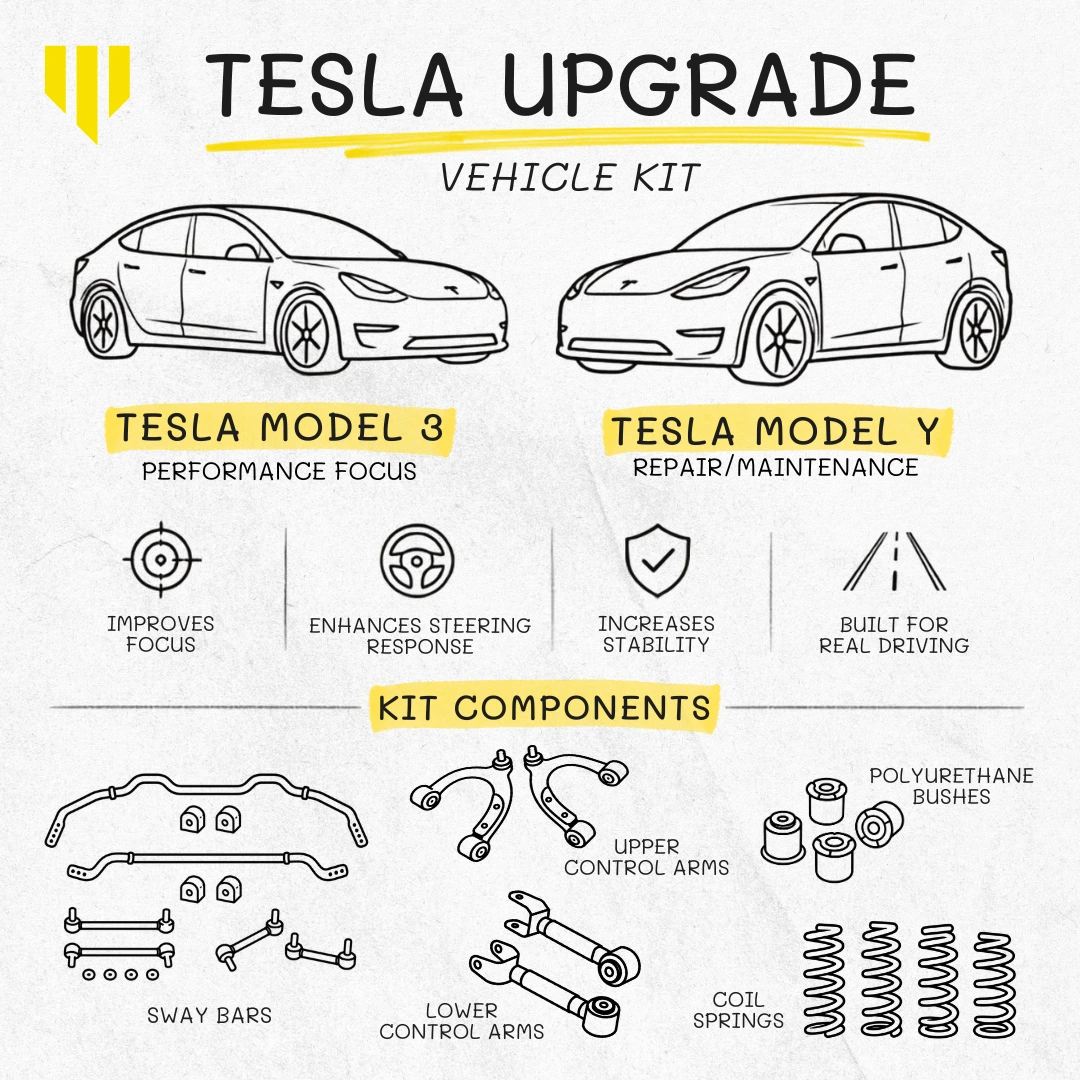
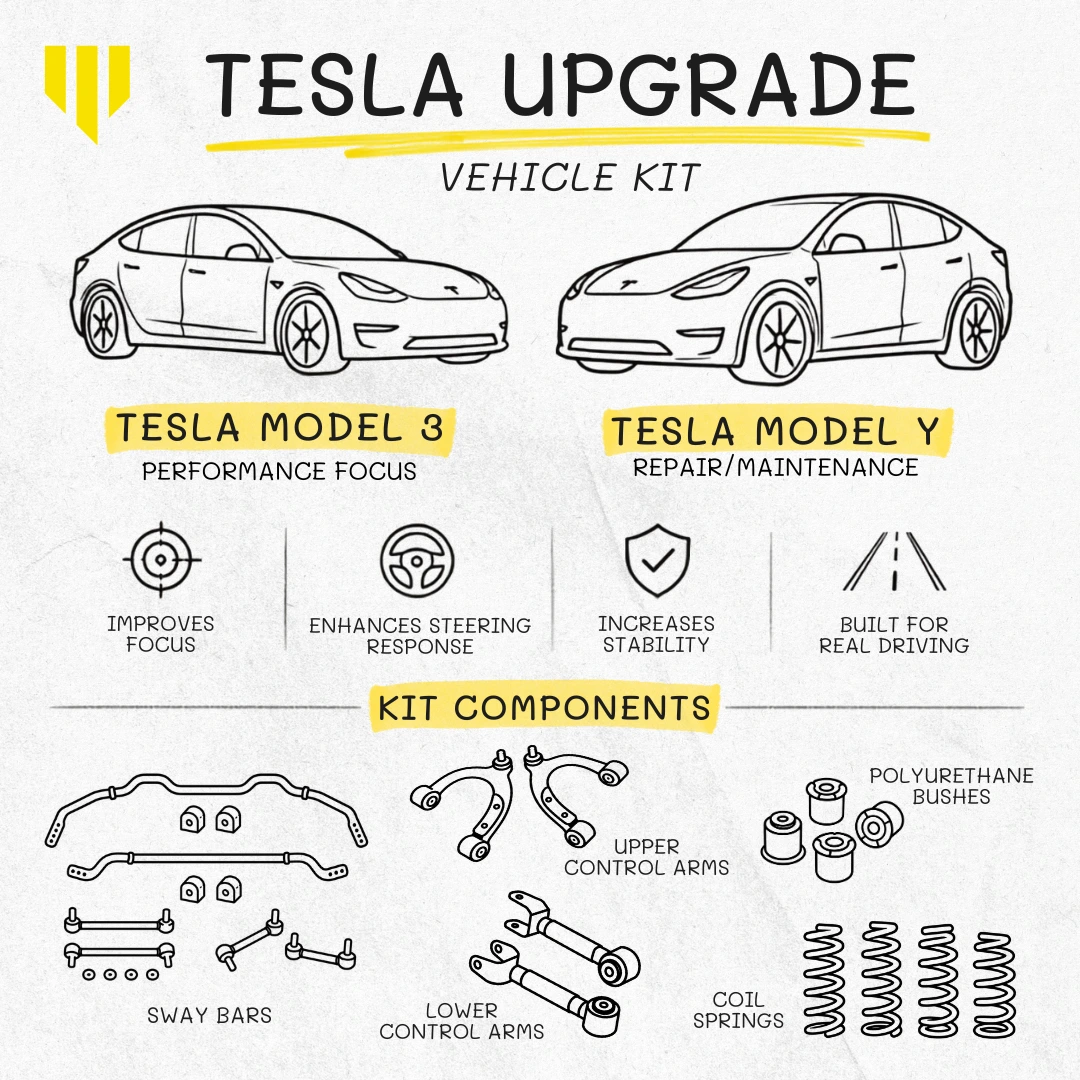
Softer springs make this worse rather than better. What improves it is control of how the body moves, particularly in roll and in the coupling between the two ends of the car. Adjustable performance sway bars are the direct lever, and the Whiteline rear bar for the Model Y runs between 82.1% and 154.2% stiffer than the factory part depending on which of its three positions you use. Set on soft it tightens body control noticeably while barely touching straight line compliance, because a sway bar only resists the wheels moving in opposite directions.
Worn bushings compound this badly. A bushing that has softened lets the wheel move where it should not, so control inputs arrive late and the body settles slowly. Replacing tired suspension bushings with Whiteline synthetic elastomer, which holds its shape under the loads an EV generates rather than progressively deflecting, restores the accuracy the car had when new.
If body control is your issue, our guide to the Model Y sway bar upgrade covers the settings and what each one changes.
Cause three, floating at highway speed
The car feels light, slightly vague, and requires small constant corrections on a straight highway.
Two contributors; Damper condition, which no spring or bar will substitute for, and geometry accuracy. Caster is the setting that gives a car straight line stability and steering that self centers, and it is often overlooked. Whiteline offset caster bushings add 0.75 degrees with KCA531 or 0.7 degrees with KCA532, along with anti lift geometry, which tightens up highway behavior meaningfully on a car that has gone vague.
The other contributor is play. Every millimeter of unwanted movement in a bushing or bearing shows up as steering that does not quite go where you point it. A sealed spherical bearing kit such as KCA561 removes deflection at the front lower lateral position entirely.
Cause four, a knock, clunk or creak
If you can localize the noise to one corner, this is not a ride quality question. It is a wear question, and it needs a workshop rather than a purchase decision.
A creak or groan turning at low speed commonly traces to the front upper control arm ball joints. Tesla has published its own procedure to reseal these on earlier cars and has characterized it as a noise condition.
A crunch turning sharply at low speed more often comes from the front lower compliance or radius arm bushing.
A knock over a sharp bump from one corner should be inspected promptly by a qualified workshop. A knock can be a worn bushing and it can also be something that needs attention immediately, and those two possibilities feel identical from the driver's seat. Do not diagnose that one from a forum thread.
Whiteline supplies complete Model Y control arms with ball joints included, including WA532 front lower lateral, WA533 front upper and WA607 front lower, all as pairs. Full detail on symptoms and cost is in our guide to Model Y control arm replacement.
What will not fix a harsh Model Y
Softer springs alone: They reduce control without reducing impact harshness, and on a vehicle this heavy that trade goes badly.
A stiffer sway bar, if your problem is genuinely sharp impact harshness: Being straight about it: a bar improves roll and body control. It does not soften an impact. If your complaint is the brittle jolt over expansion joints, start with tires and pressure.
Alignment, if nothing has moved: An alignment corrects geometry. It does not add compliance.
Knowing which of these applies to your car is worth more than any single part.
Frequently asked questions
Looking for more information about improving the Tesla Model Y ride? Below we answer the most commonly asked questions
Why is my Tesla Model Y ride so rough?
What tire pressure gives the best Model Y ride?
Will smaller wheels make my Model Y ride better?
Why does my Model Y feel boomy and bouncy rather than harsh?
Does the Model Y have adjustable or air suspension?
When should I suspect worn suspension rather than tuning?
Can I make a Model Y ride like a luxury SUV?
Fix the cause, not the symptom
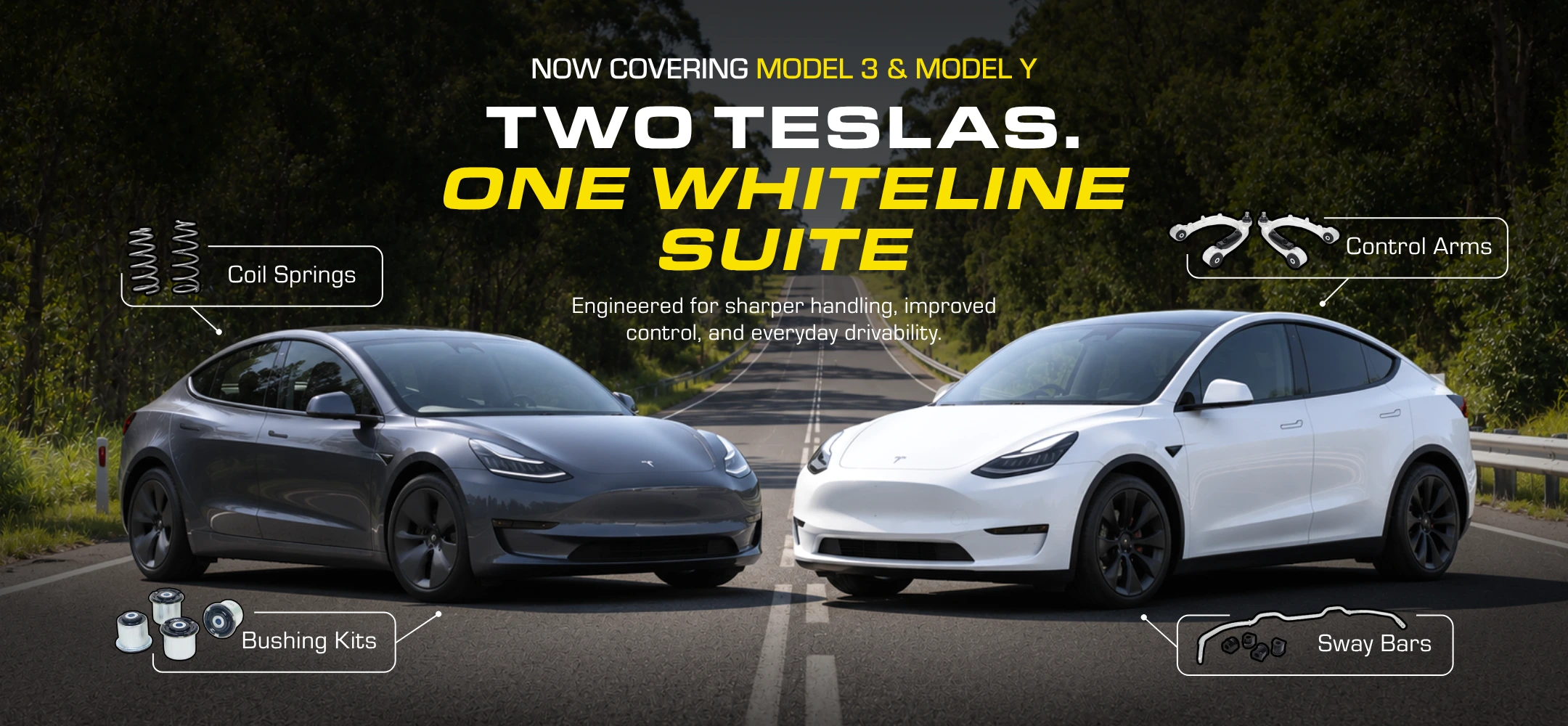
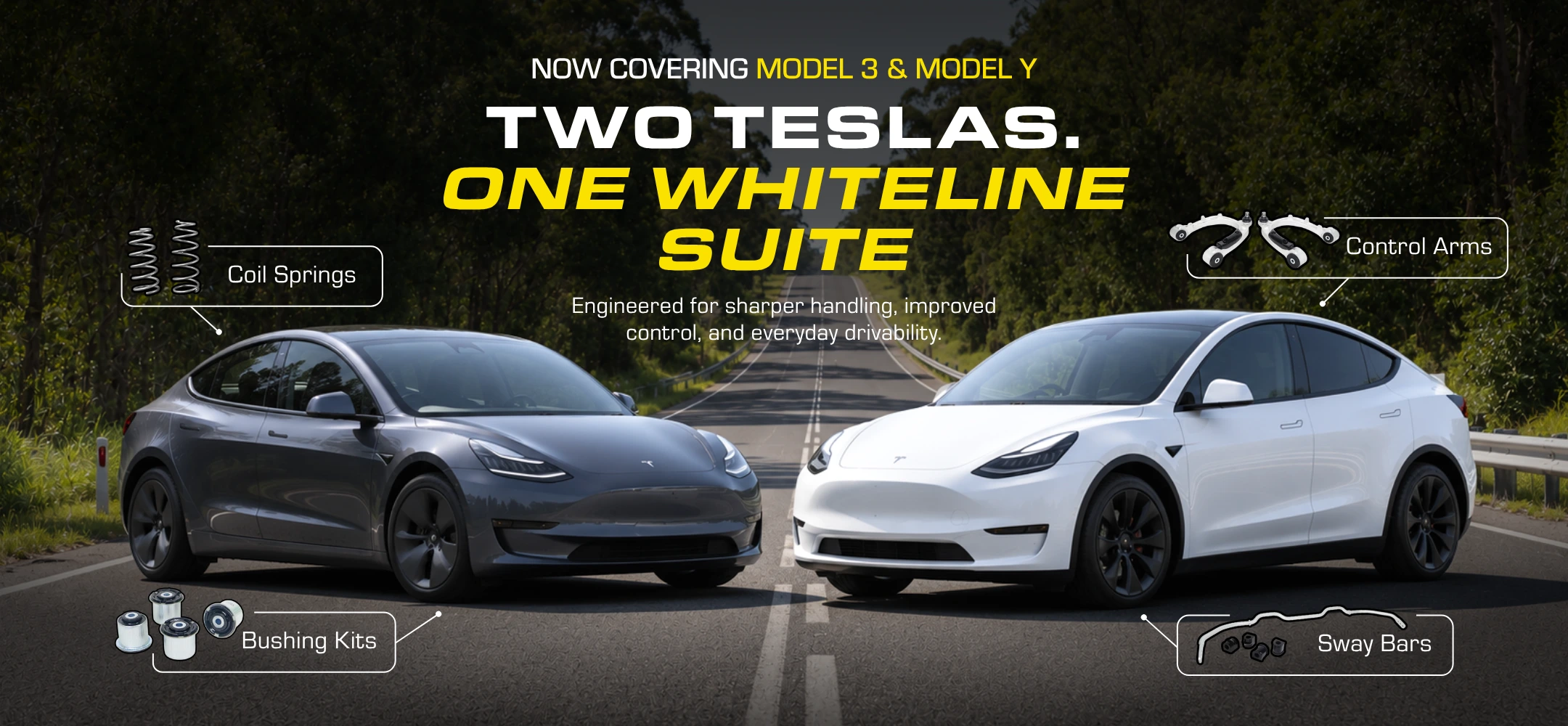
Adjustable sway bars, elastomer bushings and complete control arms engineered for EV loads and weights. Shop Whiteline performance sway bars, control arms and suspension bushings, or go direct to the 24mm adjustable rear sway bar.
Browse the full range of Whiteline EV suspension upgrades and select your Model Y to confirm fitment.


