
 US
 Australia
 United Kingdom
 Europe

C-Bushings for 1975 Ford Bronco Northland
IMPROVE GRIP, HANDLING & PERFORMANCE.
On a solid front axle, two arms hold the axle against everything the brakes and the engine throw at it. The bushings in those arms are the only thing deciding whether the axle stays where it was put, and they are carrying more load than any other bushing on your Ford Bronco. What a Leading Arm Does A leading arm runs forward from the axle housin... Read more
On a solid front axle, two arms hold the axle against everything the brakes and the engine throw at it.
The bushings in those arms are the only thing deciding whether the axle stays where it was put, and they are carrying more load than any other bushing on your Ford Bronco.
What a Leading Arm Does
A leading arm runs forward from the axle housing to a chassis mounting point ahead of it, which is what distinguishes it from a trailing arm running back.
Its job is fore and aft location of the axle. Under braking the axle tries to move rearward and rotate, and under acceleration it tries to do the opposite. The leading arm is what resists both of those.
Because the arm is fixed to the axle at one end and the chassis at the other, it also controls the axle's rotational position. That sets caster at the steering knuckles and pinion angle at the differential, which are the same thing measured at different points.
Each arm carries a large bushing at both ends. The axle end usually takes the heaviest loading, and the chassis end allows the arm to swing as the suspension moves.
Why Ford Bronco C-Bushings Carry So Much
Scale is the thing worth understanding about these.
A solid front axle is heavy, and all of its braking torque reaction passes through two arms into four bushings. There is no subframe spreading the load and no additional links sharing it.
Factory bushings are correspondingly large, and they are still soft rubber because the manufacturer wanted to isolate driveline and road shock from the cabin.
Under braking that soft rubber simply compresses away. The axle rotates slightly, caster reduces, and the steering goes light exactly at the moment the driver wants it to feel connected.
Let off the brakes and it springs back, which is the movement people describe as the front end feeling unsettled under heavy braking.
Caster, Pinion Angle and Why They Move Together
On a solid axle the two cannot be separated, and leading arm bushings control both.
Rotate the axle housing nose up and caster increases while pinion angle changes with it. Rotate it the other way and caster reduces.
That matters because the two want different things. Caster wants to be positive for steering stability and self centering. Pinion angle wants to point correctly at the transfer case so the universal joints run at sensible angles.
Factory geometry balances the two angles against each other. Worn bushings let the axle sit wherever the load puts it, which means neither setting is held, and the result is wandering steering along with driveline vibration.
Lifting the vehicle rotates the housing and moves both again, which is why correction at this joint is a common requirement after a lift.
Offset Bushings for Caster Correction
Some applications offer offset leading arm bushings, and they do more than restore the original position.
The bushing's inner sleeve sits off center, so fitting it rotates the arm's effective mounting point and takes the axle housing with it.
That recovers caster lost to a lift without changing the arms, and because the pinion rotates at the same time, the correction has to balance both rather than chasing caster alone.
How much correction is available depends on the bushing design and the housing it fits into. Larger lifts usually need adjustable arms instead, since an offset can only move the pivot so far.
Check the current caster and pinion readings before ordering, since the correction needs to suit the gap rather than a number chosen in advance.
Bad Leading Arm Bushing Symptoms on Your Ford Bronco
- Steering that goes vague or light under heavy braking
- The front end feeling like it shifts as you come off the brakes
- Wandering at highway speed with no alignment fault found
- Driveline vibration that changes with throttle position
- A clunk from the front over bumps and driveways
- Axle tramp or hopping under hard acceleration
- Caster readings that will not hold between alignments
- Visible cracking, splitting or separation in the bushing rubber
The braking symptom is the most useful one. A front end that feels connected normally and vague under hard braking is describing a bushing that deflects under load and recovers afterward.
Why Polyurethane Changes Your Ford Bronco's Feel
Replacing soft rubber here produces a bigger change than on most joints, because of how much load passes through.
Polyurethane holds its shape under braking and acceleration loads, so the axle stays rotated where it was set. Caster holds, pinion angle holds, and the steering keeps the same weight whether you are braking or not.
Driveline behavior improves alongside the steering feel as well. Axle wrap is the term for the housing winding up under power and releasing, and an axle that does not wrap puts torque through the driveshaft more smoothly with far less hop.
The trade is more noise and more driveline sensation reaching the cabin. On a solid axle vehicle that already transmits a fair amount, the difference is less dramatic than it would be on a car.
Correct lubricant matters, with silicone or PTFE based grease rather than petroleum, which degrades polyurethane over time.
Axle Wrap and Why It Starts at the Bushings
Axle wrap is what happens when the differential housing rotates against the arms under power instead of driving the wheels.
Torque goes into the ring gear, the housing tries to rotate in the opposite direction to the wheels, and the only thing stopping it is the arms and their bushings.
Soft bushings let that rotation happen almost freely. The housing winds up, the energy stores in the rubber, and then it releases, which is the hop or judder people feel pulling away hard or climbing in low range.
On a lifted vehicle it worsens, since the arms sit at a steeper angle and resist rotation less effectively than they did at standard height.
Firm bushings stop the wind up before it starts. The torque goes to the wheels rather than into twisting the housing, and the driveline stops cycling between loaded and unloaded.
That matters for component life as well as feel. Repeated wind up and release puts shock loading through the driveshaft, the universal joints and the differential itself.
Checking Leading Arm Bushings
A load check tells you more than a visual one here.
With the vehicle on a hoist, lever against each arm at both ends and watch the bushing. Any visible movement at the sleeve means the axle is not being held.
Look for the rubber bulging out past the washer or separating from its metal sleeve, which is the usual failure rather than outright splitting.
Compare all four of them against each other. These rarely wear evenly, and the axle end bushings typically go first because they carry more.
Check the caster reading from the last alignment against the current one. A figure that has drifted between services points at the bushings letting the housing rotate rather than at the alignment being wrong.
Leading Arms Against Radius Arms and Trailing Arms
The three get confused and the distinction is worth making.
A leading arm runs forward from the axle to a chassis mount in front of it.
A trailing arm runs rearward from its chassis mount to the axle behind it, which is the usual arrangement on a rear axle.
A radius arm does the same locating job as either but is typically a single heavy arm bolted to the axle at two points, resisting rotation through its own structure rather than relying on a pair of separated mounts.
All three control fore and aft position and axle rotation, and all three use large bushings carrying significant load. The terms get used loosely in catalogs, so check the shape of what is on your Ford Bronco rather than the name in the listing.
Replacing Leading Arm Bushings on Your Ford Bronco
These are a heavy interference fit in a thick housing, so a press and the correct sleeves are required rather than improvised tooling.
Support the axle before releasing the arms, since it will move once both ends are free and it is heavy enough to cause damage or injury.
Expect to find the through bolts seized in place. These joints collect water and sit under the vehicle, and a bolt that has been in place for years frequently needs cutting.
Replace the bushings in both arms at the same time. One firm bushing against three tired ones leaves the axle still rotating, and the new one carries more than its share.
Torque at ride height with the vehicle on its wheels rather than hanging, since the bushing takes its set from the position it is clamped in.
Have caster and pinion angle checked afterward, because both will have moved.
Find Leading Arm Bushings for Your Ford Bronco
C-bushings are part of our bushings lineup, alongside standard radius arm bushings.
Select your Ford Bronco to see the leading arm and radius arm bushings available for it, including offset versions where caster correction is needed. If the steering goes light under braking or the caster will not hold between alignments, these are the joints to look at.
2 items
-
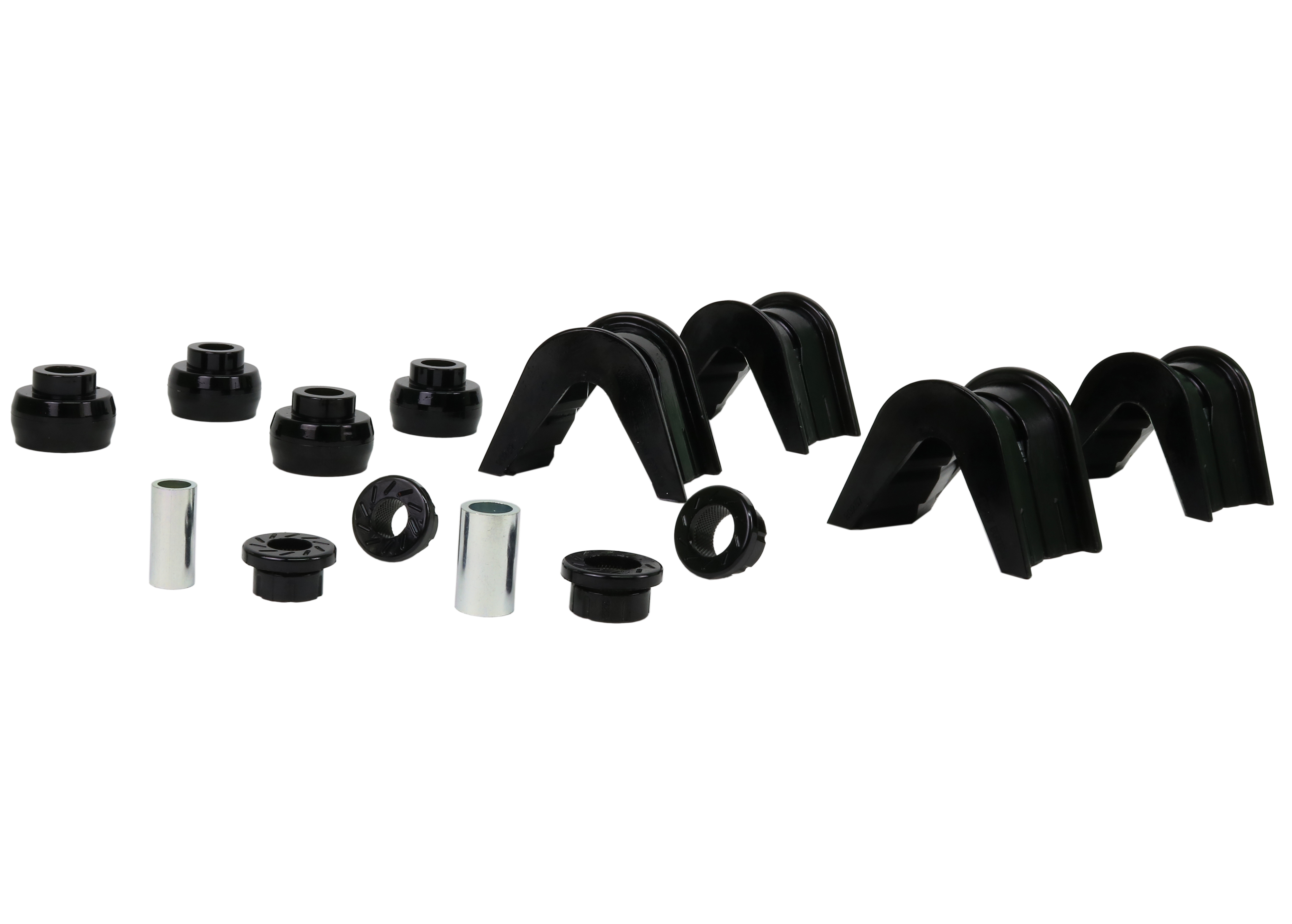
Leading Arm - Bushing
✅ Fits 1975 Ford Bronco Northland Pre-OrderAvailable for Preorder. Stock due on 08-Nov-2026.Available for Preorder. Stock due on 08-Nov-2026.SKU: W93525Leading Arm - Bushing
✅ Fits 1975 Ford Bronco NorthlandPre-OrderAvailable for Preorder. Stock due on 08-Nov-2026.Available for Preorder. Stock due on 08-Nov-2026.Qty Required 1Kit Contents 12 Bushings, 2 Tubes, Grease$101.88 -
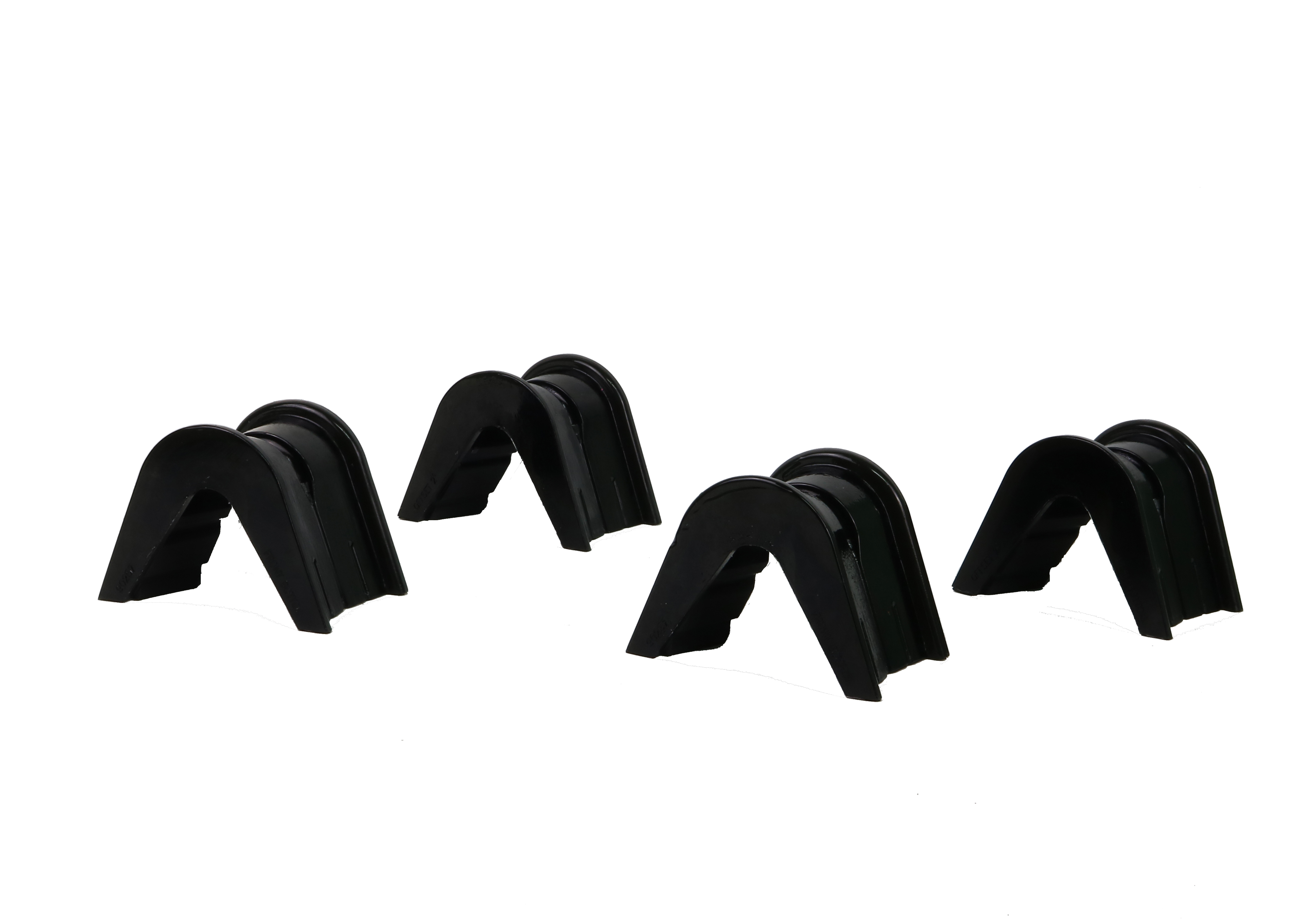
Leading Arm - To Diff Bushing
✅ Fits 1975 Ford Bronco Northland In StockShips within 24hrs.Ships within 24hrs.SKU: W93524Leading Arm - To Diff Bushing
✅ Fits 1975 Ford Bronco NorthlandIn StockShips within 24hrs.Ships within 24hrs.Qty Required 1Kit Contents 4 Bushings , Grease$62.88
Your vehicle
Matching vehicles
No match — try selecting it below.
Refine your search
Clear allNo categories match.
Can’t find what you’re looking for?
Our team can help you find the right part — or tell us what was missing so we can improve the site.
Call Us +1 909-476-2860 Give Feedback (opens in a new tab)


