
 US
 Australia
 United Kingdom
 Europe

Dust Covers for 1999 Dodge Neon SE
IMPROVE GRIP, HANDLING & PERFORMANCE.
A ball joint or tie rod end does not usually wear out. It gets contaminated, and the thing standing between it and the road is a rubber boot worth a few dollars. What a Dust Boot Is Doing The joints in your Dodge Neon's steering and suspension system run on grease sealed inside a flexible cover. That flexible cover does two jobs at once. It keep... Read more
A ball joint or tie rod end does not usually wear out. It gets contaminated, and the thing standing between it and the road is a rubber boot worth a few dollars.
What a Dust Boot Is Doing
The joints in your Dodge Neon's steering and suspension system run on grease sealed inside a flexible cover.
That flexible cover does two jobs at once. It keeps the grease in, so the bearing surfaces stay lubricated for the life of the joint. And it keeps water, road salt and grit out, which is what destroys those surfaces when it gets in.
While the boot is intact, the joint is effectively sealed and can last an extremely long time. Once it splits, the grease escapes within weeks and contamination takes its place.
From that point onward the joint wears rapidly. A component that would have lasted another decade develops play in months, and the failure gets recorded as a worn ball joint rather than as a failed boot.
That is the economics behind this particular part. A dust boot costs very little and it is protecting something that costs a great deal more.
Bellows and Cup Styles
Two shapes cover most applications and they suit different movements.
A bellows boot has concertina folds along its length, which lets it extend and compress substantially. Those are used where the joint moves through a long stroke, such as an inner tie rod inside a steering rack.
A cup or dome style boot is a simple flexible cover over a joint that rotates and articulates without much linear travel. A ball joint dust boot is this style, and outer tie rod ends use the same shape.
The distinction matters when ordering a universal part, since a cup boot on a position needing bellows will tear the first time the suspension reaches full travel.
Rubber bellows dust boots also appear on steering racks themselves, covering the rack bar between the housing and the tie rod.
Inner and Outer Boots
The two positions on a tie rod assembly fail differently and are accessed differently.
An outer tie rod boot, also listed as a tie rod end boot or a tie rod rubber boot, covers the ball joint at the steering arm. It is visible from underneath, easy to inspect and usually replaced with the joint since the two are often supplied together.
An inner tie rod boot is the large bellows covering the rack bar and the inner socket. It is harder to see, which is why splits there go unnoticed, and it protects both the inner joint and the rack bar itself.
That second function matters a great deal here. A split inner boot lets grit at the rack bar, which then runs through the rack seals and through the shaft guide bushing, turning a cheap boot into an expensive rack.
Inspect the inner boots by feel as well as by eye, since a split on the upper surface is not visible from below.
Tie Rod Boot Clamps and Why They Leak
The clamp is as much a part of the seal as the boot, and it is frequently the reason a new boot fails early.
A tie rod boot clamp can be a band clamp, a spring wire clip or a crimped ring, with one at each end of the boot. The seal depends on that clamp holding the boot against a smooth sealing surface.
Reusing a stretched or corroded clamp leaves a path for water to enter even with a perfect boot fitted, which is why clamps come with quality boot kits rather than being assumed.
Crimp style clamps need the correct crimping pliers. Squeezing one with ordinary pliers leaves it uneven, and an uneven clamp seals on part of its circumference.
Check the sealing surface on the joint as well. Corrosion or scoring where the clamp sits means the boot will not seal regardless of how well the clamp is fitted.
Replacing the Boot or the Joint on Your Dodge Neon
The decision comes down to how long the boot has been split.
A boot found split at a service, with the grease still present and no play in the joint, is a boot replacement. Clean out what contamination has entered, repack with fresh grease and fit a new boot and clamps.
A joint with any detectable play is a joint replacement. The boot is no longer the issue, and a new boot over a worn joint simply hides it.
A boot that has been open long enough for the grease to be gone is a judgment call. If the joint feels tight and the surfaces are not corroded, a repack and new boot can buy years. If there is any roughness when it is articulated, replace it.
For a steering joint specifically, the bar is lower. Play in a tie rod end is a safety matter rather than a wear item, and the cost difference is not worth the risk.
Ball joint boot repair kits exist for exactly the first case, supplying the boot, the clamps and often the grease.
What a Boot Replacement Costs
The part is among the cheapest in a suspension and the labor varies by position.
An outer boot on an accessible joint is quick. The joint has to be separated, the old boot removed, the joint cleaned and repacked, and the new boot and clamps fitted.
An inner tie rod boot takes longer, since the outer joint has to come off and the boot slides along the rod, sometimes requiring the tie rod to be disconnected at the rack.
Where the joint is being replaced anyway, the boot usually comes with it and adds nothing to the cost.
Compared against the joint it protects, a boot replacement cost is trivial. Against a steering rack contaminated through a split inner boot, it is not close.
That is the argument for acting on a split boot immediately rather than at the next service.
An alignment is needed where a tie rod has been disconnected, which is worth factoring in on the inner boots.
Universal and Application Specific
Both exist and the choice depends on what you are fixing.
Application specific boots match the joint's dimensions exactly, sealing on surfaces designed for that part. These are the right answer wherever they are available.
Universal ball joint boots are sized by dimension rather than vehicle, which suits older platforms the aftermarket no longer supports, modified suspension, and aftermarket joints supplied without boots.
Three measurements between them will decide the fitment. The inside diameter at the top where it seals against the stud or the joint shoulder, the inside diameter at the base where it seals against the housing, and the overall height.
Get the height wrong and a boot either stretches at full articulation or bunches and chafes against itself.
Measure the original where you can, and the joint itself where the original has already disintegrated.
Rubber and Polyurethane Boots
Material affects how long a boot survives rather than how it seals.
Rubber is the usual factory choice for boots. It flexes readily through a wide temperature range and it perishes with age, UV and ozone, which is why a boot can split on a vehicle that has barely been driven.
Polyurethane boots resist perishing, ozone and oil contamination considerably better, which extends service life in the conditions that destroy rubber.
The trade comes in how flexible the material is. Polyurethane is stiffer, so it suits positions with moderate articulation better than those needing a long stroke.
For a vehicle that sees salt, water or sits outside, the longer life is the argument. For a position with substantial movement, check that the boot is specified for it.
Checking Them Properly
A boot inspection takes seconds and it is the highest value check on a suspension.
Look for splits, cracking and any sign of grease on the outside of the boot, which means it has escaped from somewhere.
Squeeze the boot gently between finger and thumb. A firm boot still holding grease feels different to an empty one, and an empty one means the grease has gone whether or not a split is visible.
Check the clamps at both ends for corrosion, looseness or a boot that has pulled away from its sealing surface.
Do this at every service and after anything that puts debris at the joints, such as off road use or a curb strike.
Acting on a split boot immediately is the difference between a cheap part and a joint replacement, and it is the single cheapest piece of preventive maintenance on a vehicle.
Find Dust Covers for Your Dodge Neon
Dust covers sit within our universal auto parts lineup. More fit-anything parts include universal bump stops.
Select your Dodge Neon or measure your existing boots to find the dust covers and boot kits available for it. Check the clamps come with the kit, since a new boot on a tired clamp leaks from the day it goes on.
1 item
-
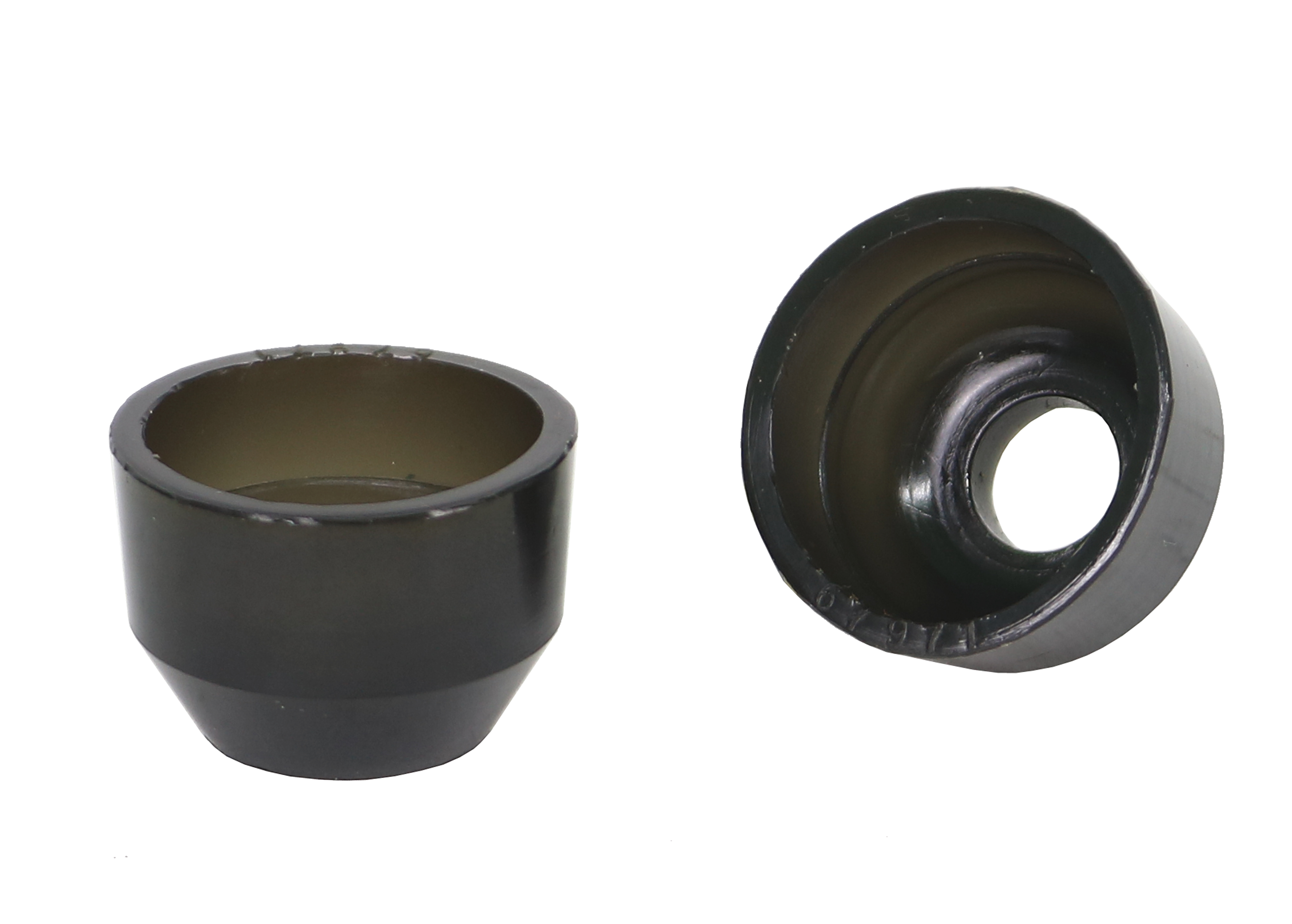
Tie Rod - Boot
✅ Fits 1999 Dodge Neon SE In StockShips within 24hrs.Ships within 24hrs.SKU: W93424Tie Rod - Boot
✅ Fits 1999 Dodge Neon SEIn StockShips within 24hrs.Ships within 24hrs.Qty Required 1Kit Contents 2 Bushings$6.19
Your vehicle
Matching vehicles
No match — try selecting it below.
Refine your search
Clear allNo categories match.
Can’t find what you’re looking for?
Our team can help you find the right part — or tell us what was missing so we can improve the site.
Call Us +1 909-476-2860 Give Feedback (opens in a new tab)


