
 AU
 United Kingdom
 Europe
 United States

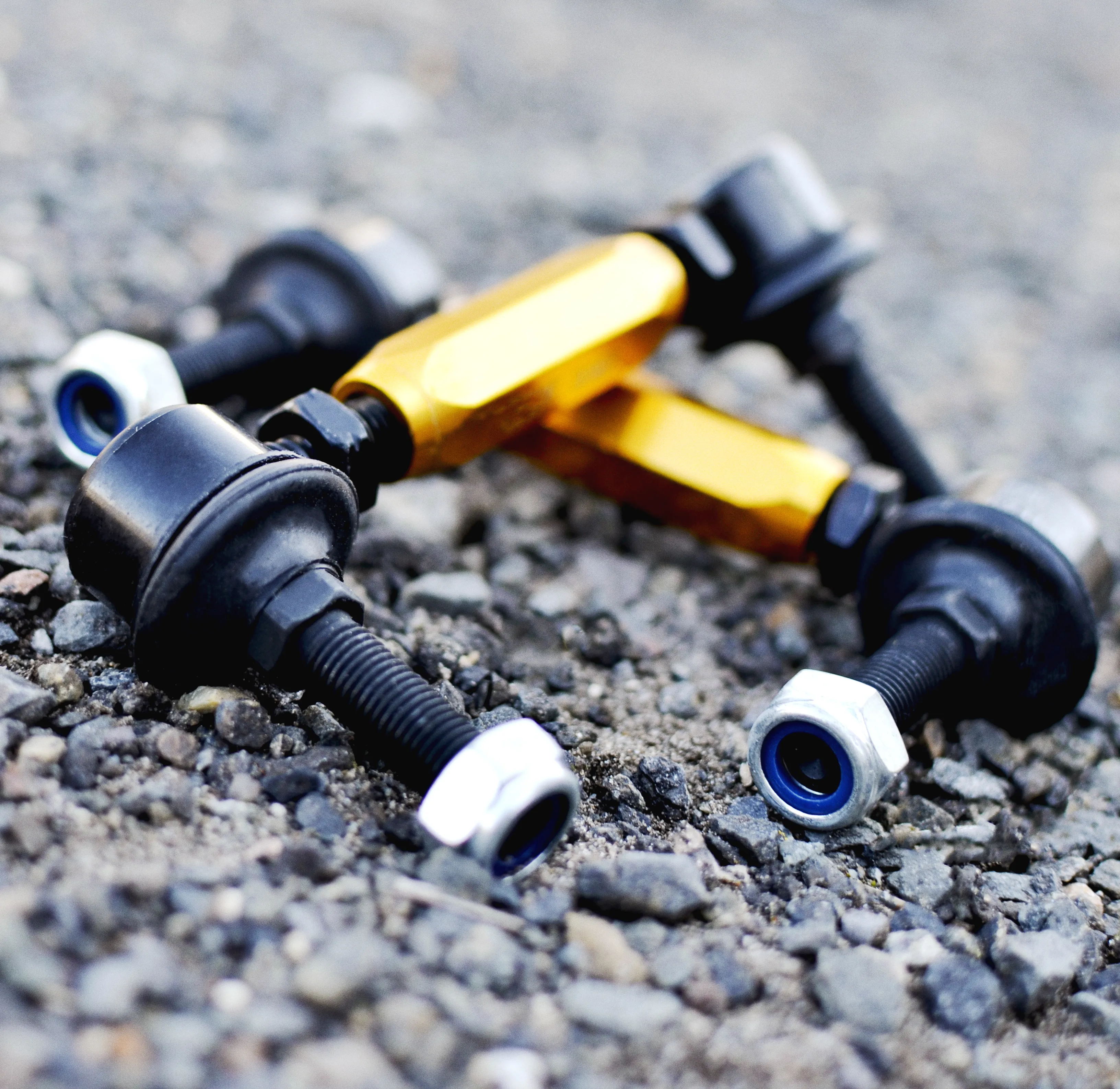

Front and rear sway bar links do the same job, connecting each sway bar to the suspension, but they’re usually different parts with different lengths, joints and mounting points. Front links typically wear faster because the front carries more weight and impacts. Both should be replaced in pairs across the axle, and both affect how well that end’s sway bar controls body roll.
Most cars, utes and 4x4s have a sway bar at the front and many have one at the rear, each with its own pair of links. When a parts list asks whether you need front or rear sway bar links, it helps to know how they differ, why one end usually wears first and how to tell which ones are worn. Here’s a clear guide, using our sway bar links as the example.
How front and rear sway bar links differ
Length and shape
Front and rear links are almost always different lengths, because the distance between the sway bar and the suspension differs at each end.
Mounting points
Front links often connect to the strut body or the lower control arm. Rear links connect to an arm, a knuckle or, on beam axles, the axle housing.
Joint types
Front links commonly use ball joints at both ends. Rear links may use ball joints, bushes or a mix, depending on the suspension design.
Loads
Front links carry the extra loads of steering, braking and the weight of the engine, while rear links see the loads of drive and cargo.
Why front links usually wear first
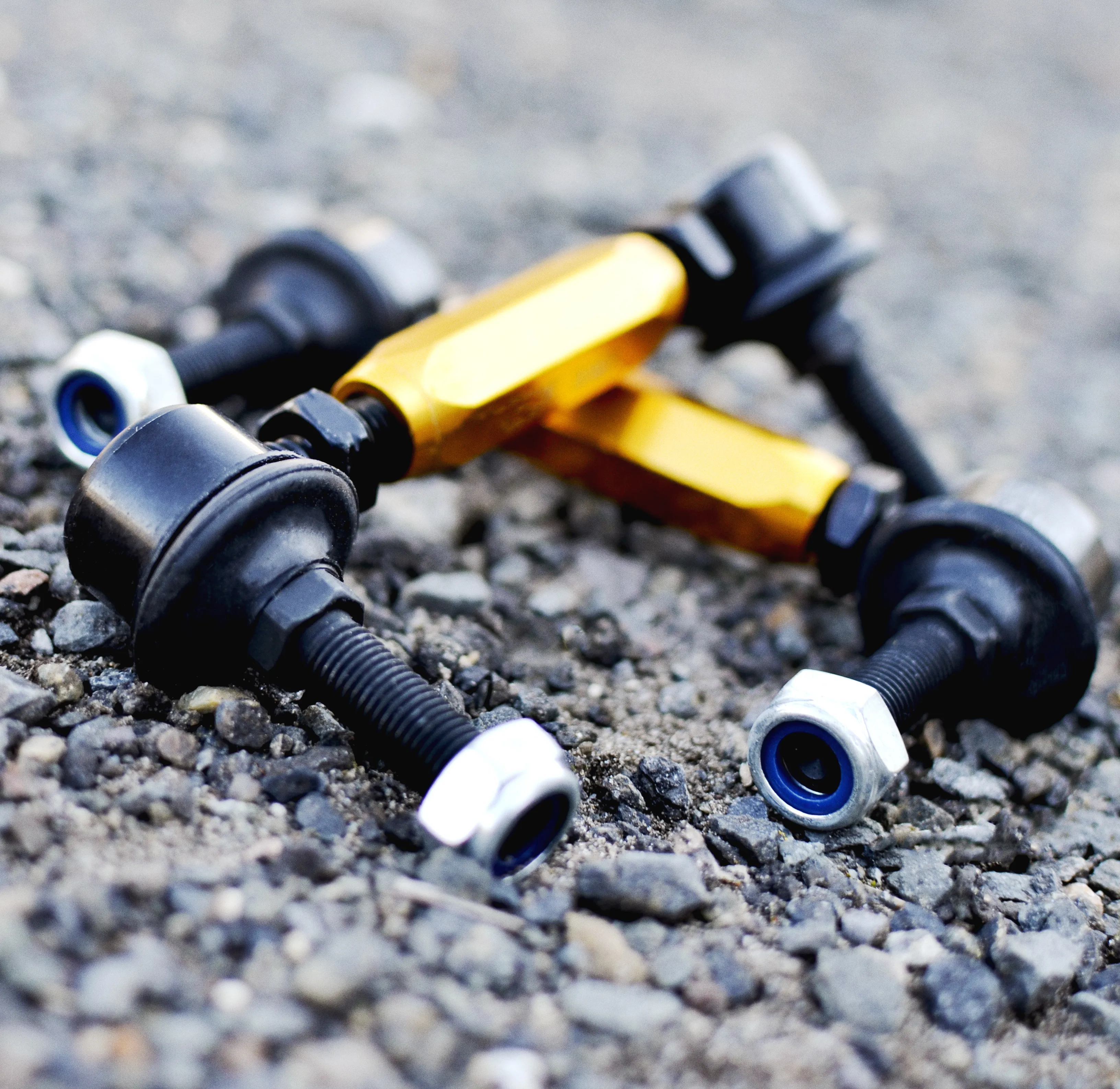
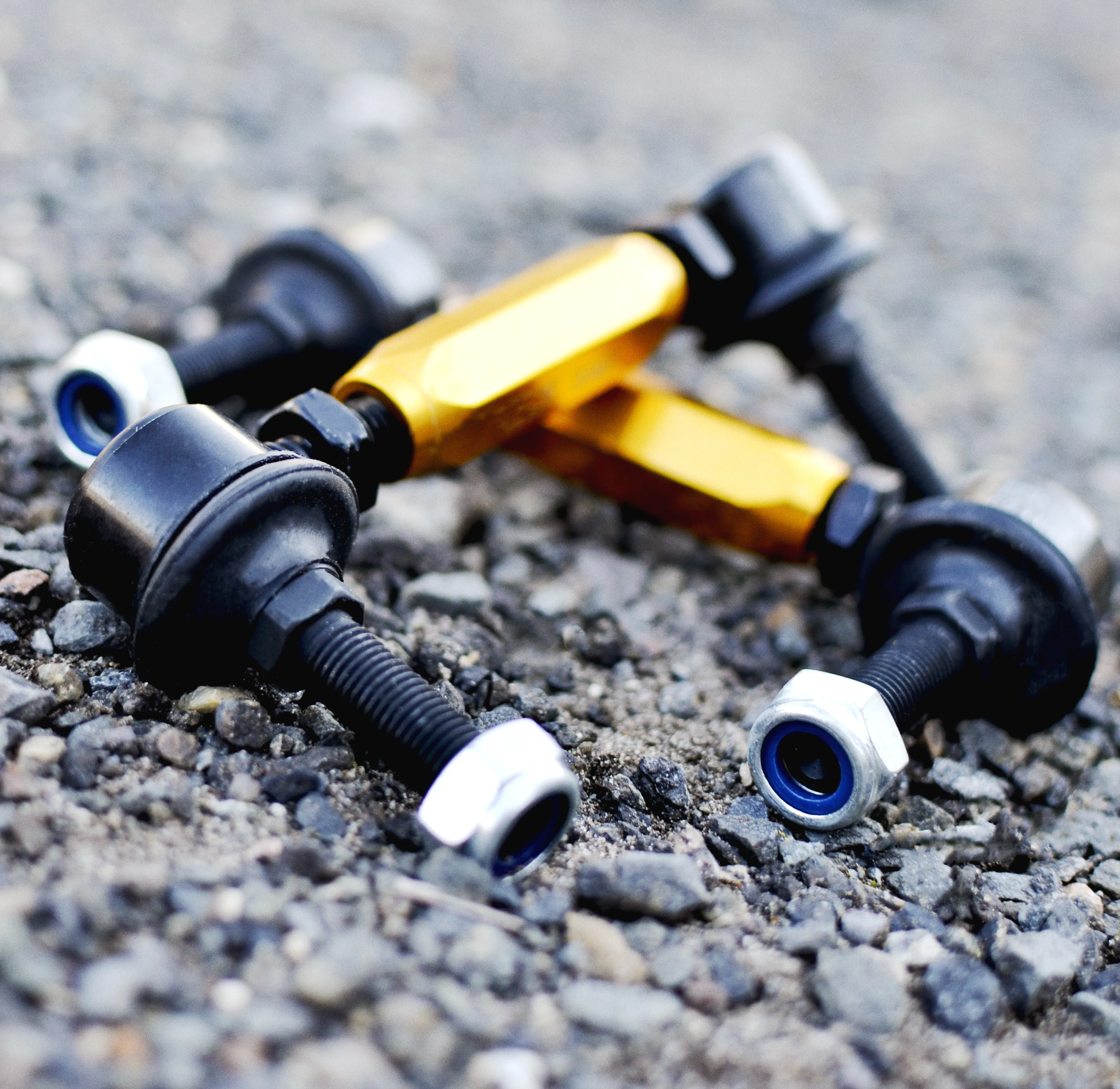
The front suspension carries more weight, takes the brunt of braking forces and meets potholes and kerbs first. Front links also sit closer to the engine bay and wheel wells, where heat, dust and road spray attack the dust boots. Once a boot splits, wear accelerates quickly. That’s why most sway bar link replacements start at the front.
Rear links wear too, especially on vehicles that tow, carry heavy loads or spend time on corrugated roads.
Front vs rear sway bar links at a glance
|
Factor |
Front sway bar links |
Rear sway bar links |
|
Typical wear rate |
Faster |
Slower on many cars |
|
Common joint type |
Ball joints |
Ball joints or bushes |
|
Loads |
Steering, braking, weight |
Drive, cargo, towing |
|
Common symptoms |
Front-end knocks, more front roll |
Rear knocks, looser rear |
|
Effect on handling |
Front roll control, turn-in |
Rear roll control, balance |
How to tell which links are worn
Listen to where the noise comes from. A knock over one-sided bumps that seems to come from the front points to the front links, while a rear knock points to the rear. Inspect each link by hand for play with the suspension unloaded, and check the boots for splits. If you’ve noticed the car rotating more or less than usual in corners, worn links at one end can change the balance, because that end’s sway bar is no longer working fully.
Should you replace front and rear links together?
Replace links in pairs across each axle. Whether you do both axles at once depends on their condition. If the rear links are also showing wear, doing all four at the same time saves a second visit. If you’re upgrading sway bars, fit new links to match. Many of our sway bar vehicle kits include front and rear links developed for the platform.
Lowered and lifted vehicles
Changing ride height affects front and rear links differently, because the geometry at each end is different. On lowered cars and lifted 4x4s, adjustable links let you set the correct length at each end so both sway bars sit neutral.
Choosing the right links
Use the vehicle listing to choose links for the correct axle, and check the length, stud size and joint type match your vehicle. Our links use high-strength alloy bodies, precision ball joints or bushes and corrosion-resistant finishes. Examples include our front and rear sway bar link kit for many Subaru Forester, Impreza, Liberty and Outback models and our front link for the Mitsubishi ASX, Lancer and Outlander.
FAQs
Looking for more information about front and rear sway bar links? Below we answer the most commonly asked questions
Are front and rear sway bar links the same?
Which sway bar links wear out first?
Should I replace all four sway bar links at once?
How do I know if my rear sway bar links are worn?
Do worn links affect handling balance?
Do I need adjustable links front and rear?
Find the right front and rear links for your vehicle in our sway bar links range.


