
 AU
 United Kingdom
 Europe
 United States

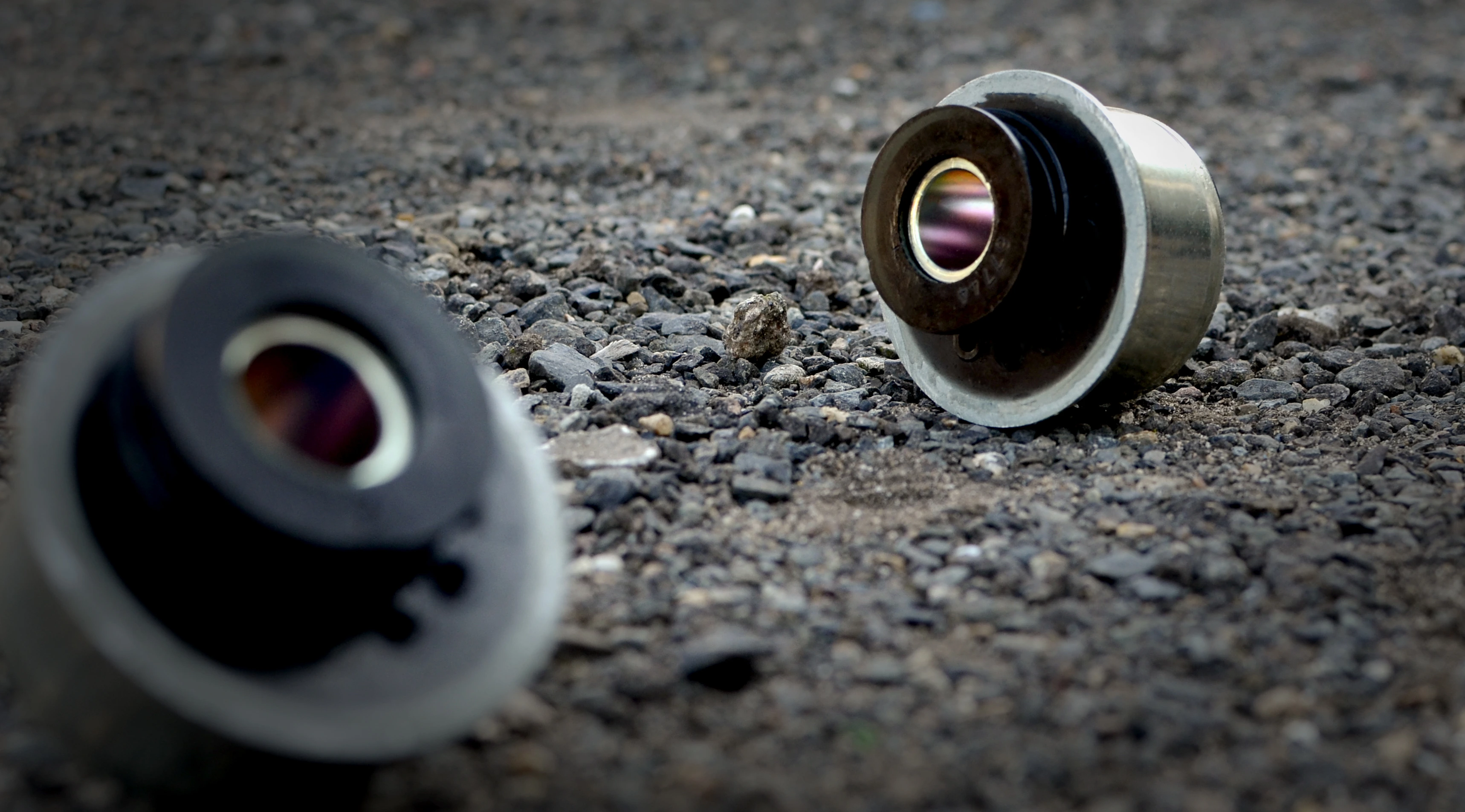

Polyurethane bushes hold suspension geometry more precisely than rubber, resist oil, heat and UV, and last far longer in Australian conditions. Rubber bushes are softer and isolate more noise, but they deflect under load and break down over time. For sharper steering, steadier alignment and fewer replacements, polyurethane is the better long-term choice.
When the clunks start and the steering goes vague, it’s usually the bushes. At that point you’ve got two options: put fresh rubber back in, or upgrade to polyurethane. Both will fix the immediate problem, but they’ll make the car feel quite different afterwards and age very differently over the years. Here’s how they compare, and why we make our suspension bushes from polyurethane.
How rubber bushes behave
Factory bushes are usually rubber bonded to an inner and outer steel sleeve. As the suspension moves, the rubber twists and stretches. That’s great for soaking up road noise and small vibrations, which is exactly why carmakers use it.
The downside shows up under load. When you corner, brake or accelerate hard, rubber squashes and lets the arms move. Camber and toe shift while you’re driving, steering response softens and the car feels less precise. Rubber also degrades with heat, ozone, oil and UV, so over the years it cracks, hardens and eventually tears.
How polyurethane bushes behave
Polyurethane is a tougher, more resilient material that resists deflection in the directions that matter for handling. In many of our designs the inner sleeve rotates within the bush rather than twisting it, which allows free suspension movement without the bush constantly being stretched.
The result is steadier geometry, sharper steering and more consistent handling. Polyurethane is also far more resistant to oil, road chemicals, heat and UV, which matters in a country where engine bays get hot and cars spend a lot of time in the sun.
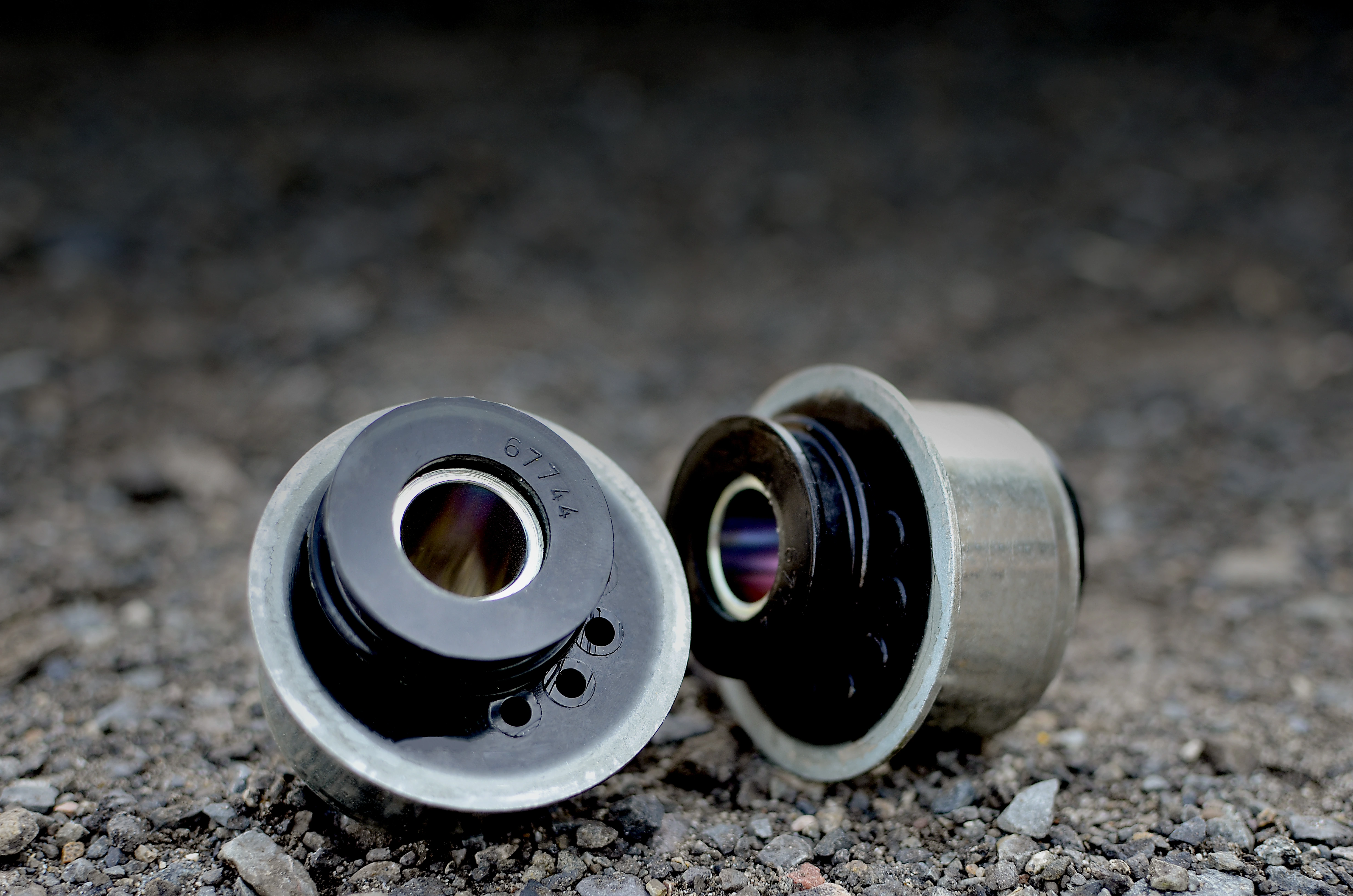
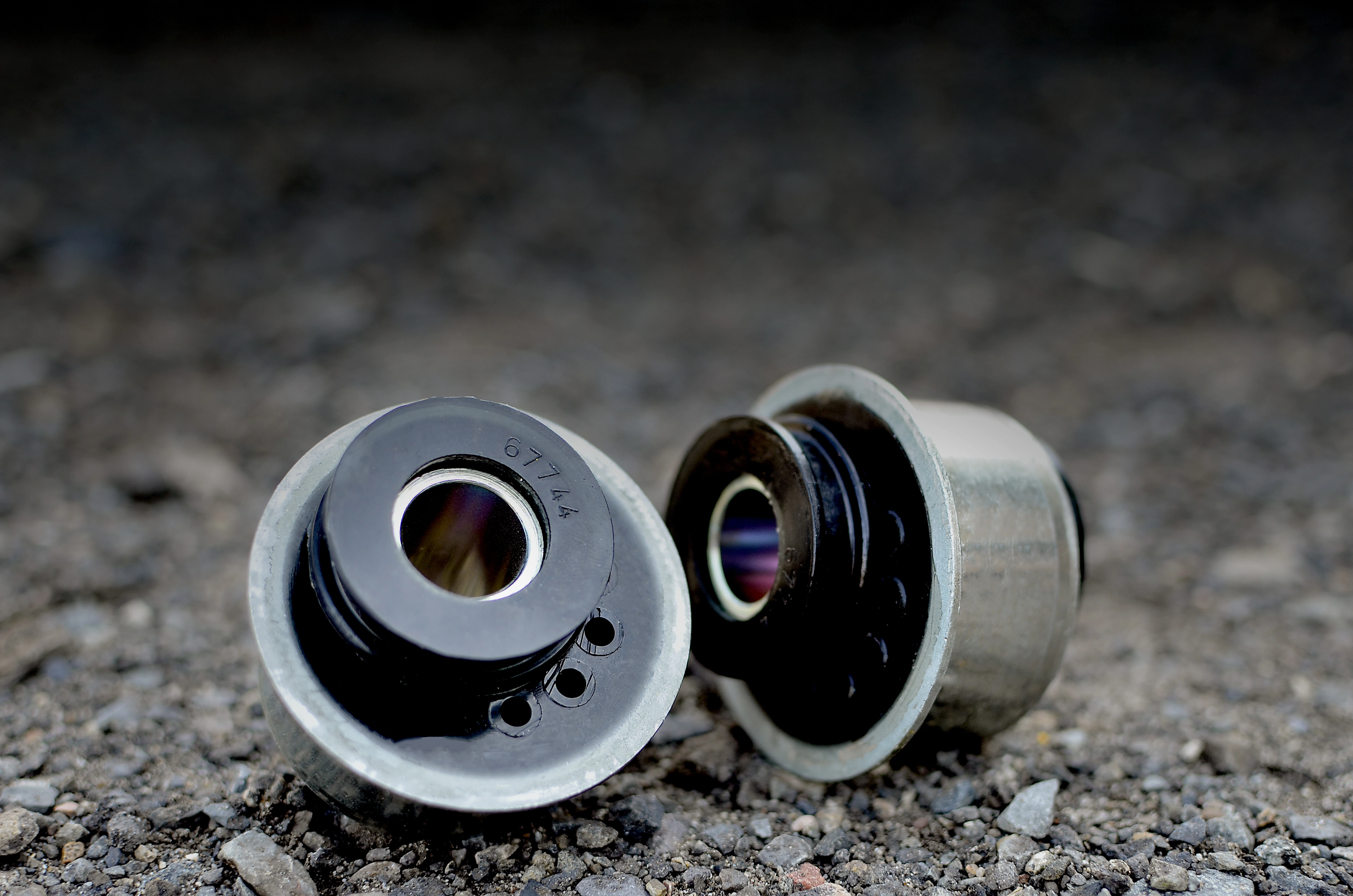
Polyurethane vs rubber bushes compared
|
Factor |
Rubber bushes |
Whiteline polyurethane bushes |
|
Geometry under load |
More deflection |
Holds steadier |
|
Steering response |
Softer |
Sharper, more direct |
|
Noise and vibration isolation |
Very high |
Good, a little more road feel |
|
Resistance to heat, oil and UV |
Lower |
Higher |
|
Lifespan in Australian conditions |
Can wear relatively quickly |
Long lasting |
|
Installation |
Often needs pressing |
Many designs press in easily |
|
Warranty |
Varies |
Lifetime |
Are poly bushes too harsh for daily driving?
Most drivers find the opposite, because a good set of polyurethane bushes feels connected rather than harsh, because the difference comes mainly from reduced slop rather than added stiffness over bumps. We design each bush for its specific location, so places that need precision get it, while places that affect ride comfort keep a little more compliance.
If you want the absolute quietest ride with no extra road feel at all, new rubber will give you that, but you’ll trade away precision and replace them again down the track.
Why polyurethane suits Australian roads and conditions
Australian driving is tough on rubber. High summer temperatures cook engine bay and exhaust-adjacent bushes, long country drives rack up the kilometres, and corrugated and potholed roads work the suspension constantly. Polyurethane handles heat and repeated loading far better, so it keeps its shape and properties for longer. That’s a big part of why we back our polyurethane bushes with a lifetime warranty.
Where to start upgrading
The front lower control arm bushes are usually the biggest single improvement, because they affect steering precision and braking stability. Sway bar bushes come next, then rear arm and trailing arm bushes, subframe mounts and, on cars with independent rear suspension, diff bushes. For the biggest overall gain, combine bushes with sway bars and springs in one of our performance suspension kits.
How to find the right bushes for your car
Search by vehicle to see every bush location we offer for your make and model, from individual bushes to complete kits. Working on a classic or a custom build? Our bush size search lets you find bushes by inner diameter, outer diameter and length.
FAQs
Looking for more information about polyurethane bushes? Below we answer the most commonly asked questions
Are polyurethane bushes better than rubber?
Do poly bushes make the ride harsh?
How long do polyurethane bushes last?
Do poly bushes squeak?
Which bushes should I replace first?
Do I need a wheel alignment after fitting new bushes?
Upgrade from rubber and do the job once with our polyurethane suspension bushes.


