
 AU
 United Kingdom
 Europe
 United States

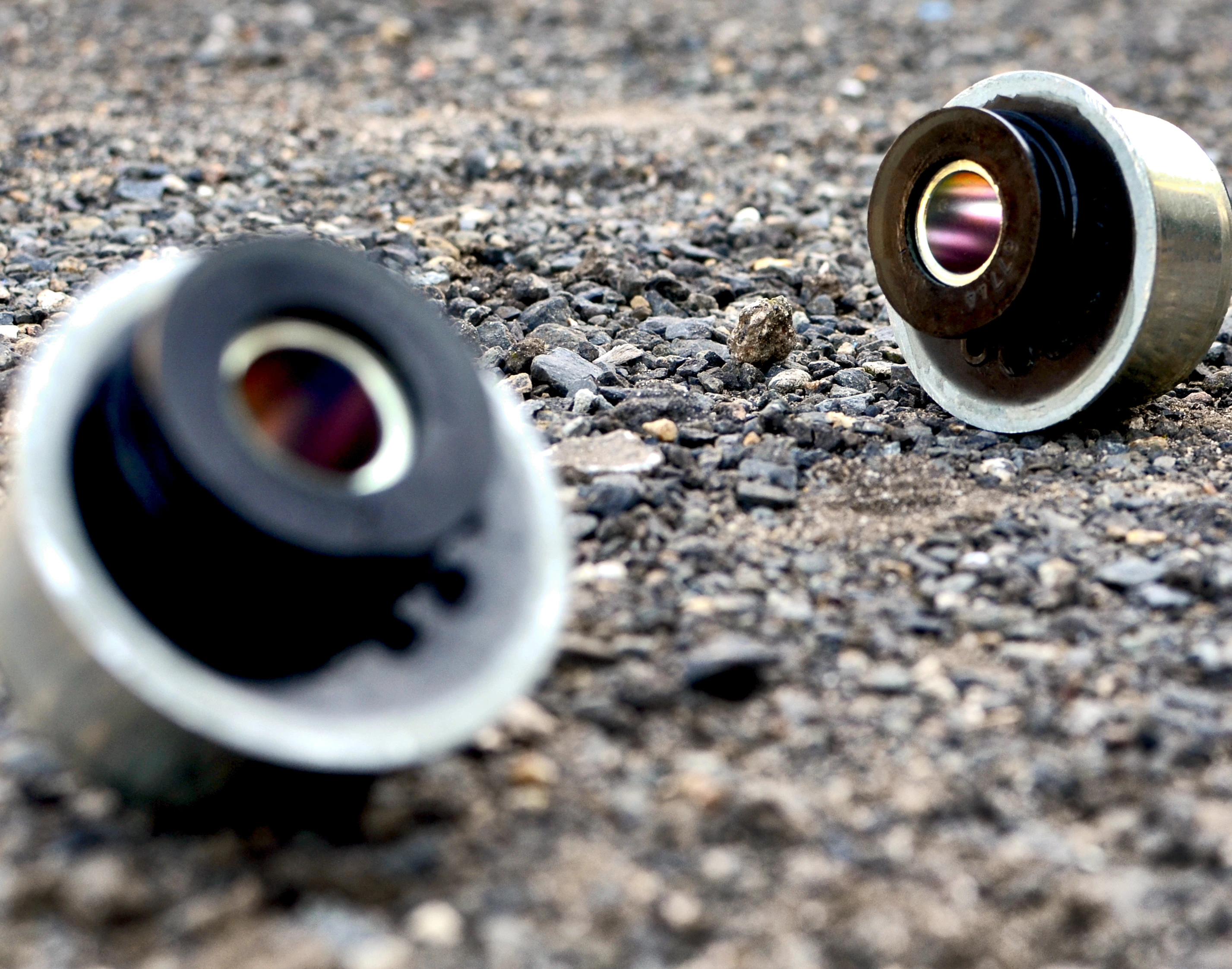

bumps, vague or wandering steering, pulling or shudder under braking, extra body roll, rear end looseness, uneven tyre wear and vibration through the wheel or floor. A visual check for cracked rubber, a pry bar test for play and a slow drive over rough roads will usually confirm it.
Bushes don’t fail overnight, because they wear slowly, so most owners get used to a car that’s a little noisier and a little looser every year without realising how far it’s drifted from new. Catching worn bushes early saves tyres, protects ball joints and shocks, and brings back the tight, precise feel the car should have. Here’s how to spot the signs, check the bushes yourself and fix them properly with our polyurethane suspension bushes.
The most common signs of worn bushes
Clunks and knocks over bumps
When bushes wear, metal parts can move and touch where they shouldn’t. A dull clunk over speed humps, potholes and driveway entrances is often the first thing owners notice.
Vague or wandering steering
Worn control arm bushes let the wheel shift under load. The car may follow ruts and grooves, drift on the highway or need constant small corrections at the wheel.
Pulling or shudder under brakes
The rear bush on the front lower control arm is a common culprit. As it wears, the wheel moves backwards under braking, causing the car to pull or the steering wheel to shudder.
More body roll and a floaty feel
Worn sway bar bushes and subframe mounts let the car lean more in corners and feel less settled over undulations.
A loose rear end
On cars with independent rear suspension, worn trailing arm, subframe or diff bushes can make the rear feel vague, shift under acceleration or cause wheel hop.
Uneven tyre wear
If the alignment moves around under load, tyres can wear unevenly even after a fresh wheel alignment.
Symptoms and the bushes most likely to blame
|
Symptom |
Likely worn bushes |
|
Clunk over bumps |
Sway bar bushes, links, control arm bushes |
|
Wandering on the highway |
Front control arm bushes |
|
Pull or shudder under braking |
Front lower control arm rear bush |
|
Extra body roll |
Sway bar bushes |
|
Loose or shifting rear |
Trailing arm, subframe or diff bushes |
|
Wheel hop under acceleration |
Rear subframe, trailing arm or diff bushes |
|
Leaf spring clunk on a ute or 4x4 |
Spring eye or shackle bushes |
|
Uneven tyre wear |
Control arm bushes |
How to check your bushes
Look for visible damage
With the car safely supported, inspect each bush for cracks, tears, rubber that’s separated from its sleeve or rubber that’s bulged out of its housing. Oil-soaked rubber is another bad sign, because oil breaks rubber down quickly.
Check for play
Use a pry bar to gently lever between the arm and its mount. A healthy bush allows very little movement, while a worn one will let the arm shift noticeably.
Listen on a test drive
Drive slowly over speed humps and rough bitumen with the windows down and the radio off. Brake firmly on a safe, straight road and feel for pulling or shudder.
Check your tyres
Run your hand across the tread and look for uneven wear on the inside or outside edges, or feathering across the blocks.
If you’re unsure, a suspension specialist can load each component and check it properly.
Why worn bushes are worth fixing quickly
Worn bushes put extra load on ball joints, tie rod ends and shocks, they chew through tyres and they reduce stability in an emergency stop or swerve. Replacing them promptly protects the rest of the suspension and makes the car safer and more enjoyable to drive.
Replace with rubber or upgrade to polyurethane?
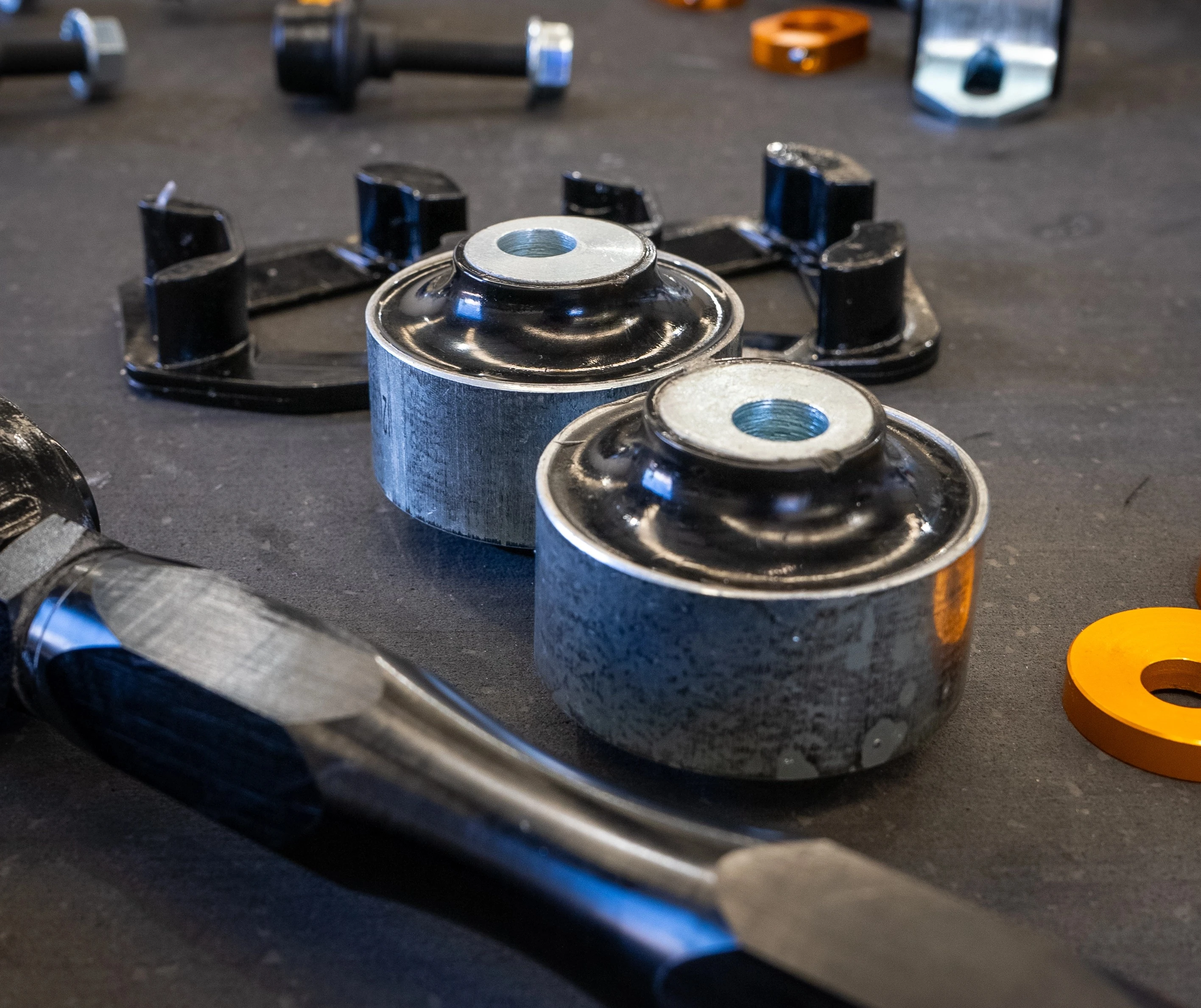
New rubber restores factory feel, but it will degrade the same way again. Polyurethane holds the geometry more precisely, resists heat, oil and UV, and lasts far longer. Our polyurethane bushes carry a lifetime warranty, so it’s a job you only need to do once. Replace bushes in pairs across the axle, and book a wheel alignment after fitting control arm or subframe bushes.
FAQs
Looking for more information about worn suspension bushes? Below we answer the most commonly asked questions
What are the signs of worn suspension bushes?
How can I check my bushes at home?
Can worn bushes cause tyre wear?
Is it safe to drive with worn bushes?
Should I replace bushes in pairs?
Do I need a wheel alignment after replacing bushes?
Fix worn bushes for good with our polyurethane suspension bushes, backed by a lifetime warranty.


