
 AU
 United Kingdom
 Europe
 United States


Understeer is when the front tyres lose grip first and the car runs wide of your line. Oversteer is when the rear tyres lose grip first and the tail steps out. Both come down to how grip is shared between the front and rear axles, and both can be tuned with sway bars, springs, bushes and wheel alignment.
Every car has a handling personality. Some push their nose wide when you get ambitious, others feel eager to swing the rear around. Understanding understeer and oversteer is the first step to tuning that personality to suit how you drive. Here’s what each one means, what causes it, and how the parts in our performance suspension kits change the balance.
What is understeer?
Understeer happens when the front tyres reach their grip limit before the rears. You turn the wheel, but the car turns less than you asked and heads towards the outside of the corner. Adding more steering usually makes it worse, because the front tyres are already sliding.
Most road cars are set up to understeer at the limit. It’s predictable and the natural reaction of lifting off the throttle tends to fix it. The downside is a car that feels lazy and nose-heavy when you want it to turn.
What is oversteer?
Oversteer works the opposite way, because the rear tyres run out of grip first and the back of the car slides wide, so the car turns more than you asked. It can be caused by too much throttle in a rear-drive car, lifting off sharply mid-corner, or a rear end that’s much stiffer than the front.
Mild, controlled oversteer can make a car feel agile and quick to rotate. Sudden oversteer, especially in the wet, is what catches drivers out.
Understeer vs oversteer at a glance
|
|
Understeer |
Oversteer |
|
Which end loses grip first |
Front |
Rear |
|
What the car does |
Runs wide, pushes |
Tail slides out, rotates |
|
Common in |
Front-wheel drive, most road cars |
Rear-wheel drive under power, stiff rear setups |
|
Driver feel |
Lazy, nose-heavy |
Agile, can feel nervous |
|
Typical suspension fix |
Stiffer rear sway bar, more front camber |
Softer rear sway bar, stiffer front |
How does suspension change the balance?
Balance comes down to how much roll stiffness each end of the car has. The stiffer end carries more of the load transfer in a corner, which reduces its grip. That gives you a simple tuning rule. To reduce understeer, add rear roll stiffness or reduce front roll stiffness. To reduce oversteer, do the opposite.
Sway bars are the main tuning tool
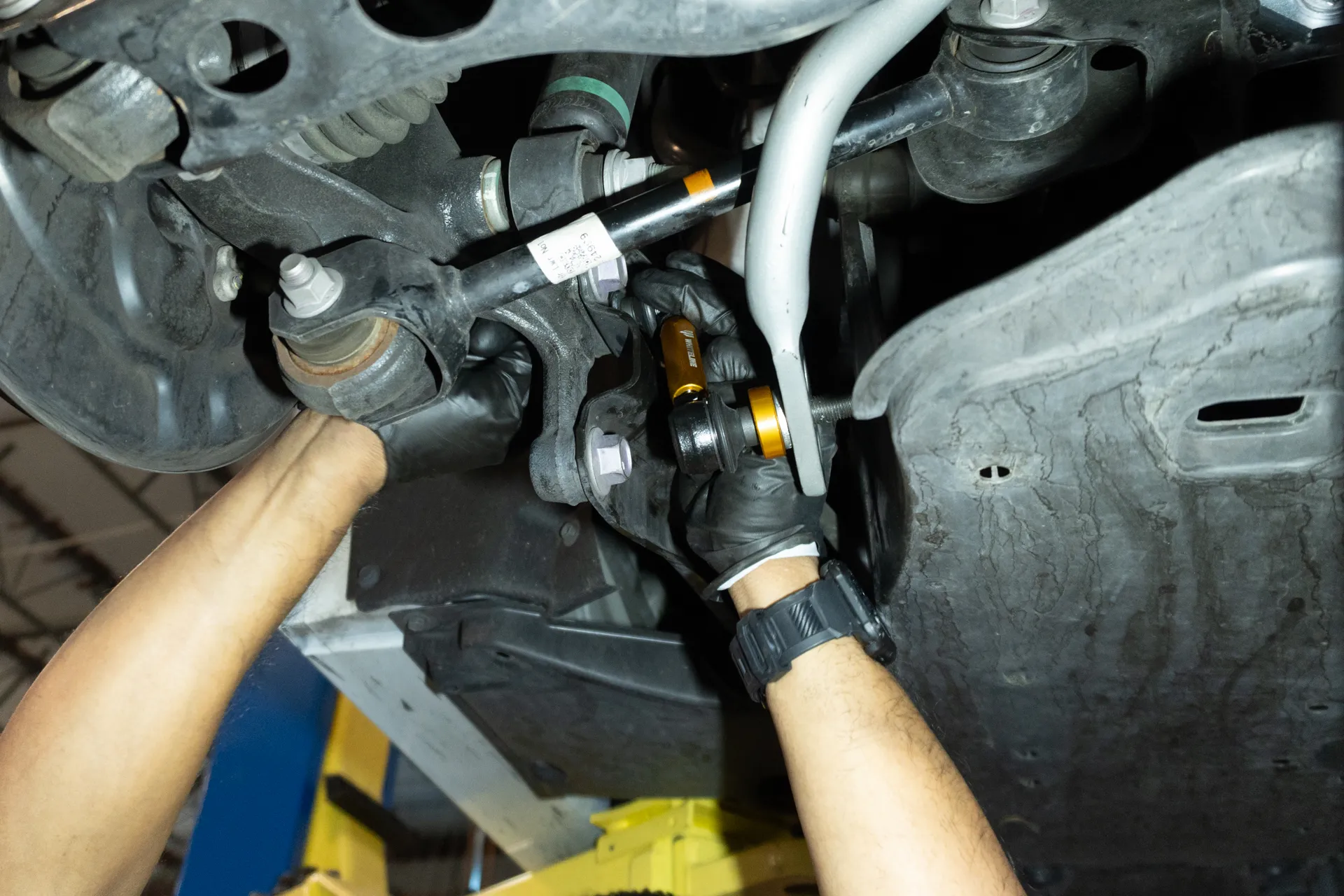
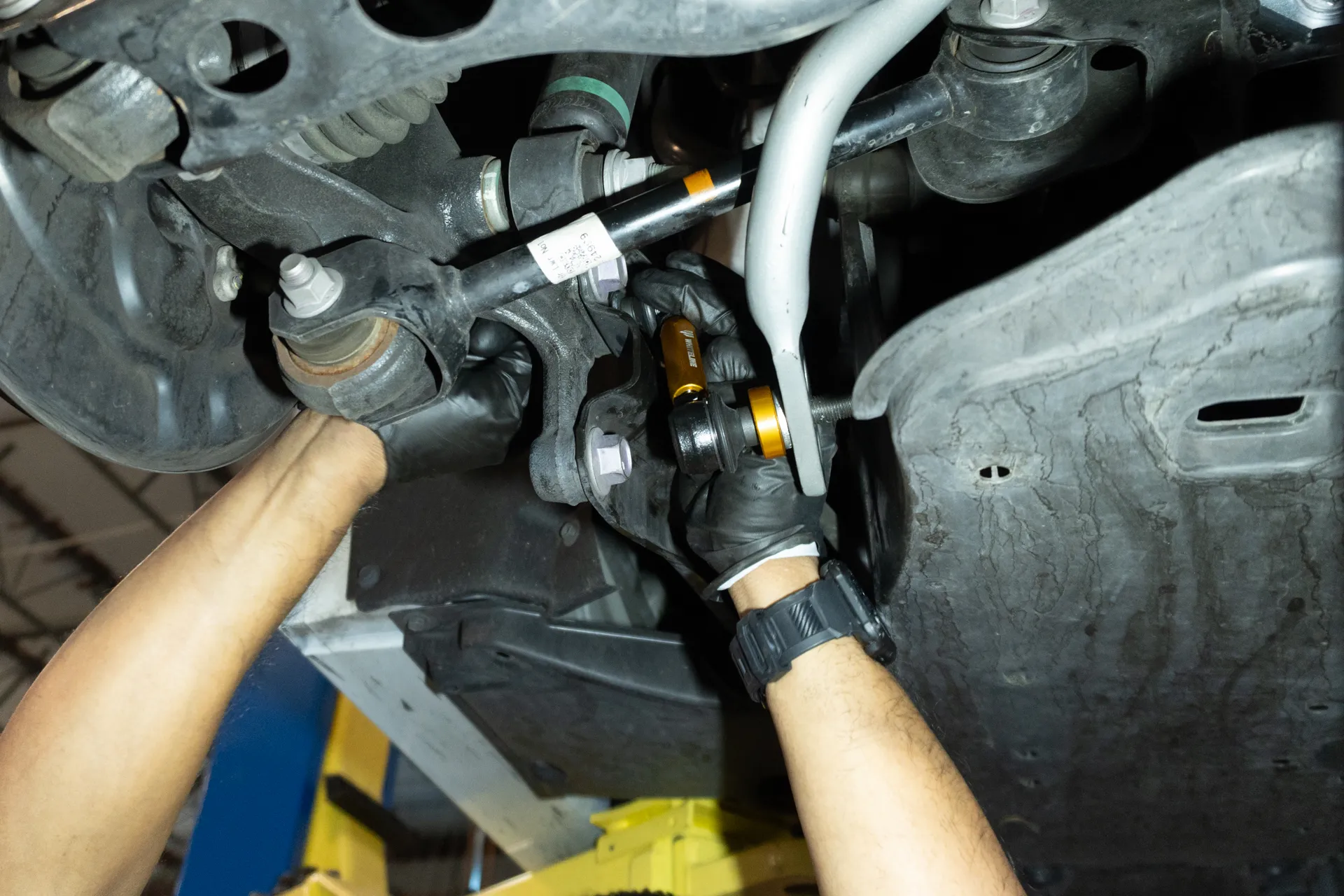
Adjustable sway bars let you move roll stiffness between the front and rear without changing springs. Our 2, 3 and 4-point adjustable bars give you a range of settings so you can tune the car for street, wet weather or the track.
Wheel alignment fine tunes grip
More negative camber at one end increases that end’s cornering grip. Toe settings affect response and stability, with a little rear toe-in helping calm a nervous rear.
Bushes keep the balance consistent
Soft rubber bushes let alignment move as the car loads up, so the balance changes mid-corner. Polyurethane bushes hold the geometry steady so the car behaves predictably.
Which balance should you aim for?
For the road, a car that’s close to neutral with a mild understeer bias at the limit is ideal. It turns in eagerly, holds a tight line and stays forgiving if you make a mistake. On a track or a closed course, many drivers prefer a more neutral setup that rotates willingly in slow corners.
That’s how we tune our kits. The springs, adjustable sway bars, links and bushes are matched for each platform so the car starts from a balanced, confidence-inspiring baseline, with adjustment to shift it either way.
FAQs
Looking for more information about understeer and oversteer? Below we answer the most commonly asked questions
Is understeer or oversteer safer?
How do I reduce understeer?
How do I reduce oversteer?
Does front-wheel drive always understeer?
Can lowering springs cause oversteer?
What is lift-off oversteer?
Tune your car’s balance with confidence. Explore our performance suspension kits, or start with adjustable sway bars.


