
 AU
AU United Kingdom
 Europe
 United States
Is a suspension lift legal in Australia on a Subaru or a RAV4
Yes, within limits. The Australian Light Vehicle Modification Code, VSB14, is the national basis for what you can change, and the widely applied guidance allows a total increase in vehicle height of up to 50 mm without certification. Suspension and tyres both count toward that total, and your state road authority has the final say.
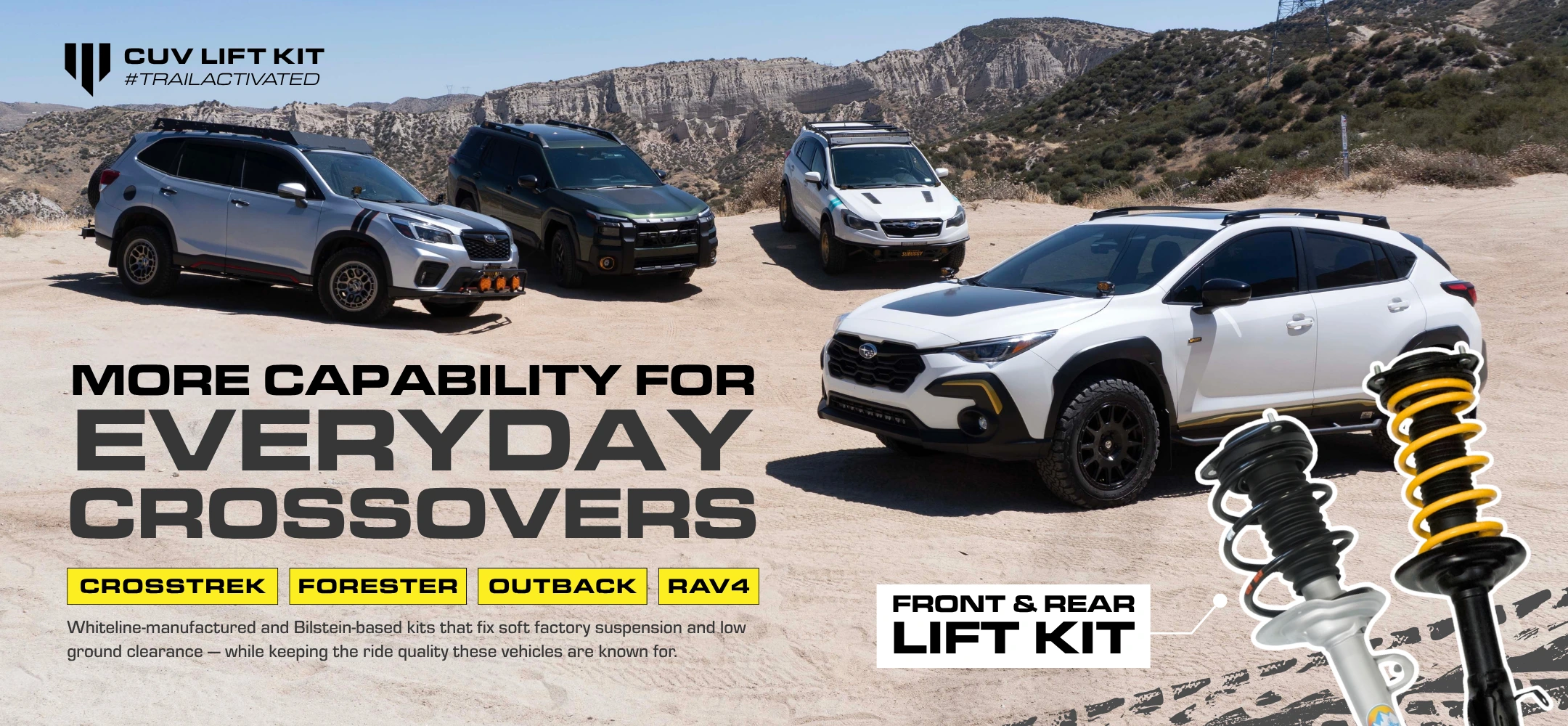
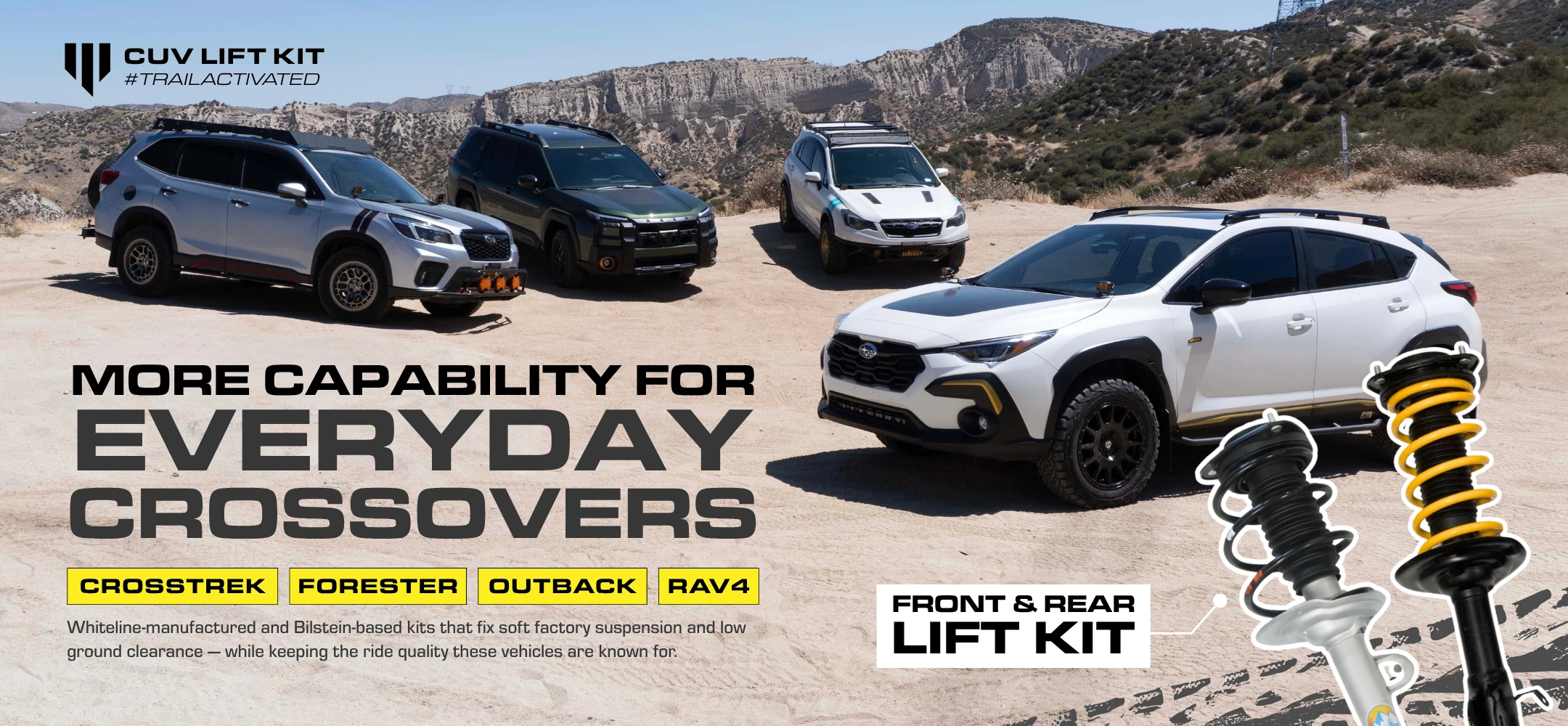
If you have been told a lift kit is legal in Australia only with an engineer's certificate, or that any lift puts your rego at risk, both claims are wrong often enough to be useless. We build 4x4 lift kits for wagons that stay registered and insured, so our Whiteline Crosstrek and RAV4 kits are specified at 30 mm front and rear, comfortably inside the commonly applied threshold rather than at the edge of it.
What VSB14 is, and who enforces it
VSB14 is the Australian Light Vehicle Modification Code, published by the federal Department of Infrastructure and Transport. It sets out nationally agreed guidance for modifying light vehicles, including suspension and ride height, and it is the document your engineer, fitter and inspector all work from.
VSB14 is not itself the law you are policed under. Each state and territory road authority adopts and administers it in its own way, which is why a modification signed off without fuss in one jurisdiction can attract a defect notice in another. Transport for NSW, VicRoads, Queensland's Department of Transport and Main Roads and their counterparts elsewhere each publish their own interpretation and certification pathway.
Use VSB14 for the principle, then confirm the detail with the road authority in the state where the vehicle is registered. We will not print a table of state rules here, because they change and a stale table on a suspension company's website is what gets an owner into trouble.
The 50mm threshold, and why tyres count toward it
The figure most owners have heard is 50mm: the widely applied guidance allows a total increase in vehicle height of up to 50mm without certification, provided the vehicle otherwise complies. What catches people out is that the 50 mm is a total rather than a suspension allowance.
Two things feed into it. Suspension changes raise the body directly, so a 30mm lift kit contributes 30mm. Larger diameter tyres raise the vehicle by half the diameter increase, because the extra rubber is split between the top and the bottom of the tyre. A tyre 30mm larger lifts the vehicle by roughly 15 mm.
Add those together and the arithmetic decides your answer. A 30mm lift on factory sized tyres leaves useful headroom, while the same lift under a tyre 45mm larger in diameter puts you near 52mm and over the line. Some road authorities also take their own view on how much of the total may come from suspension alone, so confirm your figure locally before you commit to a tyre size.
A worked example on a Crosstrek
Take a Crosstrek GU on the standard 225/60R17. Our WLK-SUB001 kit adds 30 mm. A 225/65R17 all-terrain increases overall diameter by roughly 22mm, contributing about 11 mm of height, for a measured increase near 41 mm. Step up to a 235/65R17, which adds roughly 35mm of diameter and about 18mm of height, and you are near 48mm with almost nothing in reserve.
What contributes to measured height increase, and what to check before you fit
|
Change |
How it counts toward measured height |
What to check before you fit |
|
Suspension lift kit, 30mm front and rear |
Counts in full, so 30mm |
The kit is listed for your exact model and build year |
|
Taller tyre, same wheel diameter |
Half the overall diameter increase |
Diameter change against the placard size |
|
Wheel spacers or reduced offset |
Nothing for height |
Track width rules and bearing load, confirm locally |
|
Body or subframe spacers |
Counts in full |
Whether that pathway is permitted in your state at all |
|
Uprated rear springs for touring load |
Only the ride height change they produce |
Rear load rating and laden ride height |
Measure the vehicle before and after, at the same corner, unladen, on level ground, at placard tyre pressure. A number you recorded yourself beats a number you assumed.
What certification means and when you need it
Certification is a licensed engineering signatory inspecting the modified vehicle against the relevant code and issuing a modification certificate. Depending on the state, that certificate may then need to be lodged and the registration record updated.
You are generally heading toward certification when the total height increase exceeds your state's threshold, when the modification alters steering or suspension geometry beyond what the code allows, or when the change is not covered by the standard codes at all. A modest lift with correct geometry hardware and a proper alignment is the least likely case to need it. A tall lift stacked with oversized tyres on a unibody wagon is the most likely.
Our kits are built for the first case. The Crosstrek GU kit ships with a rear subframe spacer kit and front camber correction, the RAV4 A50 kit includes front camber correction, and both require a front and rear wheel alignment, which is how we hold geometry close to where the factory put it.
Rego, insurance and the cost of getting it wrong
Two things go wrong when a modification sits outside the rules. The first is a defect notice, which puts the vehicle off the road until it is rectified and inspected. The second is quieter and more expensive: comprehensive policies routinely require modifications to be declared, and an undeclared one can give an insurer grounds to reduce or refuse a claim.
Ring your insurer before you fit, tell them the lift height and tyre size, and have it noted on the policy. Keep the parts invoice, the fitting invoice and the alignment report with your service records, because that paperwork turns "it is modified" into "it is modified correctly".
FAQs
Looking for more information about suspension lift kits and Australian regulations? Below we answer the most commonly asked questions
Is a 30 mm suspension lift legal in Australia?
What is VSB14?
Do bigger tyres count toward the 50 mm limit?
Do I need engineering certification for a lift kit?
Does a lift kit affect my car insurance in Australia?
Which Whiteline lift kits are available in Australia?
What do the Australian kits cost?
Lift it once, lift it properly. See our 30 mm front and rear kit for the 2024 to 2026 Subaru Crosstrek GU (WLK-SUB001)


