
 AU
AU United Kingdom
 Europe
 United States
Coilovers or lowering springs for a Tesla Model 3: which is better to buy?
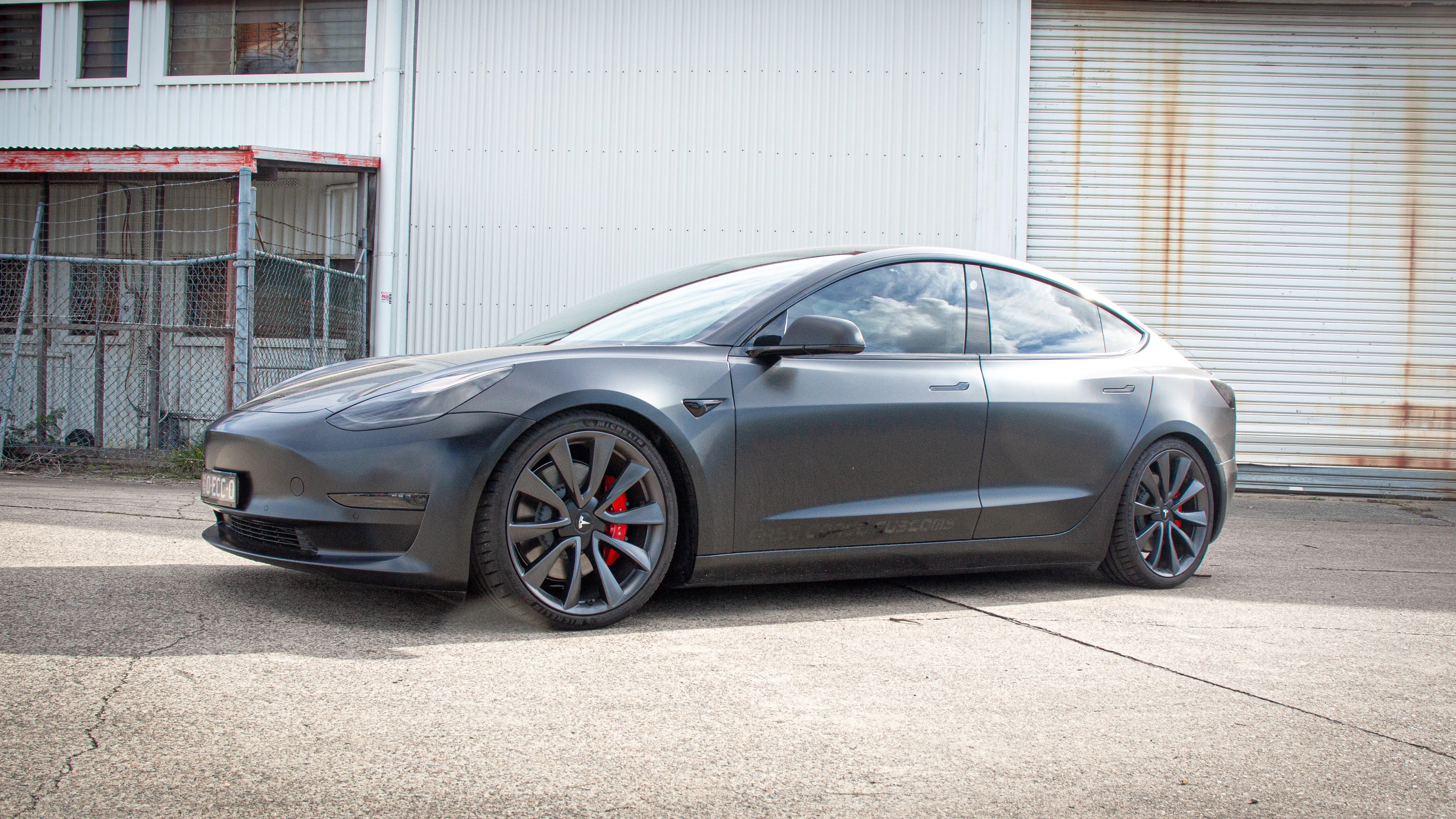
For a street driven Model 3, lowering springs paired with adjustable sway bars beat coilovers on value and usually on outcome. Coilovers cost between $1707.51 and $4553.36 in this segment and their real advantage is adjustable damping, which matters on a track car. Most owners want flat cornering and better stance, and springs plus bars deliver that.
What each one actually gives you
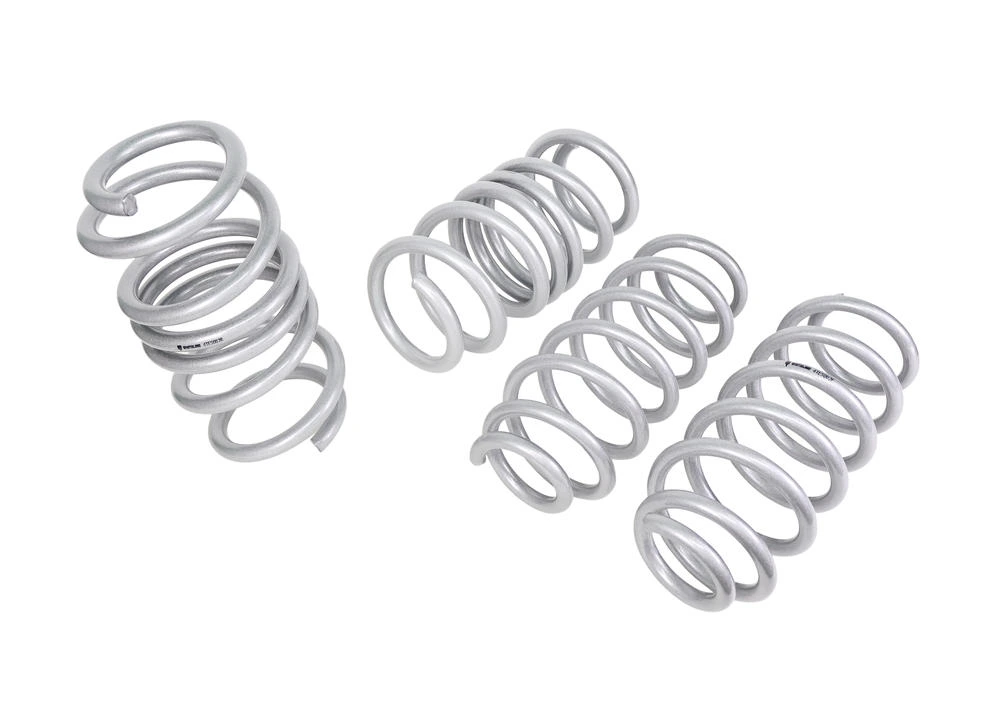
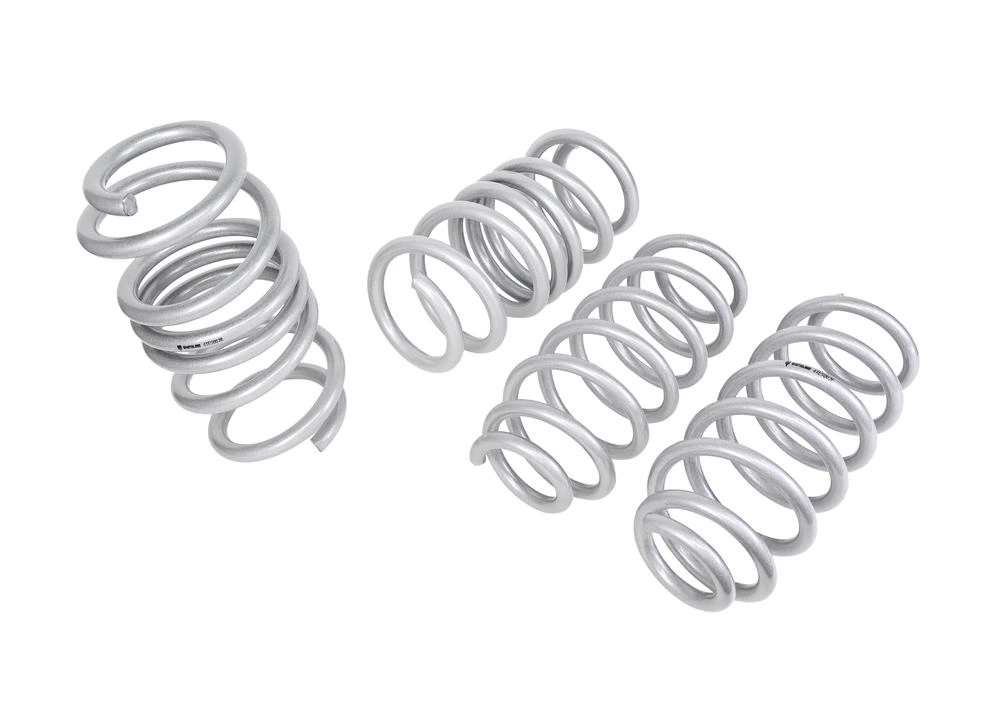
Lowering springs replace the factory coil springs. You choose a drop and a spring rate, you keep your existing dampers, and the job is done in a few hours. Whiteline's Model 3 kit drops the car 20mm front and rear on 4.7kg/mm (263lb/in) front and 8.0kg/mm (450lb/in) rear rates, engineered for balance with the OEM damper.
Coilovers replace the spring and the damper as one assembly, usually with ride height adjustment on a threaded body and, on the better units, adjustable damping. You are buying control over how fast the suspension moves, not just how far it sits.
That distinction is the whole decision. Springs set the car's height and stiffness. Dampers control the rate at which the car responds to inputs. If your complaint is about how the car sits and how much it leans, springs and bars address it. If your complaint is about how the car settles after a bump at speed, you are in damper territory.
The cost comparison people do not make
|
Option |
What you get |
|
20mm drop, matched front and rear rates, Limited Lifetime warranty |
|
|
Whiteline Grip Series Stage 1, GS1-TES001 |
20mm springs plus front and rear adjustable sway bars plus drop links |
|
Aftermarket comfort coilovers |
Spring, damper, height adjustment |
|
Adjustable damping coilovers |
Spring, damper, height and damping adjustment |
|
Premium coilovers |
Spring, damper, high specification damping |
Prices for competitor coilovers are from published US retail listings in the segment as of August 2026.
The Grip Series kit is the interesting line in that table. For roughly half the price of entry level coilovers you get the drop, matched spring rates, and both sway bars with adjustable drop links. Because the bars are 3 position adjustable you can retune the car's balance afterwards at no cost, which is a form of adjustability coilovers do not offer at all.
Where coilovers genuinely win
Not going to pretend otherwise, because there are cases where a coilover is the correct answer.
Track use: Repeated heat cycles and sustained cornering loads ask more of a damper than any spring can compensate for. Adjustable damping lets you tune for a circuit.
Fine ride height control: A threaded body sets height in millimeters and lets you corner balance the car. A spring gives you one height.
Tired dampers already: If your factory dampers are worn, a coilover replaces both items at once and a spring swap alone will disappoint you.
Very low stance: If the goal is a dramatic drop rather than a functional one, only a coilover designed for it will do the job without destroying the ride.
Where springs and bars win
Cost: Three to nine times cheaper for the outcome most owners actually want.
Ride quality on real roads: A modest drop on matched rates over factory dampers rides better than a poorly set up coilover, and a poorly set up coilover is a common outcome because most people never adjust them after installation.
Reliability and warranty: Fewer moving parts, nothing to seize, nothing to re valve. Whiteline covers the springs under a Limited Lifetime warranty in the US.
Handling gains per dollar: This is the point competitors selling coilovers do not raise. Body roll is controlled by sway bars, not dampers. A stiffer rear bar on this car runs between 82.1% and 154.2% stiffer than the factory part depending on setting, and it changes the way the Model 3 corners more than a damper change will. Spending a thousand dollars on coilovers while leaving the soft factory bars in place is a very common and very expensive mistake.
Simplicity of install. Four hours for the springs, two hours for a bar, against a full corner strip for coilovers.
1. Sway bars first if handling is the complaint. Biggest change per dollar, no ride penalty, no alignment
required on the front bar per Whiteline's US fitment data.
2. Lowering springs next for stance, center of gravity and body control. Budget for the front alignment.
3. Coilovers only if you are tracking the car, your dampers are worn out, or you want a drop beyond what a
spring should deliver.
Do it in that order and most owners find they never need step three. Do it in reverse and you spend the most money on the least noticeable change.
What about the Model 3 Performance adaptive dampers?
Later Performance cars use adaptive damping, and swapping to a coilover means giving that up or adding a canceller module to stop the car reporting a fault. Competitor listings in this segment price such modules around $550 on top of the coilover. Springs and sway bars leave the adaptive system in place and working, which is a real advantage that rarely makes it into a coilover sales page.
Frequently asked questions
Looking for more information about Tesla Model 3 coilovers and lowering springs? Below we answer the most commonly asked questions
Are coilovers worth it on a Tesla Model 3?
Do lowering springs work with the factory Model 3 dampers?
Which gives a better ride, coilovers or lowering springs?
Can I fit coilovers to a Model 3 Performance with adaptive suspension?
Will springs alone fix body roll on a Model 3?
How much cheaper are springs than coilovers on a Model 3?
Does either option affect the Tesla warranty?
Get the handling without the coilover price
Matched springs, adjustable bars, and a Limited Lifetime warranty on the parts. Shop Whiteline lowering springs, performance sway bars or the complete Grip Series performance suspension kits.
Compare the full range of Whiteline EV suspension upgrades and select your Model 3 to confirm fitment.


