
 AU
AU United Kingdom
 Europe
 United States
Whiteline Control Arms
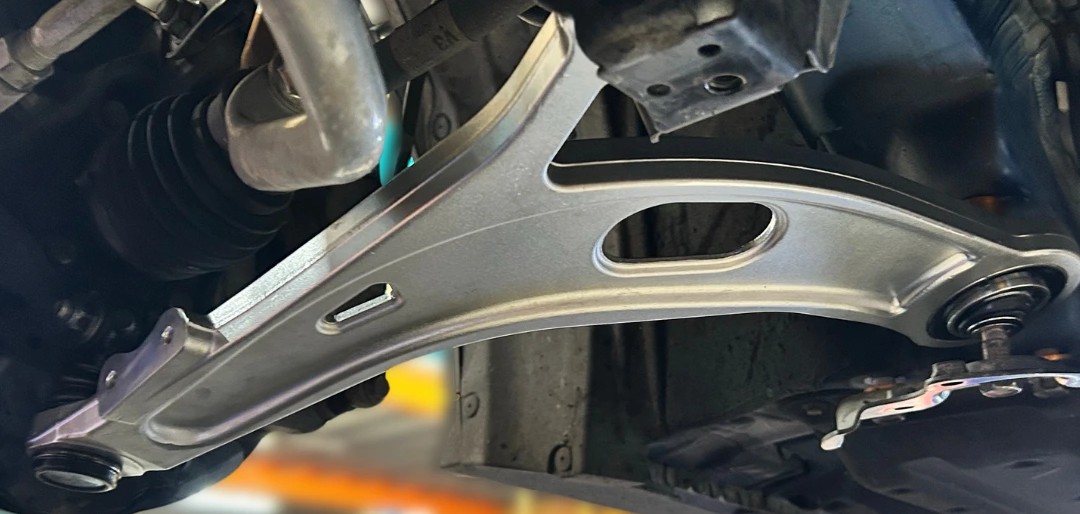
Control arms are one of the most important yet least understood components in a vehicle’s suspension system. They determine how the wheels are positioned relative to the chassis and how those wheels move as the suspension compresses and extends. Because of this, control arms have a direct influence on alignment angles, tyre contact, steering response, braking stability, and overall vehicle predictability.
Whiteline Control Arms are designed as geometry-correct suspension components that address the limitations of factory control arms when suspension height, load conditions, or vehicle usage changes. Rather than focusing solely on replacement, Whiteline approaches control arm design from an engineering and systems perspective, ensuring alignment stability, durability, and consistent suspension behaviour over time.
This pillar page explains what control arms do, why their design matters, how different types function, and when upgrading or replacing them becomes necessary. It is intended to provide foundational knowledge for anyone looking to better understand suspension behaviour.
What Are Control Arms?
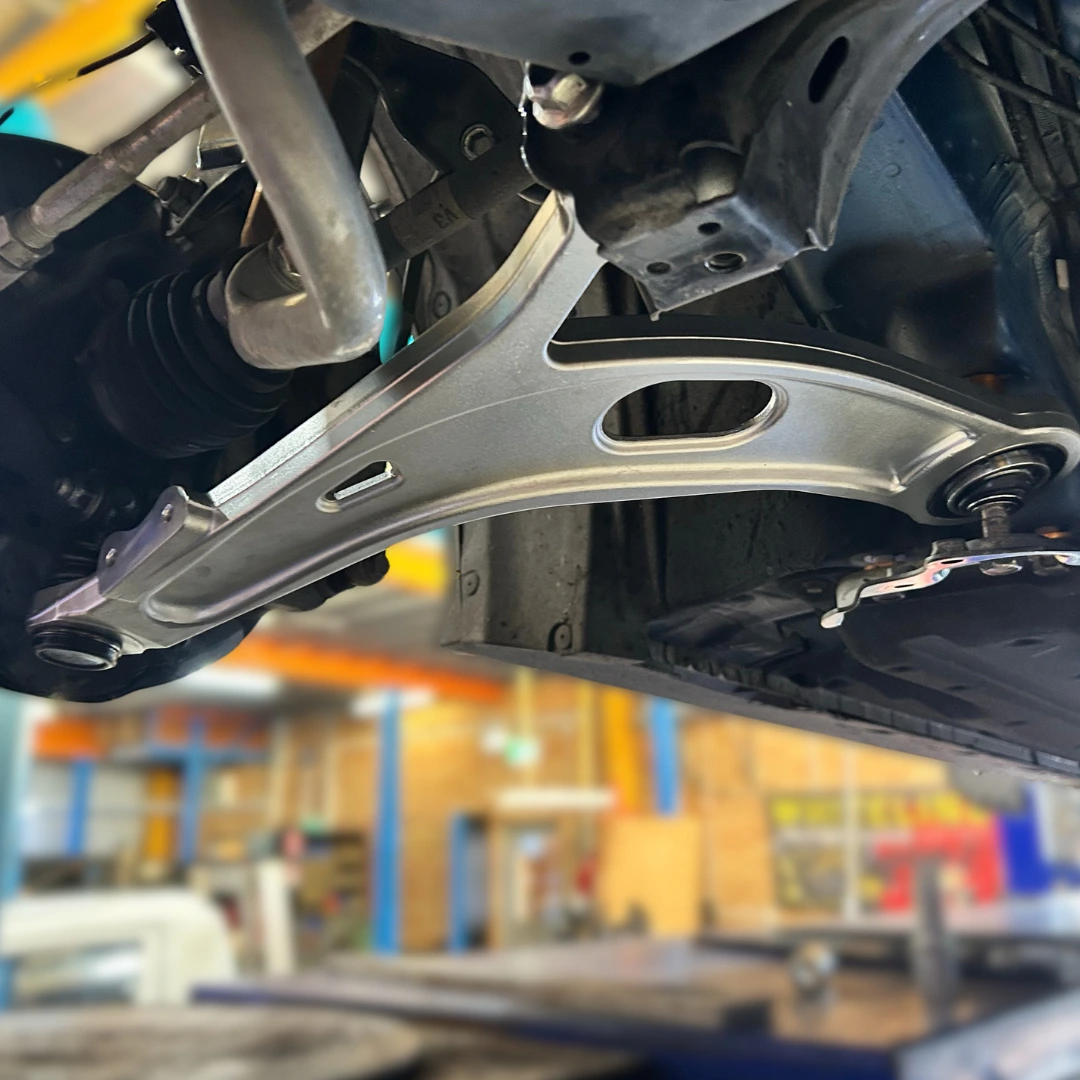
A control arm is a suspension link that connects the wheel hub or steering knuckle to the vehicle chassis. It allows the wheel to move vertically with the suspension while controlling its position laterally and longitudinally. This controlled movement ensures the wheel follows a predictable path throughout suspension travel.
Most independent suspension systems use multiple control arms to locate the wheel precisely. The length of the arm, the position of its mounting points, and the design of its bushings all determine how the wheel moves relative to the chassis.
Because control arms define wheel position, they directly affect camber, caster, and toe angles. These alignment parameters determine how the tyre contacts the road surface and how the vehicle responds to driver inputs.
How Control Arms Affect Vehicle Behaviour
Every force applied to the wheel passes through the control arm. During braking, the wheel is pushed rearward. During acceleration, it is pulled forward. During cornering, lateral forces attempt to move the wheel sideways.
If the control arm flexes or its bushings deform under these loads, the wheel can move independently of the intended suspension geometry. This movement causes alignment angles to change dynamically, often without being detectable during a static alignment check.
Dynamic alignment changes can result in vague steering feel, inconsistent cornering traction, unstable braking behaviour, and accelerated tyre wear. This is why control arm stiffness, geometry, and bushing design are critical to predictable handling.
Why Factory Control Arms Have Limitations
Factory control arms are designed to meet a wide range of priorities. These include ride comfort, noise isolation, manufacturing efficiency, durability under normal use, and cost control. They are typically optimised for standard ride heights and average driving conditions.
Once a vehicle’s suspension is modified, or when it is subjected to higher loads than originally intended, these factory compromises can become limitations. Common issues include reduced alignment adjustment range, excessive bushing deflection, and difficulty maintaining consistent geometry under load.
Even without modification, factory rubber bushings degrade over time. As the rubber softens or cracks, alignment stability is reduced, leading to inconsistent handling characteristics.
Aftermarket control arms, when properly engineered, address these issues by improving geometry, reducing deflection, or allowing additional alignment correction.
Why Factory Control Arms Have Limitations
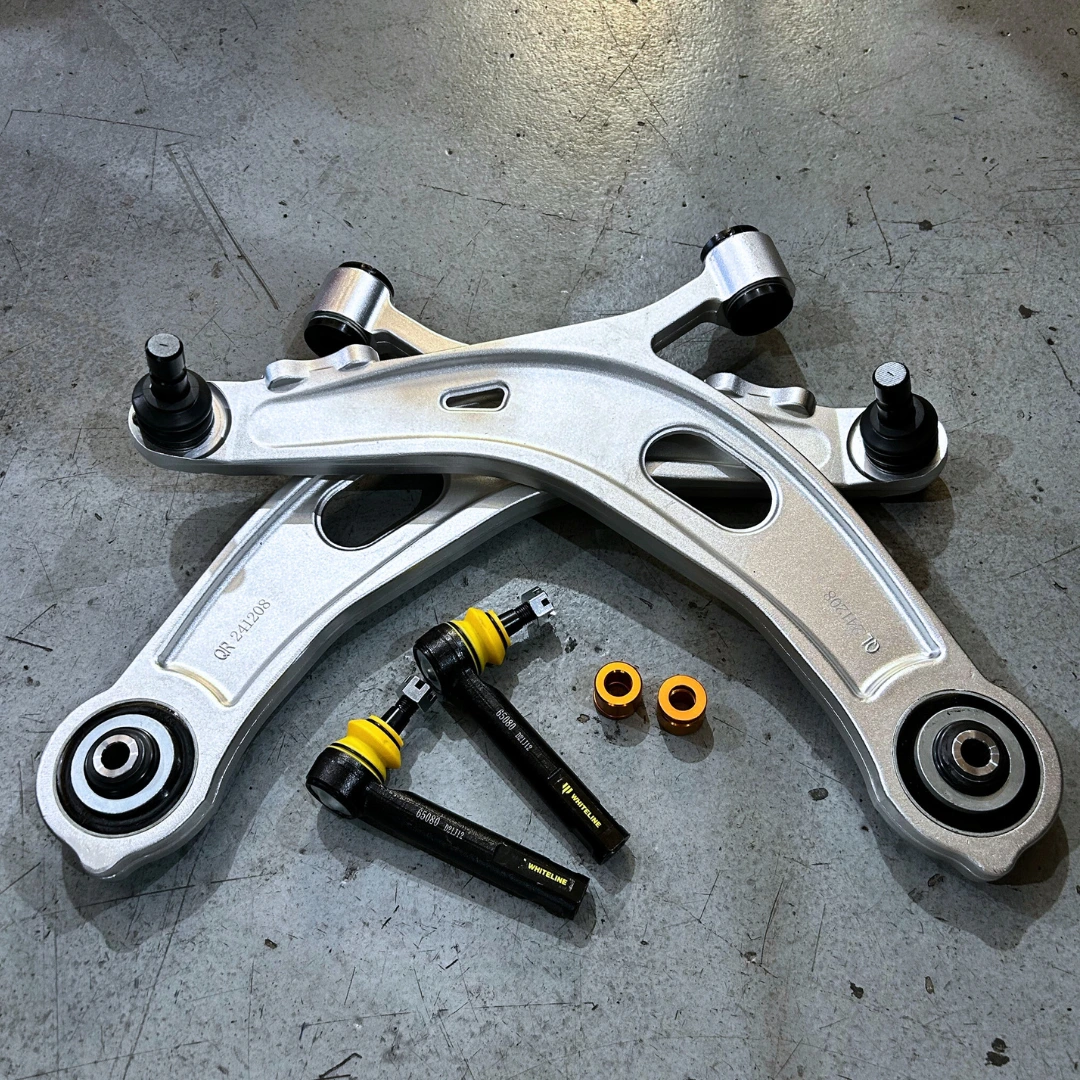
Factory control arms are designed to meet a wide range of priorities. These include ride comfort, noise isolation, manufacturing efficiency, durability under normal use, and cost control. They are typically optimised for standard ride heights and average driving conditions.
Once a vehicle’s suspension is modified, or when it is subjected to higher loads than originally intended, these factory compromises can become limitations. Common issues include reduced alignment adjustment range, excessive bushing deflection, and difficulty maintaining consistent geometry under load.
Even without modification, factory rubber bushings degrade over time. As the rubber softens or cracks, alignment stability is reduced, leading to inconsistent handling characteristics.
Aftermarket control arms, when properly engineered, address these issues by improving geometry, reducing deflection, or allowing additional alignment correction.
Upper Control Arms Explained
Upper control arms are primarily responsible for controlling camber and caster angles. Camber affects how much of the tyre contacts the road during cornering, while caster influences straight-line stability and steering self-centring.
On many vehicles, the factory upper control arm offers limited alignment adjustment. When ride height changes, this limitation can make it difficult or impossible to restore correct alignment.
Upgraded upper control arms are often used to regain alignment control on lowered or lifted vehicles. By revising arm length or mounting position, they allow camber and caster angles to be corrected so the tyre maintains consistent contact with the road.
Whiteline manufactures upper control arms for both front and rear applications where geometry correction or improved durability is required.
Lower Control Arms Explained
Lower control arms typically carry higher loads than upper arms and play a major role in maintaining wheelbase position, braking stability, and lateral strength. They influence how the wheel reacts under acceleration and braking forces.
Because of their load-bearing role, lower control arms must balance strength with controlled movement. Excessive stiffness without proper bushing design can negatively affect ride quality, while excessive compliance can reduce alignment stability.
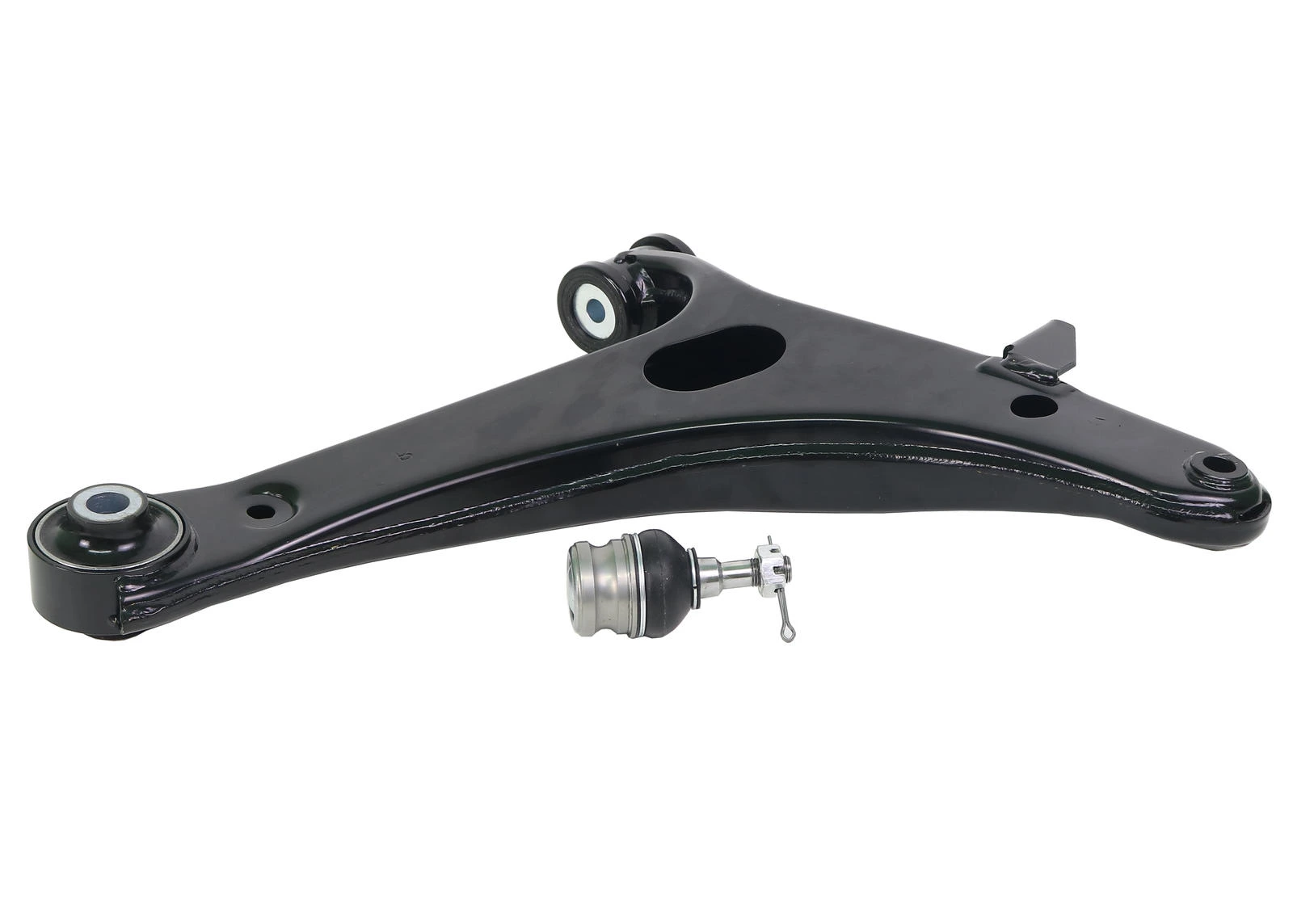
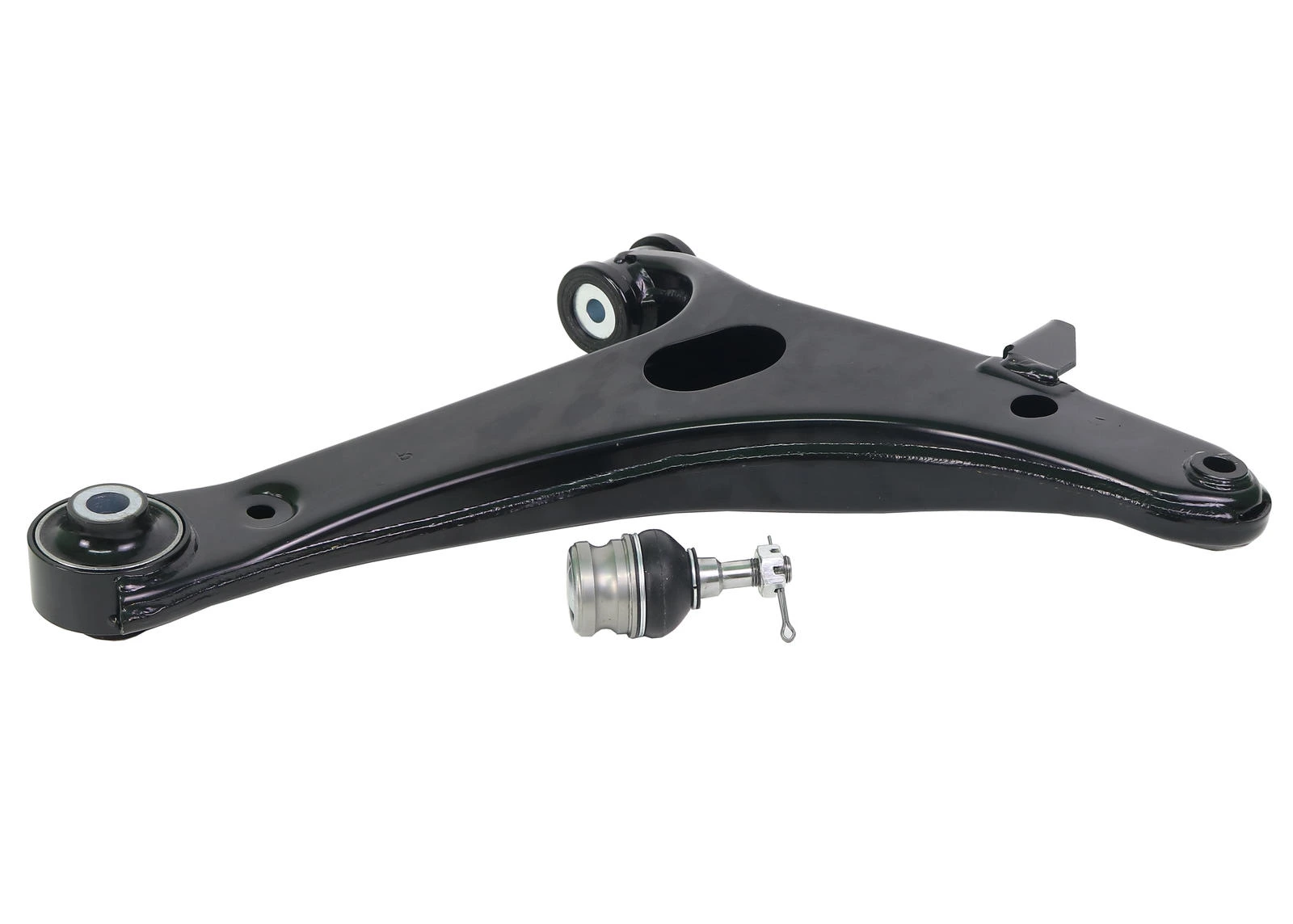
Upgraded lower control arms are commonly used to improve durability, reduce unwanted movement, and maintain consistent wheel positioning under load. Whiteline lower control arms are engineered to address these requirements while maintaining compatibility with factory suspension layouts.
Front Control Arms and Steering Response
Front control arms have a direct and immediate effect on steering feel. Changes to front suspension geometry are often noticeable as soon as the vehicle is driven.
Front control arms influence turn-in response, mid-corner stability, braking confidence, and how clearly steering feedback is transmitted to the driver. Excessive deflection or poor geometry at the front axle can result in vague steering, delayed response, or instability during braking.
Whiteline front control arms are designed to support consistent alignment and predictable steering behaviour across a range of driving conditions.
Rear Control Arms and Vehicle Stability
Rear control arms influence how the rear of the vehicle follows the front during direction changes. They play a key role in corner exit behaviour, straight-line stability, and overall balance.
Poor rear control arm geometry can lead to unpredictable handling, particularly during lane changes or under acceleration. Uneven rear tyre wear is also commonly linked to rear control arm limitations.
Whiteline rear control arms are designed to maintain alignment stability and predictable behaviour at the rear axle, supporting overall vehicle balance.
Front and Rear Axle Coverage
Whiteline Control Arms are available for both front and rear axles. Addressing suspension geometry comprehensively rather than selectively ensures balanced handling characteristics and consistent performance.
Upgrading only one end of the vehicle can sometimes introduce imbalance. Understanding how front and rear control arms interact is essential when planning suspension changes.
Adjustable vs Fixed Geometry Control Arms
Control arms are generally categorised as adjustable or fixed geometry.
Adjustable control arms allow alignment angles to be fine-tuned beyond factory limits. They are particularly useful on modified vehicles where ride height changes have altered suspension geometry significantly.
Fixed geometry control arms use revised dimensions or mounting positions to correct alignment without adjustment. These designs prioritise simplicity, repeatability, and long-term consistency.
Whiteline offers both adjustable and fixed control arms depending on application, recognising that not every vehicle or use case requires the same level of tuning flexibility.
Pairs and Individual Control Arms
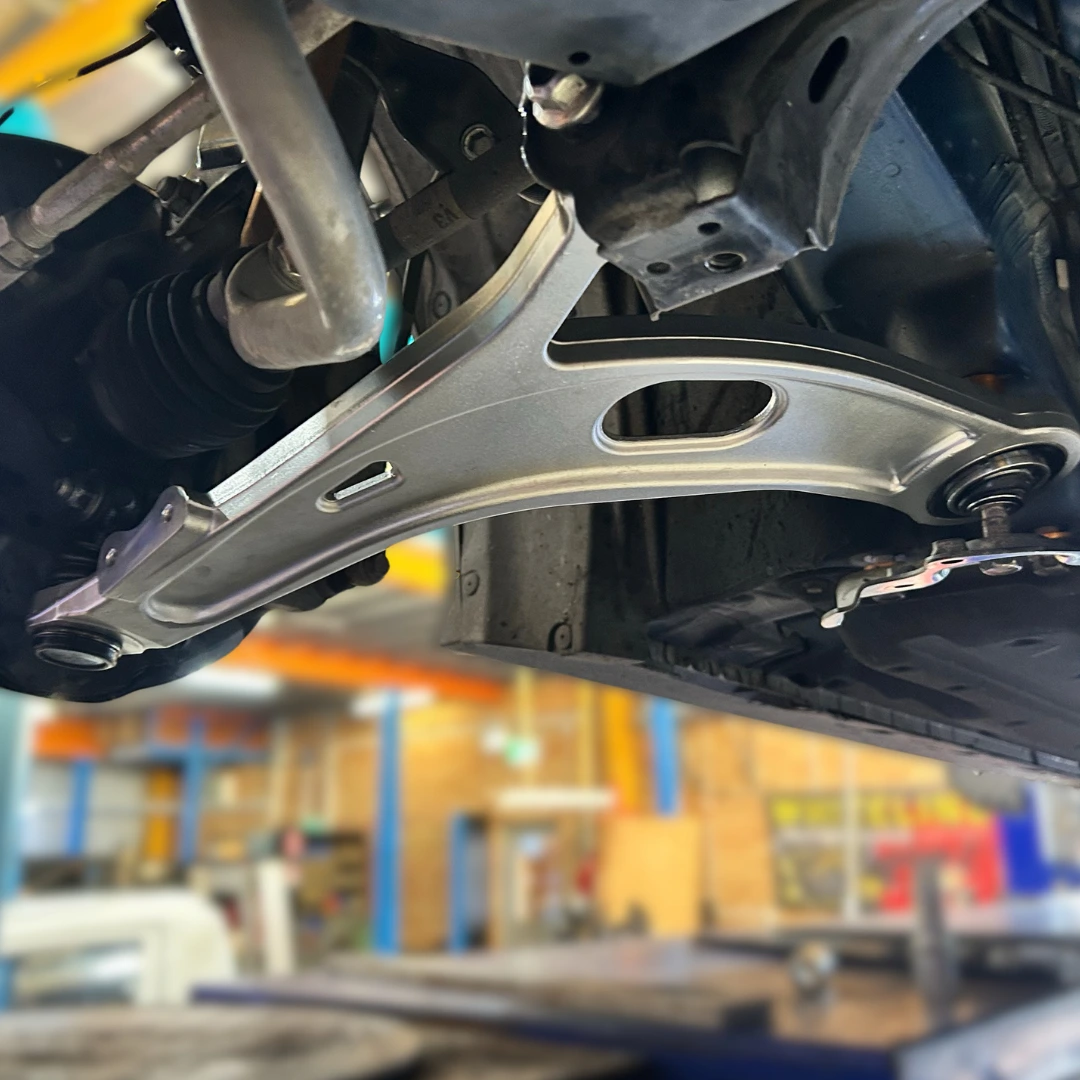
Depending on suspension design, control arms may be replaced as matched pairs or as individual components.
Some suspension systems require paired replacement to maintain symmetry and alignment accuracy across the axle. Others allow individual arms to be replaced independently, which can be useful for targeted correction or staged upgrades.
Whiteline control arms are available as pairs or individual units, providing flexibility for different vehicle designs and upgrade strategies.
Bushings and Suspension Control
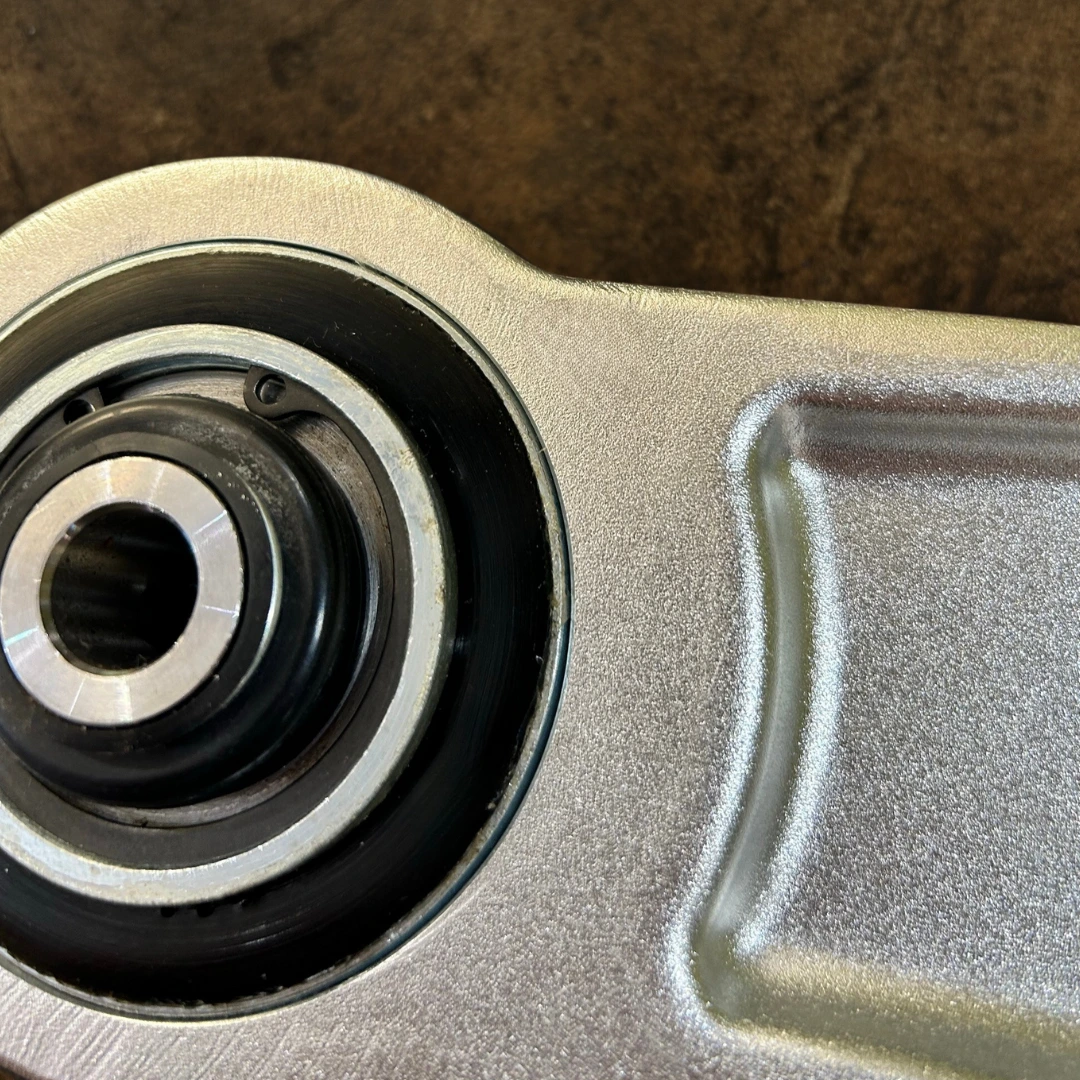
Bushings play a critical role in how control arms perform. They determine how much movement is allowed between the arm and the chassis under load.
Factory rubber bushings prioritise comfort and noise reduction but can deform significantly under cornering and braking forces. Over time, this deformation increases as the rubber ages.
Whiteline control arms are supplied pre-assembled with polyurethane bushes. Polyurethane provides improved resistance to deformation, helping maintain alignment angles and consistent suspension behaviour under load.
Pre-assembled bushings ensure correct orientation, reduce installation time, and minimise the risk of improper installation.
Pre-Assembled Components and Installation Consistency
Supplying control arms pre-assembled offers practical and performance benefits. It removes the need for specialised tools, ensures consistent bushing installation, and reduces variability between installations.
Incorrect bushing installation can introduce preload or binding, which negatively affects suspension movement and durability. Pre-assembled components help avoid these issues.
Control Arms, Tyre Wear, and Alignment Longevity
One of the most overlooked effects of control arm design is its influence on tyre wear over time. While wheel alignment settings may appear correct when measured statically, alignment angles can still change dynamically if control arms flex or bushings deform under load.
This dynamic movement often results in uneven tyre wear patterns such as inner or outer edge wear, feathering, or accelerated wear during sustained motorway driving.
In many cases, repeated alignments fail to resolve these issues because the underlying cause is suspension movement rather than incorrect static alignment.
Stable control arm geometry and reduced bushing deflection help maintain alignment angles while driving. This allows tyres to operate within their intended contact patch more consistently, improving wear characteristics and extending tyre life.
Control Arms and Suspension Travel
Control arm geometry also affects how suspension behaves through its full range of travel. Poorly matched arm length or pivot positioning can cause undesirable camber gain or loss as the suspension compresses and extends.
This is particularly relevant on lowered vehicles, where suspension travel occurs closer to bump stop limits. Well-designed control arms account for suspension motion rather than relying solely on static alignment values, helping maintain predictable behaviour during braking, acceleration, and uneven road surfaces.
Durability and Lifetime Ownership
Control arms are exposed to constant load cycles, road debris, moisture, and temperature variation. Material selection and manufacturing quality directly influence long-term reliability.
Whiteline control arms are engineered for durability and are backed by a lifetime warranty. This reflects confidence in their design, materials, and manufacturing processes, and provides long-term ownership assurance.
Control Arms as Part of a Suspension System
Control arms do not operate independently. Their behaviour affects, and is affected by, springs, dampers, anti-roll bars, and alignment settings.
Changes to control arm geometry can influence suspension sway, weight transfer, and overall balance. For this reason, control arms should be considered as part of a complete suspension system rather than isolated upgrades.
Whiteline develops control arms to integrate with broader suspension setups, supporting predictable handling and consistent performance.
Alignment and Setup Considerations
Any change to control arms alters suspension geometry. A professional wheel alignment is required after installation to ensure camber, caster, and toe angles are set correctly.
Adjustable control arms should be set to baseline specifications before final alignment adjustments are made. Proper setup is essential to achieving the intended handling and durability benefits.
Understanding Control Arms in Real-World Driving
Control arms influence everyday driving as much as performance driving. Stable alignment improves straight-line tracking, steering confidence, and tyre longevity. Reduced deflection improves predictability during braking and cornering.
In 4WD applications, durable control arms support load carrying, articulation, and long-term reliability in off-road conditions.
Building Suspension Knowledge
Control arms are often discussed only when problems arise, but understanding their role clarifies many common suspension issues. Alignment instability, uneven tyre wear, and inconsistent handling are frequently symptoms of control arm limitations rather than isolated faults.
By understanding upper and lower control arms, front and rear applications, geometry principles, and bushing behaviour, suspension decisions can be made with clarity rather than guesswork.
Whiteline Control Arms serve as an example of geometry-correct, durability-focused control arm engineering designed to support consistent and predictable suspension performance.
Whiteline Control Arm FAQs
Need more information about Whiteline control arms? Below we answer the most frequently asked questions.


