
 AU
 United Kingdom
 Europe
 United States

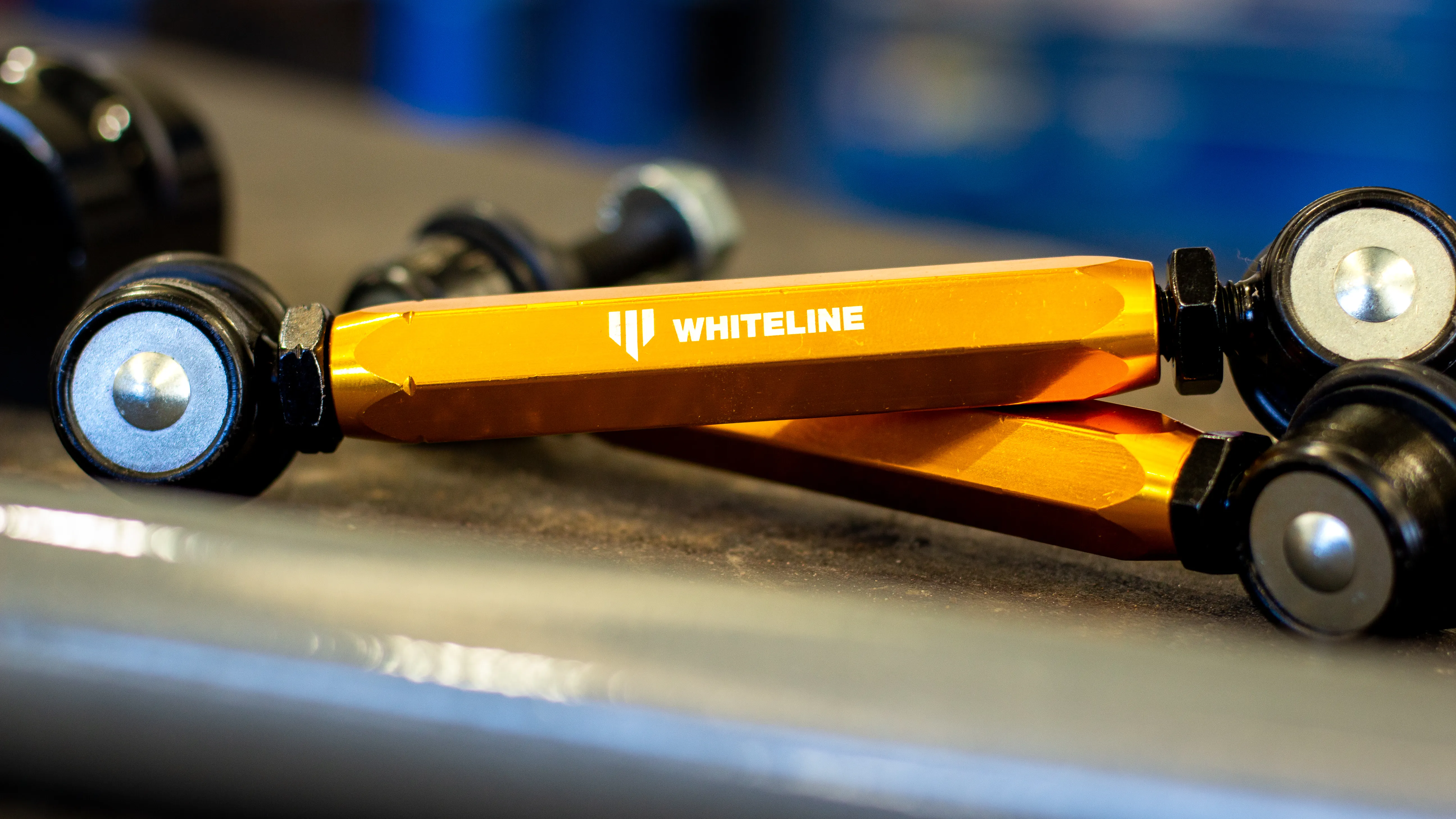

Ball joint sway bar links use a small ball and socket at each end, giving smooth, free movement and immediate response, which suits performance cars and many modern suspensions. Bushed links use rubber or polyurethane bushes, which absorb more vibration and suit many older designs, utes and 4x4s. The best type is the one designed for your vehicle’s mounting points and use.
When you start looking at replacement sway bar links, you’ll find two main styles: ball joint links and bushed links, plus designs that combine one of each. They do the same job, but they behave a little differently and suit different vehicles. Here’s how they compare, and how we choose the right joint type for our sway bar links.
What is a ball joint sway bar link?
A ball joint link has a small ball stud sitting in a socket at each end, much like a miniature version of a suspension ball joint. The ball can pivot freely in several directions, so the link moves smoothly as the suspension travels and the sway bar rotates. A rubber dust boot keeps dirt and water out of the joint.
Our ball joint links come with 10mm or 12mm ball studs depending on the application, and in various joint orientations to suit the mounting points.
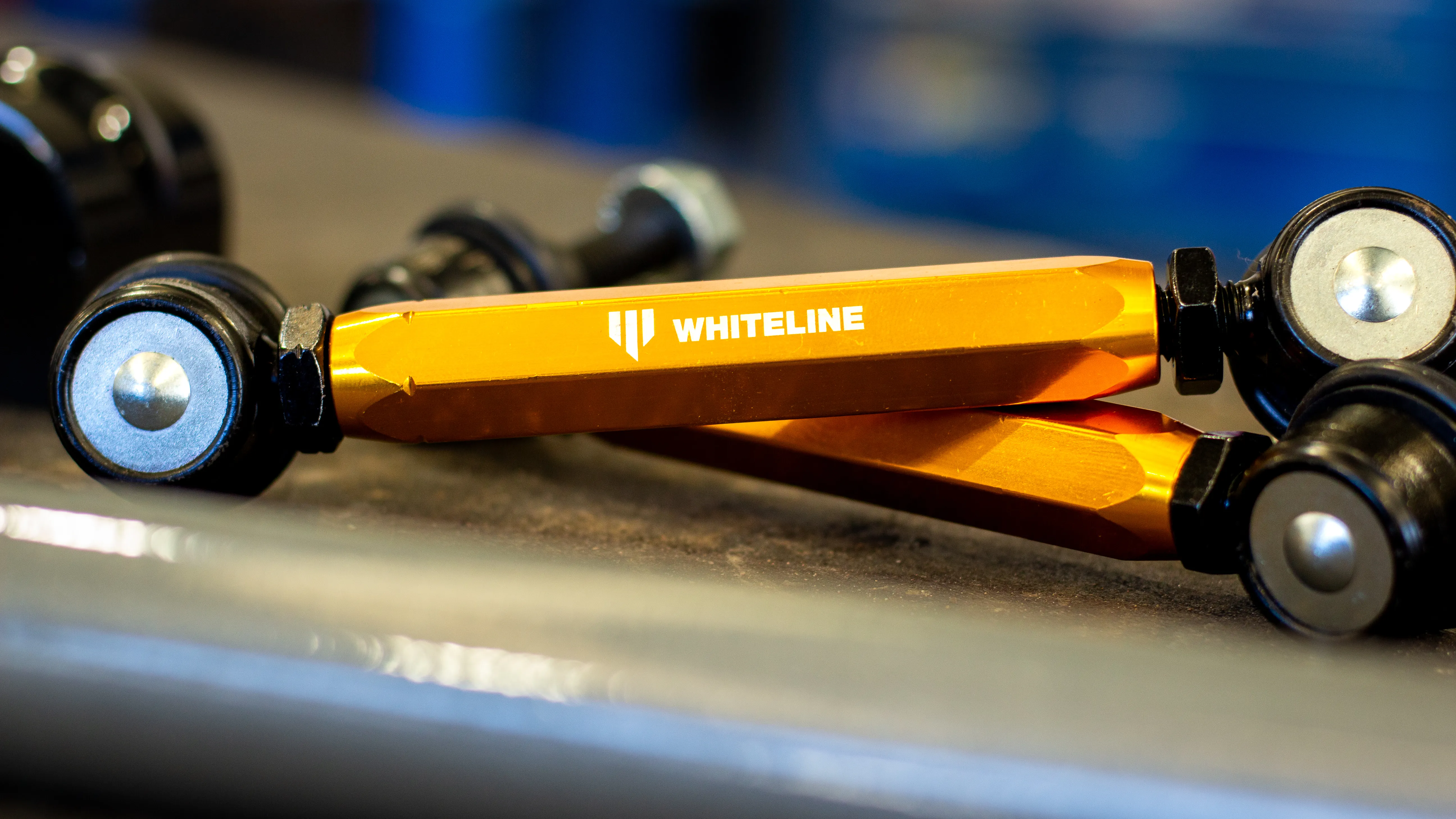
A bushed link uses a bolt or stud passing through bushes, often with washers either side, at one or both ends. The bushes allow movement while absorbing vibration. Bushes can be rubber or polyurethane, with polyurethane giving firmer, longer-lasting location.
Ball joint vs bushed sway bar links compared
|
Factor |
Ball joint links |
Bushed links |
|
Movement |
Smooth, multi-directional |
Controlled by bush compliance |
|
Response |
Immediate |
Slightly softer, depending on bush |
|
Vibration isolation |
Lower |
Higher |
|
Typical applications |
Performance cars, many modern suspensions |
Older designs, many utes and 4x4s |
|
Wear point |
Ball and socket, protected by boot |
Bushes and washers |
|
Maintenance |
Inspect boots |
Inspect bushes |
Which type suits performance driving?
Ball joint links are generally preferred for performance use, because they move freely without compliance, so the sway bar reacts the instant the body rolls. They also allow precise geometry, which matters on lowered cars where link angles have changed. Many of our performance links use precision ball joints at both ends, often with adjustable bodies.
Which type suits utes and 4x4s?
Many utes and 4x4s use bushed links from the factory, particularly at the rear, because bushes cope well with the large movements and vibration of off-road driving. Polyurethane bushed links give firmer location and longer life than rubber. On some lifted 4x4s, ball joint links with the right length and joint angle work very well too. The right choice depends on the vehicle’s mounting points and how it’s used.
Combination links
Some vehicles use a ball joint at one end and a bush at the other, to suit different mounting designs at the bar and suspension. We offer fixed ball and bush style links where the vehicle calls for them, as well as fixed ball and ball styles.
What matters most when choosing
Choose a link designed for your exact vehicle and axle, so the length, stud size, joint orientation and mounting style are correct. Our links use high-strength alloy bodies, precision ball joints or long-lasting bushes, corrosion-resistant finishes and, on many kits, upgraded high-tensile hardware. On lowered or lifted vehicles, consider adjustable links so the joints work within their range.
How each type wears
Ball joint links wear when dust and water get past a split boot, which leads to play in the socket and a knock over bumps. Bushed links wear as the bushes compress, crack or perish, so the link starts to move around on its bolt and rattle. Rubber bushes break down faster in heat and with oil contamination, while polyurethane holds its shape for longer. Whichever type you run, regular inspections catch wear before it turns into a clunk.
FAQs
Looking for more information about ball joint and bushed sway bar links? Below we answer the most commonly asked questions
Are ball joint sway bar links better than bushed links?
Which sway bar links last longer?
Can I swap bushed links for ball joint links?
Do ball joint links make more noise?
What stud sizes do sway bar links use?
Are polyurethane bushed links better than rubber?
Find the right joint type for your vehicle in our sway bar links range.


