
 AU
 United Kingdom
 Europe
 United States

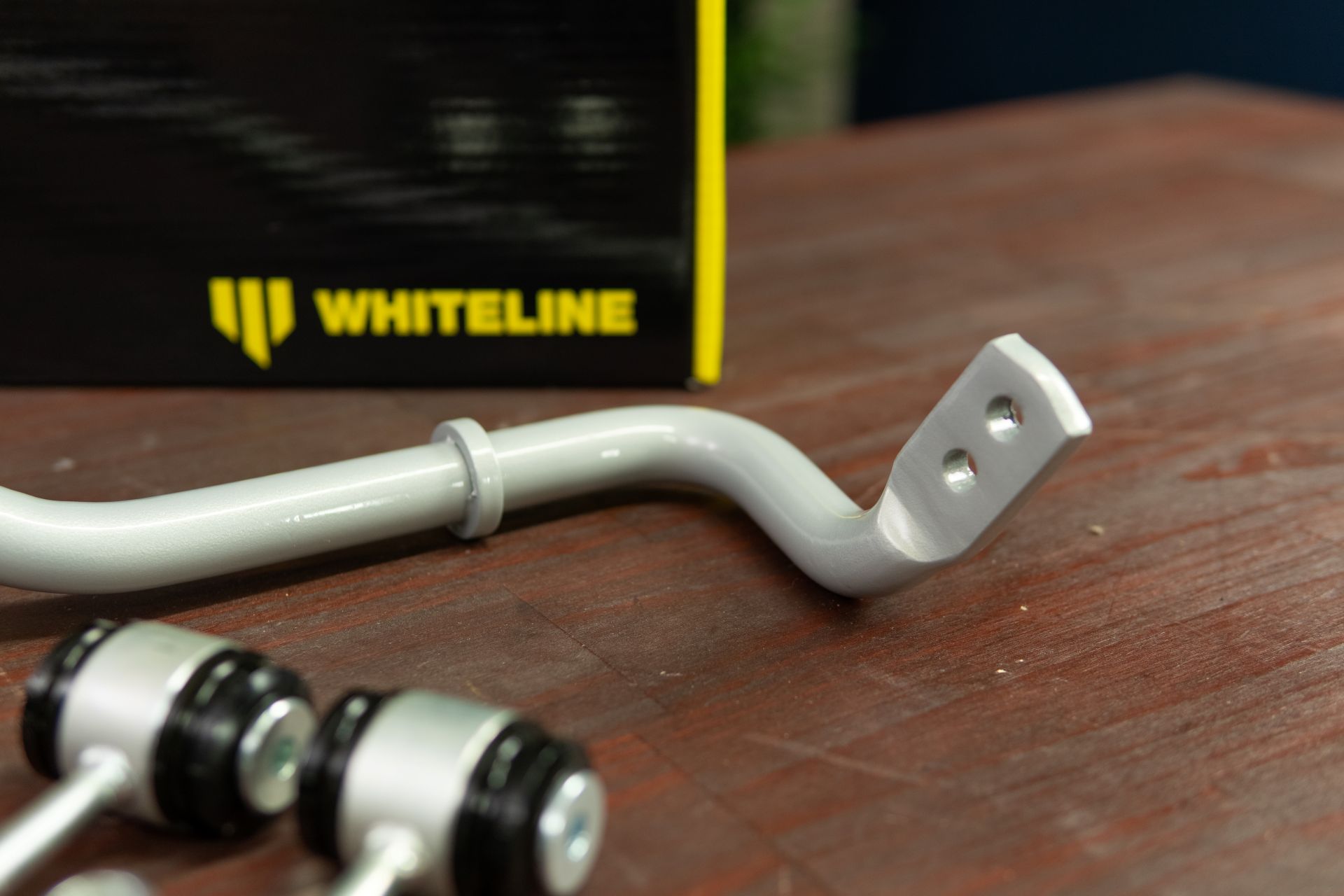

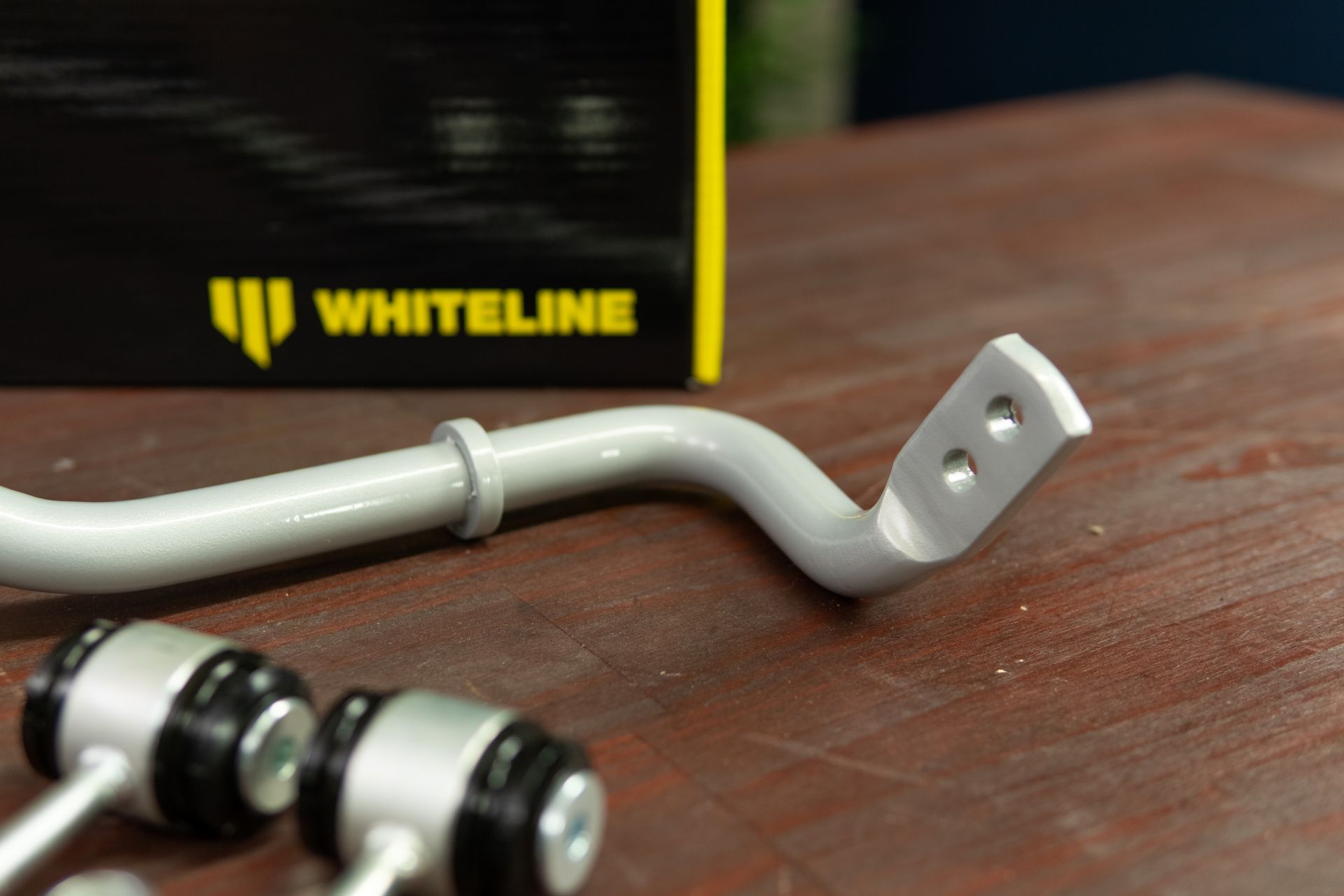
An adjustable sway bar has two, three or four holes at the end of each arm. Mounting the sway bar link closer to the bar’s main body makes it stiffer, and mounting it closer to the tip makes it softer. Set both sides to the same hole, start in a middle or softer position, then move one hole at a time to tune body roll and balance.
One of the best things about an adjustable sway bar is that you can tailor it to your car, your tyres and how you drive, long after it’s been fitted. A setting that’s perfect for a wet winter commute might not be what you want at a track day, and adjustment lets you have both. Here’s how the settings work and how to tune our adjustable sway bars properly.
How the adjustment works
Think of a sway bar as a torsion spring with a lever arm at each end. The sway bar link connects the tip of each arm to the suspension. The distance from the bar’s main body to the link’s mounting point is the lever length, and it decides how easily the suspension can twist the bar.
A longer lever gives the suspension more leverage, so the bar twists more easily and acts softer. A shorter lever means less leverage, so the bar resists more and acts stiffer. Adjustable bars give you several holes along the arm to change that lever length.
Which hole does what?
|
Link position |
Lever length |
Effect |
|
Hole closest to the bar body |
Shortest |
Stiffest setting |
|
Middle hole or holes |
Medium |
Medium setting |
|
Hole closest to the tip |
Longest |
Softest setting |
Always run both ends of the same bar on matching holes. Different holes left and right would make the car behave differently in left and right-hand corners.
2, 3 and 4-point bars
A 2-point bar gives a simple choice between a softer street setting and a firmer one. A 3-point bar adds a middle position, which makes it easier to land on the right balance without a big jump. A 4-point bar gives the finest control, which suits owners who do track days, motorkhanas or like to tweak for different conditions.
Where to start
On a front-drive or all-wheel drive car, start the rear bar on its softest or middle setting and any adjustable front bar in the middle. On a rear-drive car, start both in the middle. Take the car for a drive on a road you know well and pay attention to tight corners, fast sweepers and quick changes of direction.
Tuning guide
|
If the car… |
Try |
Result |
|
Pushes wide in tight corners |
Rear bar one hole stiffer, or front one softer |
More rotation |
|
Feels loose or steps out |
Rear bar one hole softer, or front one stiffer |
More stability |
|
Still leans too much |
Both bars one hole stiffer |
Less body roll |
|
Feels skittish over mid-corner bumps |
Both bars one hole softer |
More compliance |
|
Feels nervous in the wet |
Rear bar one hole softer |
More forgiving |
Change one bar by one hole at a time and give it a proper drive before changing anything else. Jot your settings down so you can always go back to one you liked.
Tips for adjusting your sway bars
Make changes with the car on level ground. After moving a link, check that it isn’t pulling or pushing the bar when the car is sitting at rest. On lowered cars, adjustable sway bar links make this easy by letting you set the link length so the bar sits neutral. Torque the link hardware to specification every time.
Many of our bars and kits include lateral locks, which clamp onto the bar beside the bushes and stop it sliding sideways under load, keeping the response consistent at every setting.
Track day and wet weather settings
At a track day, many drivers run the rear bar one hole firmer than their road setting to help the car rotate in slower corners. For wet winter driving, a softer rear setting gives a more forgiving balance. Being able to switch between them in a few minutes is a big part of what makes adjustable bars so useful.
FAQs
Looking for more information about adjustable sway bar settings? Below we answer the most commonly asked questions
How do adjustable sway bar settings work?
Which hole is the stiffest on a sway bar?
Do both sides need to be on the same hole?
Where should I start with an adjustable sway bar?
How do I reduce understeer with an adjustable sway bar?
Do I need adjustable sway bar links?
Tune your car exactly how you like it with our adjustable sway bars.


