
 AU
 United Kingdom
 Europe
 United States

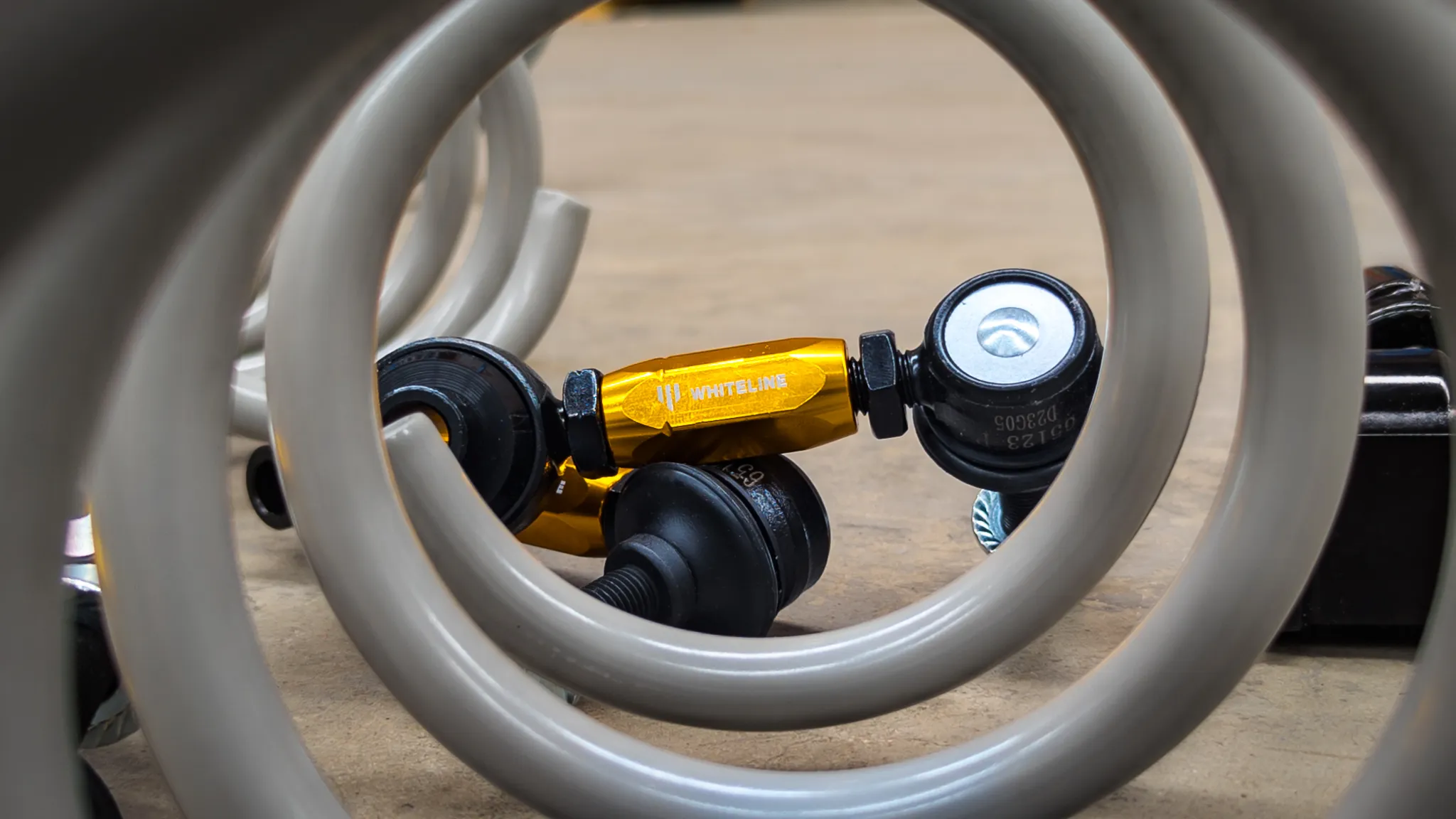

A good track day suspension setup controls body roll, keeps the tyres flat and gives you adjustment to tune balance. Start with fresh brake fluid, quality tyres and a performance wheel alignment, then add adjustable sway bars, polyurethane bushes and matched springs. Keep it street legal so you can drive to the circuit and home again.
Your first track day is a revelation. The car that feels quick on the street suddenly feels soft, leans heavily into fast corners and starts eating the outside edges of its tyres. That’s normal, because factory suspension isn’t built for sustained circuit loads. The fix is a setup that’s sharper and more controlled without becoming a trailer queen. Here’s how we approach it, and where our performance suspension kits come in.
What changes when you take a road car on track?
On the road, you rarely use more than a fraction of the car’s grip. On a circuit you’re at the limit lap after lap, braking hard from high speed and loading the suspension through long, fast corners. Everything gets hotter and works harder. Body roll increases, soft rubber bushes deflect, tyres overheat on their shoulders and the car’s balance shifts as it goes.
A track setup is about making the car consistent, so it behaves the same way on lap ten as it did on lap one.
Track day prep that comes before suspension
Brakes and fluid
Fresh high-temperature brake fluid and pads with plenty of life are non-negotiable. Suspension upgrades let you carry more speed, so the brakes have to keep up.
Tyres and pressures
A good performance tyre is your biggest single gain. Check hot pressures after each session and bleed them back to your target, because pressures climb quickly on track.
A performance wheel alignment
Extra negative camber up front keeps the outside tyre flat in long corners. Camber bolts are an easy way to add adjustment on strut cars. Keep toe close to zero for a stable, responsive car.
Suspension upgrades that make the biggest difference on track
Adjustable sway bars
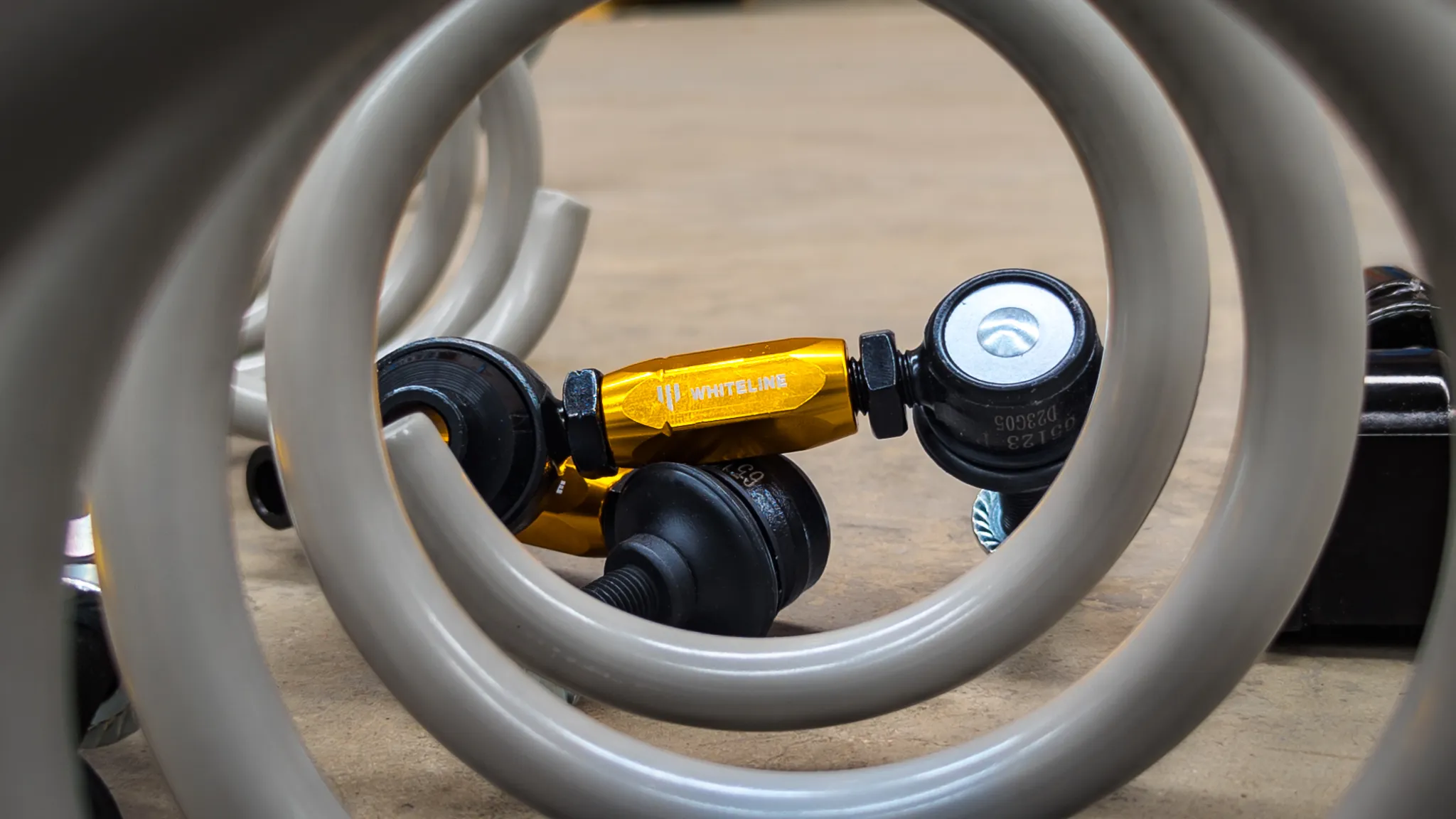
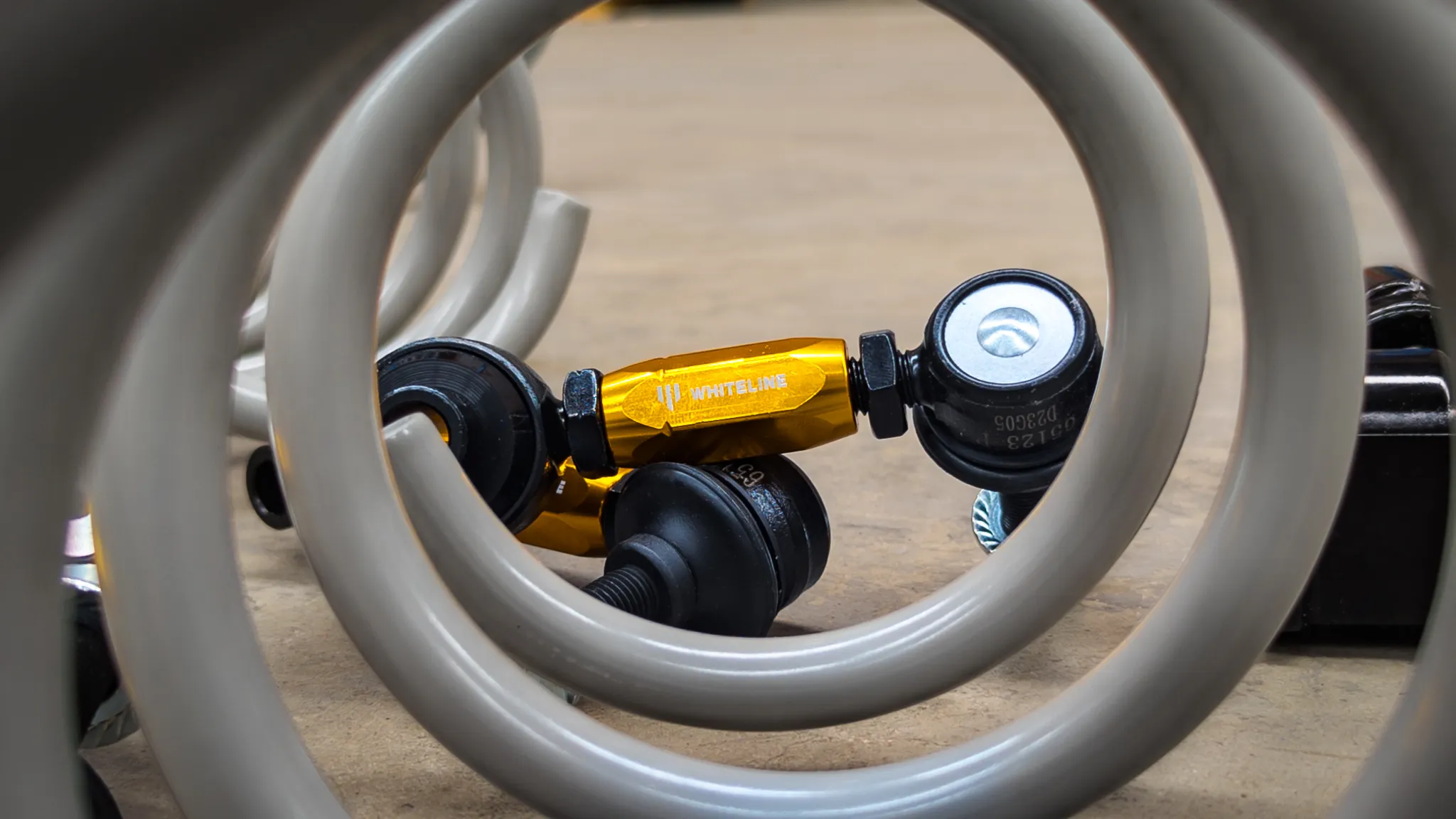
These are the core of any track day setup. They reduce body roll, keep the tyres in better contact with the bitumen and let you change balance between sessions. A firmer rear setting helps a front-driver rotate in slow corners, while a softer one adds stability in fast sweepers.
Polyurethane bushes
Soft rubber bushes let the suspension move under heavy braking and cornering, which changes alignment mid-corner. Our polyurethane bushes keep the geometry locked so the car stays predictable as it heats up.
Matched lowering springs
A lower centre of gravity and firmer rate help control pitch under brakes and roll in corners. Keep the drop moderate to retain travel for kerbs and bumps.
Sway bar links and bracing
Quality links let the bar work immediately, and a strut brace can steady the towers on platforms that flex.
Track day setup checklist
|
Area |
Recommended change |
Why it matters on track |
|
Brakes |
High-temp fluid, fresh pads |
Consistent stopping lap after lap |
|
Tyres |
Performance tyre, hot pressure checks |
Grip and even wear |
|
Alignment |
More front negative camber, near-zero toe |
Flatter tyres in long corners |
|
Sway bars |
Adjustable front and rear |
Less roll, tunable balance |
|
Bushes |
Polyurethane at key locations |
Geometry stays put under load |
|
Springs |
Moderate drop, firmer rate |
Less pitch and roll |
|
Notebook |
Log every change and lap time |
Know what actually worked |
How should you tune at the track?
Make one change per session and write it down. Start with tyre pressures, then sway bar settings. If the car pushes wide in the slow corners, go one hole firmer on the rear bar or softer on the front. If the rear feels loose in quick changes of direction, go the other way. Three careful changes will teach you more than from ten random ones.
Why a matched kit suits track day drivers
Track days reward balance, and balance comes from parts that work together. Our kits combine springs, adjustable sway bars, links and polyurethane bushes developed for each platform, so the spring rates and bar stiffness suit each other from the start. You then use the bar adjustment to fine tune for each circuit. And because the setup stays street friendly, you can drive the car to the track, enjoy the day and drive it home.
FAQs
Looking for more information about track day suspension upgrades? Below we answer the most commonly asked questions
What is the best first suspension upgrade for track days?
Do I need coilovers for track days?
How much camber should I run on track?
Will track suspension make my car uncomfortable on the street?
Do polyurethane bushes help on track?
Are track day suspension upgrades legal for road use?
Ready to get circuit ready? Explore our matched performance suspension kits, or start with adjustable sway bars.


