
 AU
AU United Kingdom
 Europe
 United States
Tesla Model Y sway bar upgrade: what a bigger bar actually changes
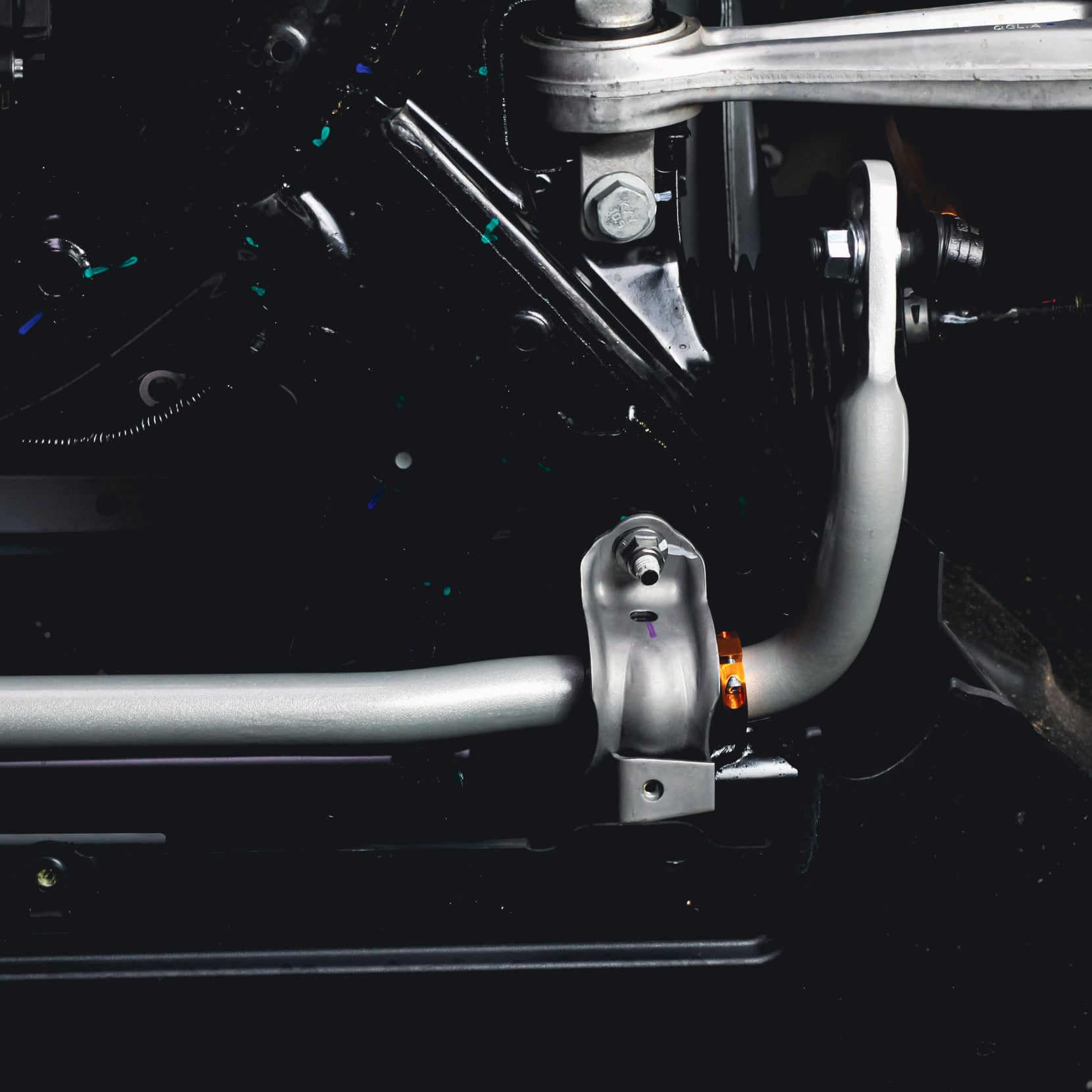
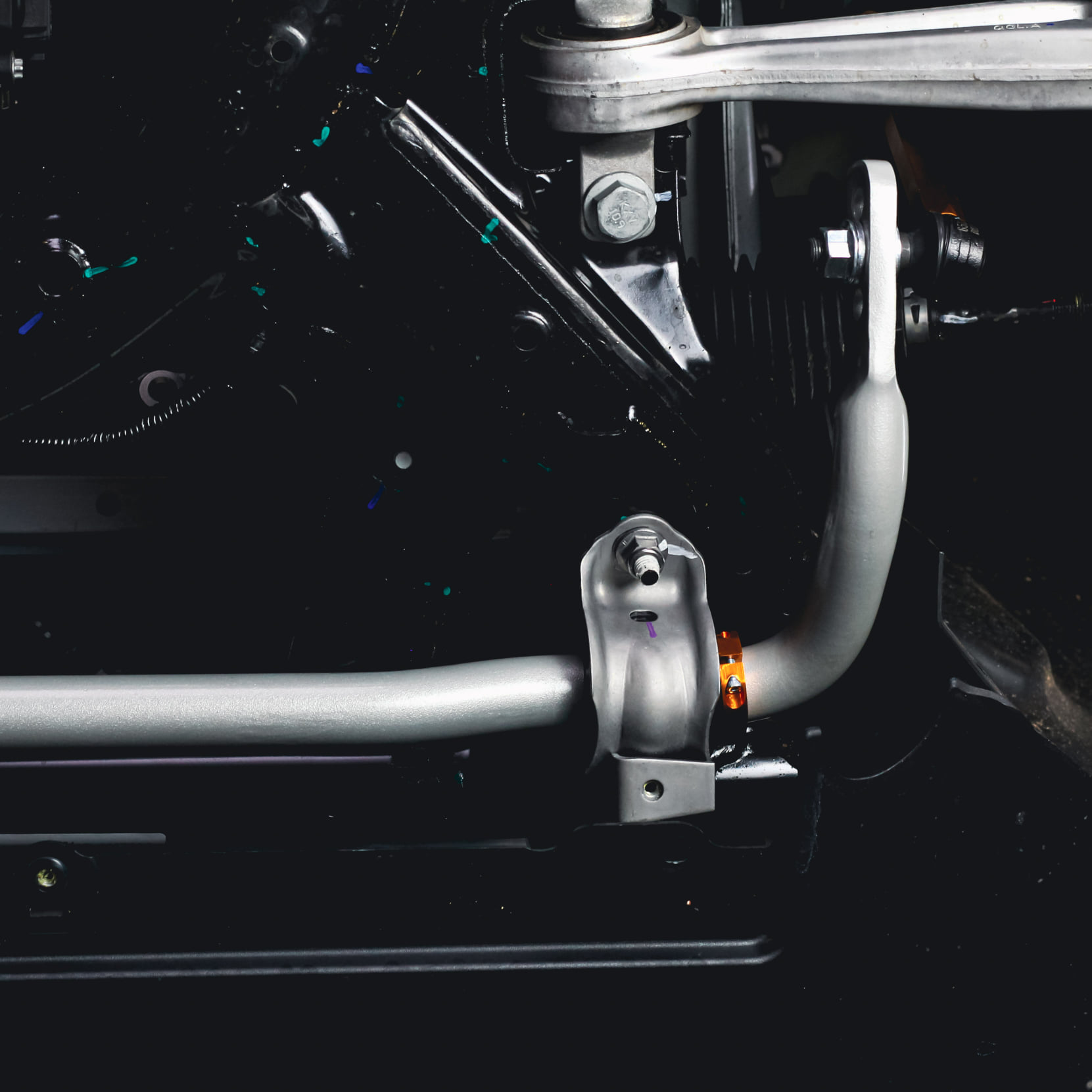
A Whiteline rear bar takes a Model Y from the soft factory setting to between 82.1% and 154.2% stiffer, depending on which of three positions you select. The front 30mm bar spans 10.3% to 44.0% stiffer than OE. The result is flatter cornering, more even tire loading and tighter body control, with no ride penalty in a straight line.
Why the Model Y needs this more than most cars
Height and mass. A Model Y is a tall vehicle carrying around two tons, and while the battery keeps the center of gravity lower than a comparable combustion SUV, there is still a lot of weight sitting above the roll axis wanting to lean when you change direction.
Tesla ships the platform with a soft rear bar, which is a deliberate and sensible decision for a mass market vehicle. A soft rear bar biases handling toward understeer, and understeer is the predictable, forgiving default. It is also why the car feels reluctant to turn, washes wide when you ask for more, and takes a moment to settle after a direction change.
Replacing that bar is the single change that most alters how a Model Y drives. Not the springs, not the dampers. The rear bar.
Why the Model Y needs this more than most cars
Height and mass. A Model Y is a tall vehicle carrying around two tons, and while the battery keeps the center of gravity lower than a comparable combustion SUV, there is still a lot of weight sitting above the roll axis wanting to lean when you change direction.
Tesla ships the platform with a soft rear bar, which is a deliberate and sensible decision for a mass market vehicle. A soft rear bar biases handling toward understeer, and understeer is the predictable, forgiving default. It is also why the car feels reluctant to turn, washes wide when you ask for more, and takes a moment to settle after a direction change.
Replacing that bar is the single change that most alters how a Model Y drives. Not the springs, not the dampers. The rear bar.
What the numbers are
Whiteline publishes effective stiffness at every position, which most of this market does not.
Whiteline Rear Sway Bar
|
Setting |
Effective bar size |
Stiffer than OE |
|
Soft |
23mm |
+82.1% |
|
Medium |
24mm |
+115.9% |
|
Hard |
25mm |
+154.2% |
Whiteline Rear Sway Bar
|
Setting |
Effective bar size |
Stiffer than OE |
|
Soft, comfort biased |
29mm |
+10.3% |
|
Medium, balanced |
30mm |
+26.3% |
|
Hard, maximum roll control |
31mm |
+44.0% |
Both bars are solid spring steel and ship with their mount bushings.
Note the gap between front and rear percentages. Even the soft setting on the rear bar is a large step from the factory part, because the factory part is soft by design.
What you feel afterwards
The car turns in when you ask. The delay between steering input and the vehicle responding shrinks. Less roll means the outside tires load up faster and more progressively.
It stops washing wide. Moving balance away from built in understeer means the nose holds its line instead of running toward the outside of the corner when you add speed.
The body settles quickly. Lane changes, roundabouts and quick direction changes stop producing that secondary lean and rebound. This is the improvement passengers notice, and it is the mechanism behind much of the boomy, unsettled feeling owners complain about in a Model Y cabin.
Tire wear typically improves. Counterintuitive, but real. Reducing roll spreads lateral load more evenly across the contact patches instead of overloading the outside shoulder, which is where cornering wear concentrates.
Straight line ride is essentially unchanged. A sway bar resists the wheels moving in opposite directions. Hit a bump square on with both wheels and the bar contributes very little. That is the fundamental advantage a bar holds over stiffer springs, which affect every input in every direction.
Which bar, and which setting?
If you fit one bar, fit the rear. Biggest change for the money, and it targets the specific characteristic the factory tuned in.
Add the front bar if you want the roll reduced at both ends and the ability to tune balance yourself, or if the rear alone has made the car livelier than you want.
Starting settings. Rear on soft, front on medium. Drive it for a week. If you want more rotation, move the rear to medium. If the rear feels too eager, bring the front up rather than backing the rear down, because you keep the roll control that way.
The adjustability is the part worth paying for. Three positions per bar means the car you set up for a commute on poor pavement can be reset for a track day in the paddock with a wrench. A fixed bar is one engineer's opinion about how your car should behave and you are stuck with it.
Fit the drop links at the same time
Not an upsell, a functional requirement worth understanding. When a sway bar is installed with preload, meaning one side is loaded before the suspension has moved at all, the bar works unevenly left to right. That is exactly the imbalance you fitted it to remove.
Whiteline adjustable sway bar drop links let you set link length during installation so the bar sits neutral. KLC180-295 covers the front with a 12mm stud and 290 to 315mm adjustment range, KLC102 covers the rear with a 10mm stud and 150 to 175mm range.
What a sway bar will not do
It will not lower the car, soften a harsh impact over expansion joints, or silence a clunk. If the ride complaint is brittle harshness rather than leaning, the cause is more likely tire pressure and wheel size, covered in our guide to why a Model Y rides rough. If you can localize a knock to one corner, that is a wear issue for a workshop, not a tuning issue.
Worth being straight about the one real trade. On the hard setting, with the front and rear mismatched, you can make a Model Y feel nervous. Set them sensibly and progressively and that does not happen, which is precisely why the adjustment exists.
Frequently asked questions
Looking for more information about Tesla Model Y sway bars? Below we answer the most commonly asked questions
How much stiffer is a Whiteline Model Y rear sway bar than stock?
Does a sway bar upgrade make the Model Y ride harsher?
Should I fit the front or rear sway bar first on a Model Y?
Do I need a wheel alignment after fitting a sway bar?
Will a sway bar improve tire wear on a Model Y?
Do the same sway bars fit the Model 3?
How long does it take to install?
Does a stiffer sway bar affect range?
Activate more grip, and keep the ride
Solid spring steel, three settings, Limited Lifetime warranty, no alignment bill. Shop Whiteline performance sway bars and adjustable drop links, or go direct to the 24mm adjustable rear bar and the 30mm adjustable front bar.
Explore the full range of Whiteline EV suspension upgrades and select your Model Y to confirm fitment.


