
 AU
 United Kingdom
 Europe
 United States

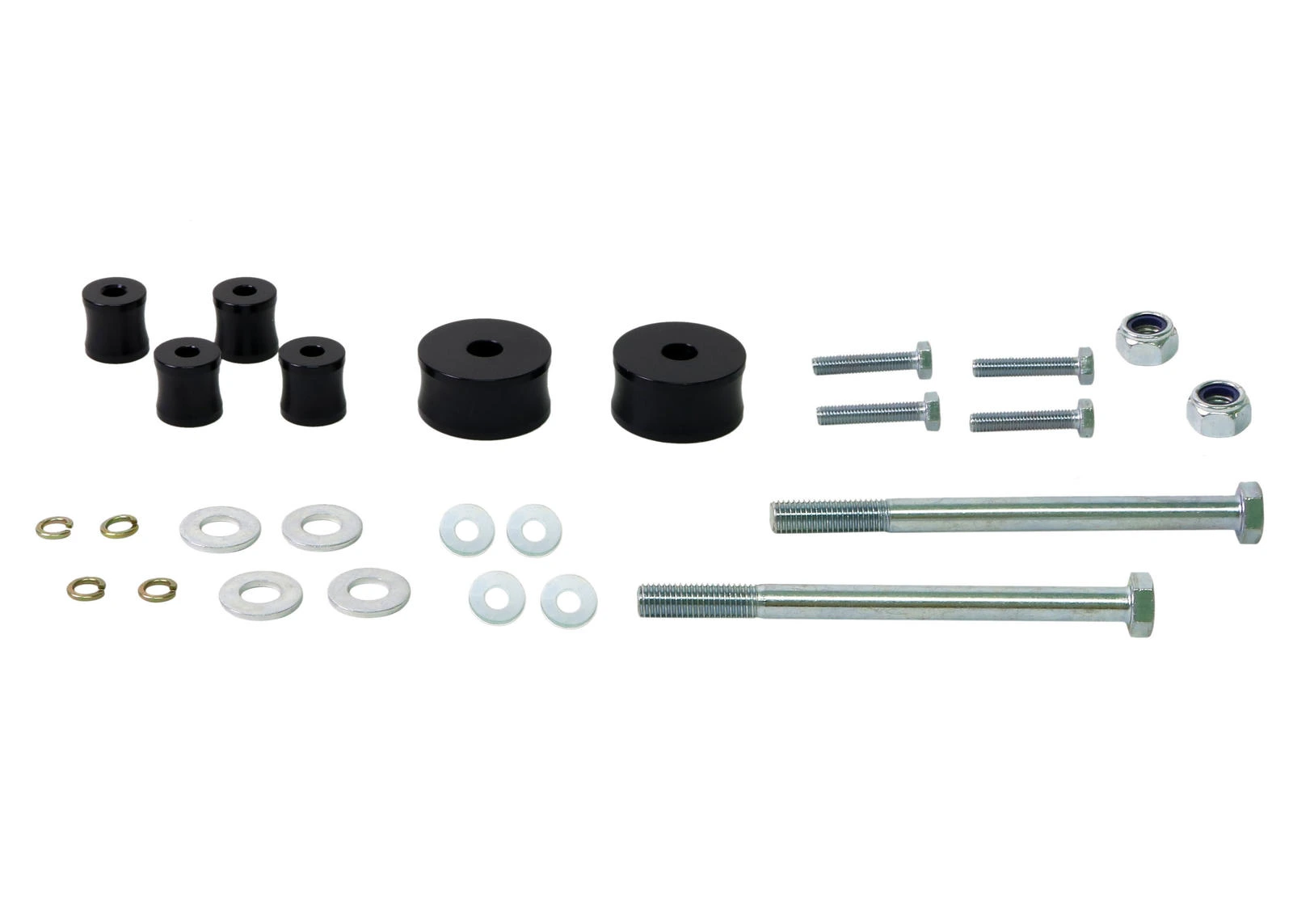

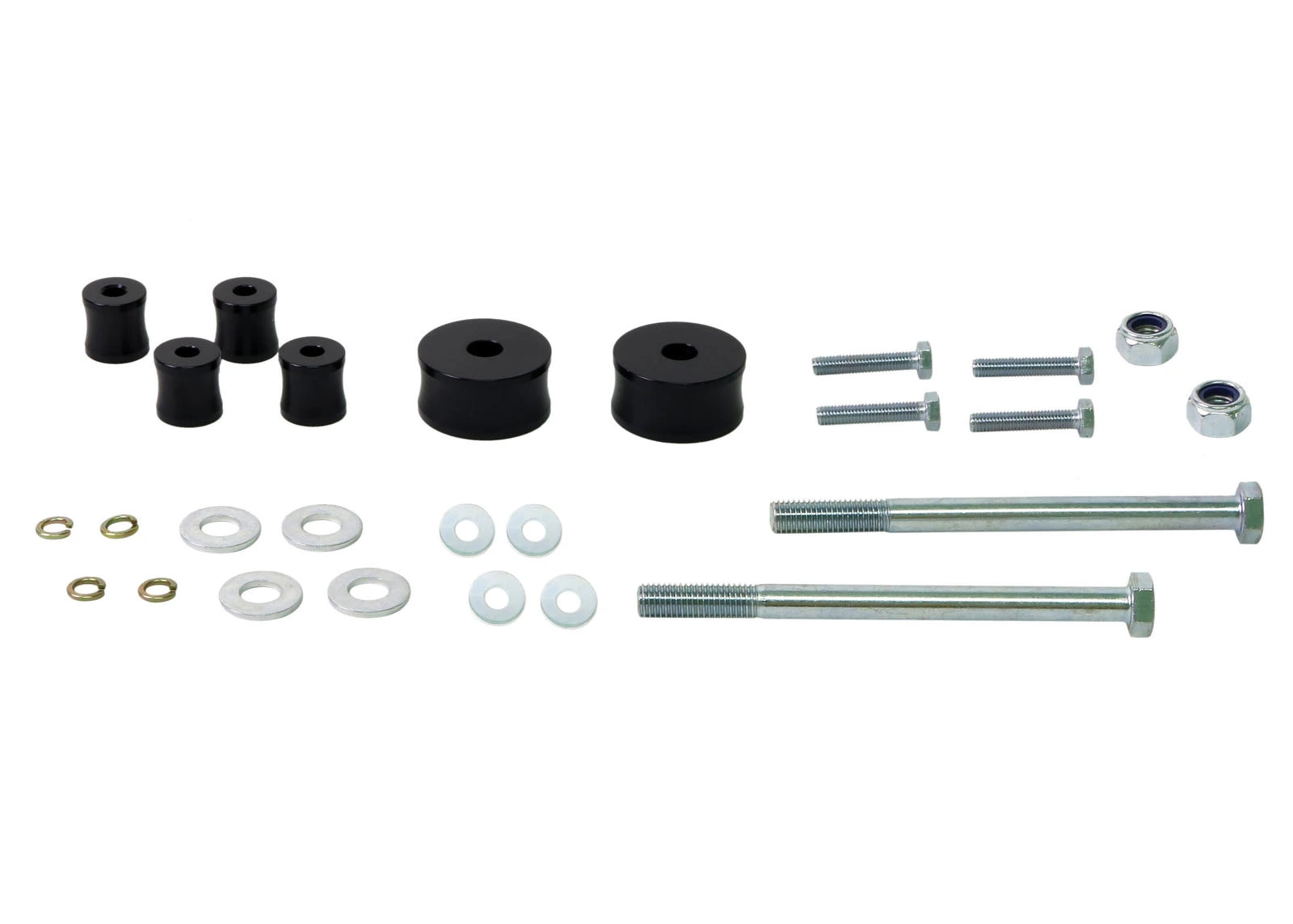
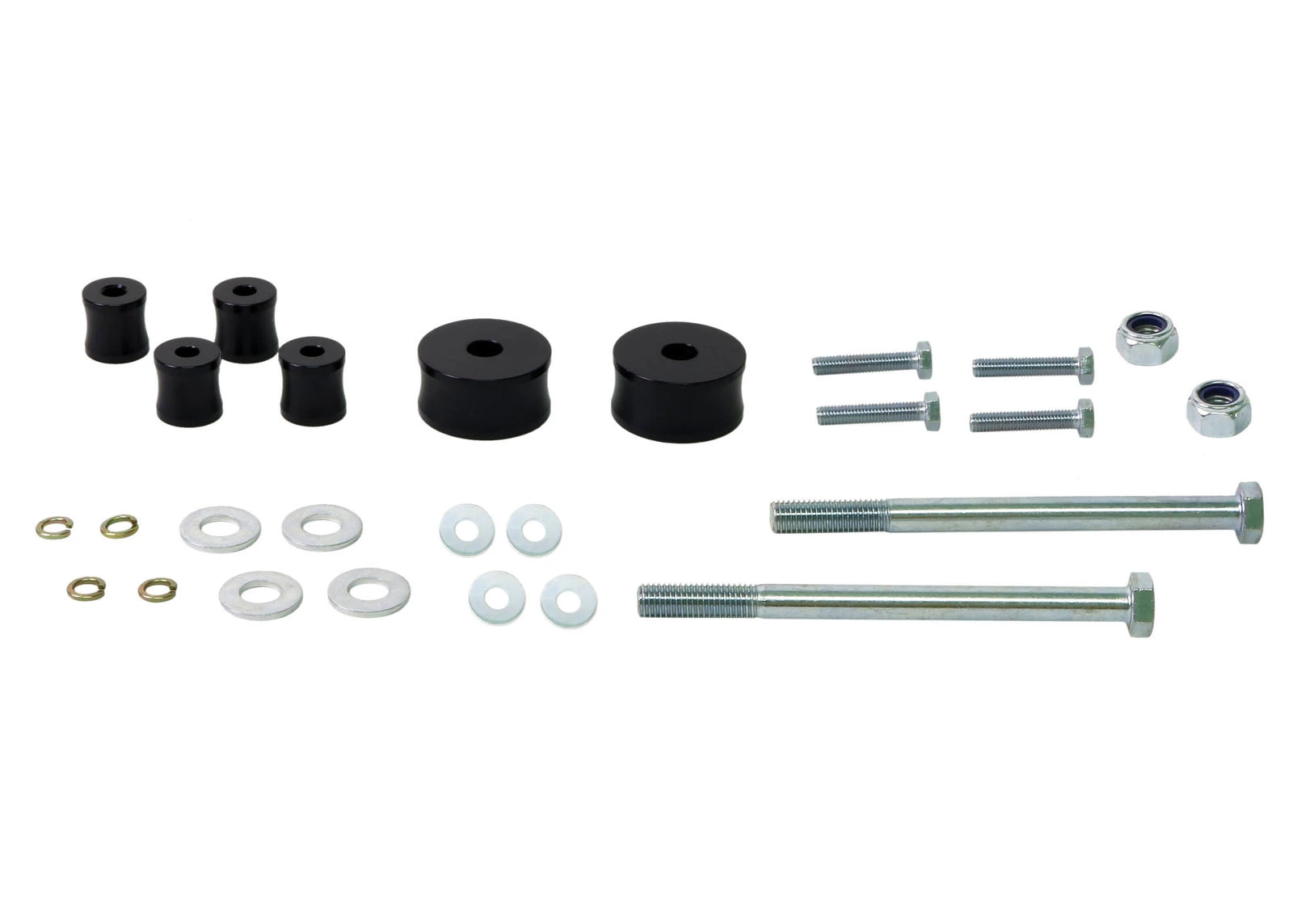
Diff bushes, or differential mount bushes, hold the differential to the subframe or body on cars with independent rear suspension. When they wear, the diff can move under acceleration and deceleration, causing clunks when you get on and off the throttle, wheel hop, driveline vibration and a vague rear end. A polyurethane differential mount bush kit holds the diff firmly and lasts much longer.
If your rear-drive or all-wheel drive car clunks every time you get on and off the throttle, worn diff bushes are a prime suspect. They’re a common wear point on Australian performance cars with independent rear suspension, where the differential bolts to a subframe through rubber mounts. Here’s what diff bushes do, how to tell when they’re gone and how a Whiteline differential mount bush kit from our suspension bushes range sorts it out.
What do diff bushes do?
On a car with independent rear suspension, the differential doesn’t sit on a solid axle. Instead it bolts to the rear subframe or body through mounting bushes. Those bushes hold the diff in place, absorb driveline vibration and stop the diff housing from rotating as it transmits torque to the rear wheels.
Every time you accelerate, the diff tries to rotate in one direction, and every time you lift off, it tries to rotate the other way. The bushes have to resist that movement thousands of times on every drive.
Clunks on and off the throttle
A clunk from the rear when you accelerate, lift off, or change between drive and reverse is the classic sign. The diff is moving in worn mounts.
Wheel hop
Worn diff bushes let the diff wind up and release under hard acceleration, contributing to wheel hop on powerful cars.
Driveline vibration
A shudder or vibration through the floor, particularly when accelerating, can come from a diff that’s moving around.
A vague rear end
If the diff moves, the rear suspension and driveshafts move with it, which can make the rear feel less precise.
Visible damage
Torn, cracked or collapsed rubber, or a diff that sits lower or at an angle in its mounts, points to worn bushes.
Rubber vs polyurethane diff bushes
|
Factor |
Factory rubber |
Whiteline polyurethane |
|
Diff movement under load |
Increases as rubber wears |
Minimal |
|
Throttle clunk |
Common on worn mounts |
Reduced |
|
Wheel hop resistance |
Lower |
Higher |
|
Response to throttle inputs |
Softer |
More immediate |
|
Lifespan |
Common wear item |
Long lasting |
|
Warranty |
Varies |
Lifetime |
Why polyurethane diff bushes work well
Polyurethane holds the diff firmly in place, so torque goes to the wheels instead of rotating the diff in its mounts. Owners typically notice the clunks disappear, throttle response feels crisper and wheel hop reduces on powerful cars. Polyurethane also resists heat and oil from the diff, which helps it last far longer than rubber in this location.
A firmer diff mount can transmit a little more driveline noise than soft rubber, but our differential mount bush kits are designed to balance control with refinement for road use.
Which cars need diff bushes?
Diff bushes are a regular replacement on many Australian cars with independent rear suspension, including popular rear-drive sedans and coupes and all-wheel drive turbo cars. Search by vehicle to find the differential mount bush kit for your car.
Fitting diff bushes
Diff bushes are usually pressed into the subframe or diff housing, so fitting typically involves supporting or lowering the diff or subframe. Clean the housings, apply the correct grease to the polyurethane bushes, fit them in the correct orientation and torque everything to specification. On some cars this is a big job, so many owners have a workshop fit them, often at the same time as other rear bushes.
While you’re there, check the subframe, trailing arm and control arm bushes, because they work alongside the diff mounts and often wear together.
FAQs
Looking for more information about diff bushes? Below we answer the most commonly asked questions
What are diff bushes?
What are the signs of worn diff bushes?
Can worn diff bushes cause wheel hop?
Do polyurethane diff bushes increase noise?
Are diff bushes hard to replace?
Do I need an alignment after replacing diff bushes?
Stop the clunks for good with a polyurethane differential mount bush kit from our suspension bushes range.


