
 AU
 United Kingdom
 Europe
 United States

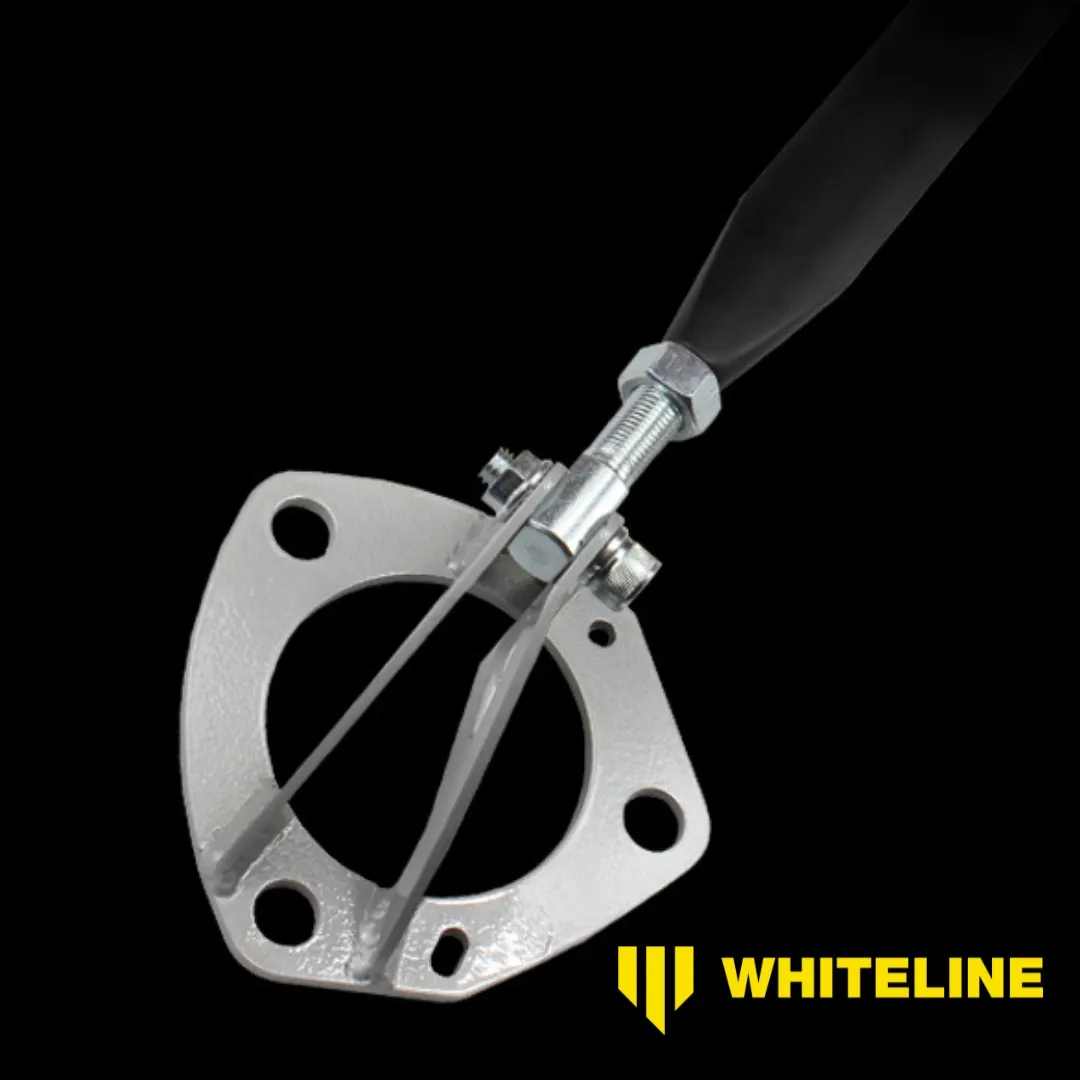

A correctly fitted strut brace doesn’t change your static wheel alignment, so you don’t need an alignment just for the brace. What it does change is how much camber shifts while the car is loaded in a corner, by stopping the towers flexing. If the car has been flexing badly or has been in a minor accident, a geometry check after fitting can still be worthwhile.
Owners often ask whether they need to book a wheel alignment after fitting a strut brace. It’s a sensible question, because almost every suspension part you change affects alignment in some way. A strut brace is a little different, and understanding why helps you get the most from it. Here’s how a brace interacts with your alignment, and how our strut braces are designed to fit without disturbing your settings.
Why a brace doesn’t change static alignment
Static alignment is measured with the car sitting still on an alignment rack, and it describes the camber, caster and toe at normal ride height. A strut brace bolts to the existing strut top mount studs and holds the towers in the position they’re already in when the car is at rest on its wheels.
As long as the brace is fitted at ride height and drops into place without force, it doesn’t push or pull the towers to a new position, so the static alignment readings stay the same.
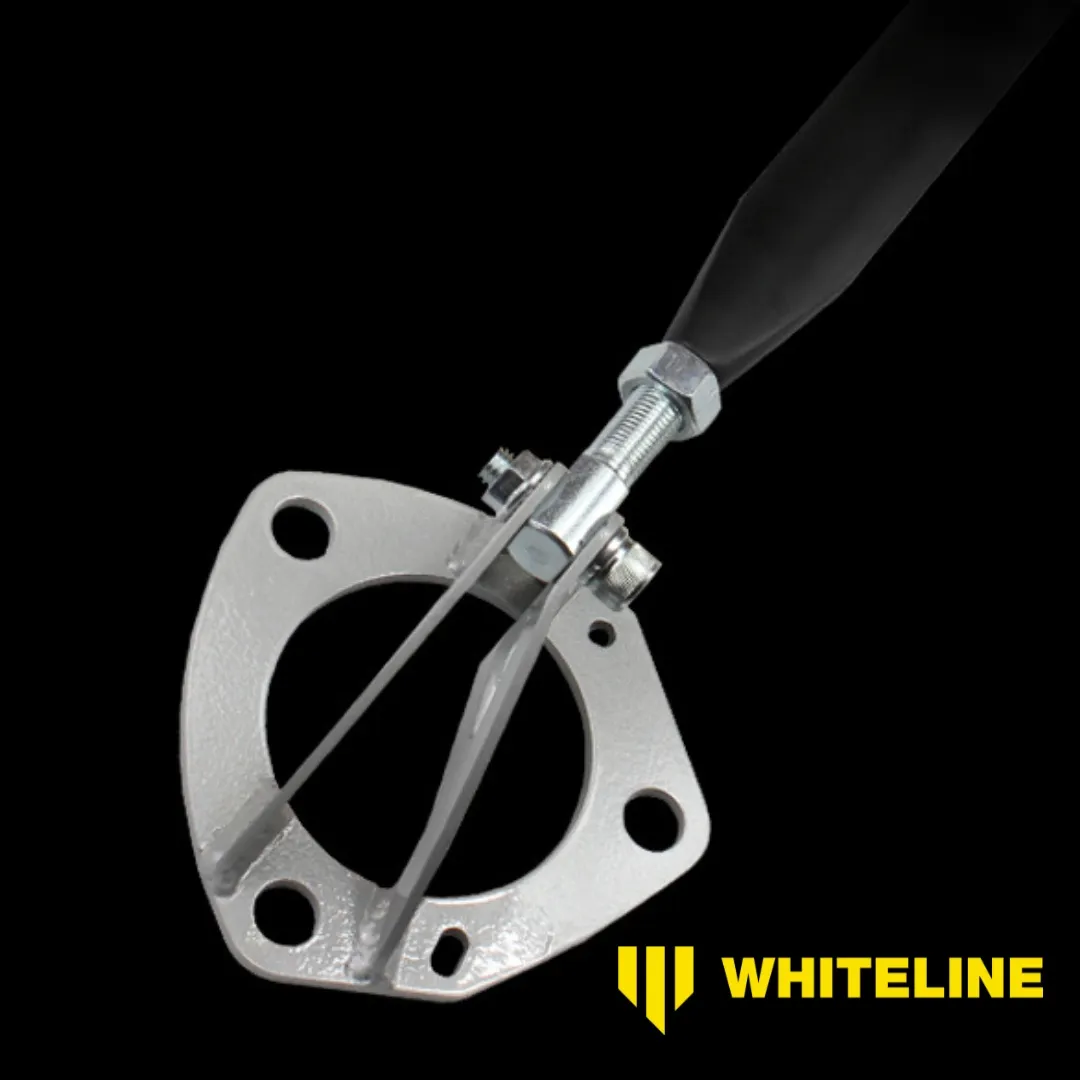
The real benefit shows up when the car is moving. In a corner, the outside strut pushes sideways against its tower. Without a brace, the tower can flex slightly, letting the top of the strut move and changing the wheel’s camber while the car is loaded. That’s dynamic camber change, and it’s what makes the front end lose bite part way through a long corner.
A brace ties the towers together so they move far less. The camber you set on the alignment rack stays much closer to the camber the tyre actually runs in the corner, which is why braced cars feel more consistent.
Static vs dynamic alignment
|
Type |
When it’s measured |
Does a strut brace change it? |
|
Static camber |
Car at rest on the rack |
No, when fitted at ride height |
|
Static toe |
Car at rest on the rack |
No |
|
Static caster |
Car at rest on the rack |
No |
|
Dynamic camber |
While cornering under load |
Yes, the brace reduces unwanted change |
|
Tyre wear pattern |
Over time |
Can become more even on cars that flexed |
When a geometry check is worth doing
There are a few situations where it’s worth booking a check after fitting a brace. If the car had obvious tower flex, the alignment may have been set to compensate for it, so a check confirms the settings suit the now steadier front end. If the brace didn’t drop into place easily, the towers may be out of position, possibly from an old accident or a heavy impact, which needs investigating. And if you’re fitting a brace at the same time as springs, bushes or camber bolts, you’ll need an alignment for those parts anyway.
Why fitting at ride height matters for alignment
If you fit a brace with the car on a hoist, the suspension hangs and the towers sit slightly differently. Bolting the brace in that position locks the towers there. When the car comes back down, the towers want to return to their loaded position, and the brace either fights them or holds them out of place, which can affect alignment readings. Fitting with the car on its wheels avoids this completely.
Getting the most from a brace and an alignment
A strut brace and a performance wheel alignment work very well together. The alignment sets the ideal camber, caster and toe, and the brace helps the car hold those angles when it’s working hard. If your car can’t reach the camber you want, our camber bolts add adjustment on many strut-front cars.
FAQs
Looking for more information about strut braces and wheel alignment? Below we answer the most commonly asked questions
Do I need a wheel alignment after fitting a strut brace?
Does a strut brace change camber?
Why does my brace not line up with the studs?
Can a strut brace improve tyre wear?
Should I fit camber bolts and a strut brace together?
Can a strut brace fix an alignment problem?
Hold your alignment where it belongs with a brace from our strut braces range.


