
 AU
 United Kingdom
 Europe
 United States

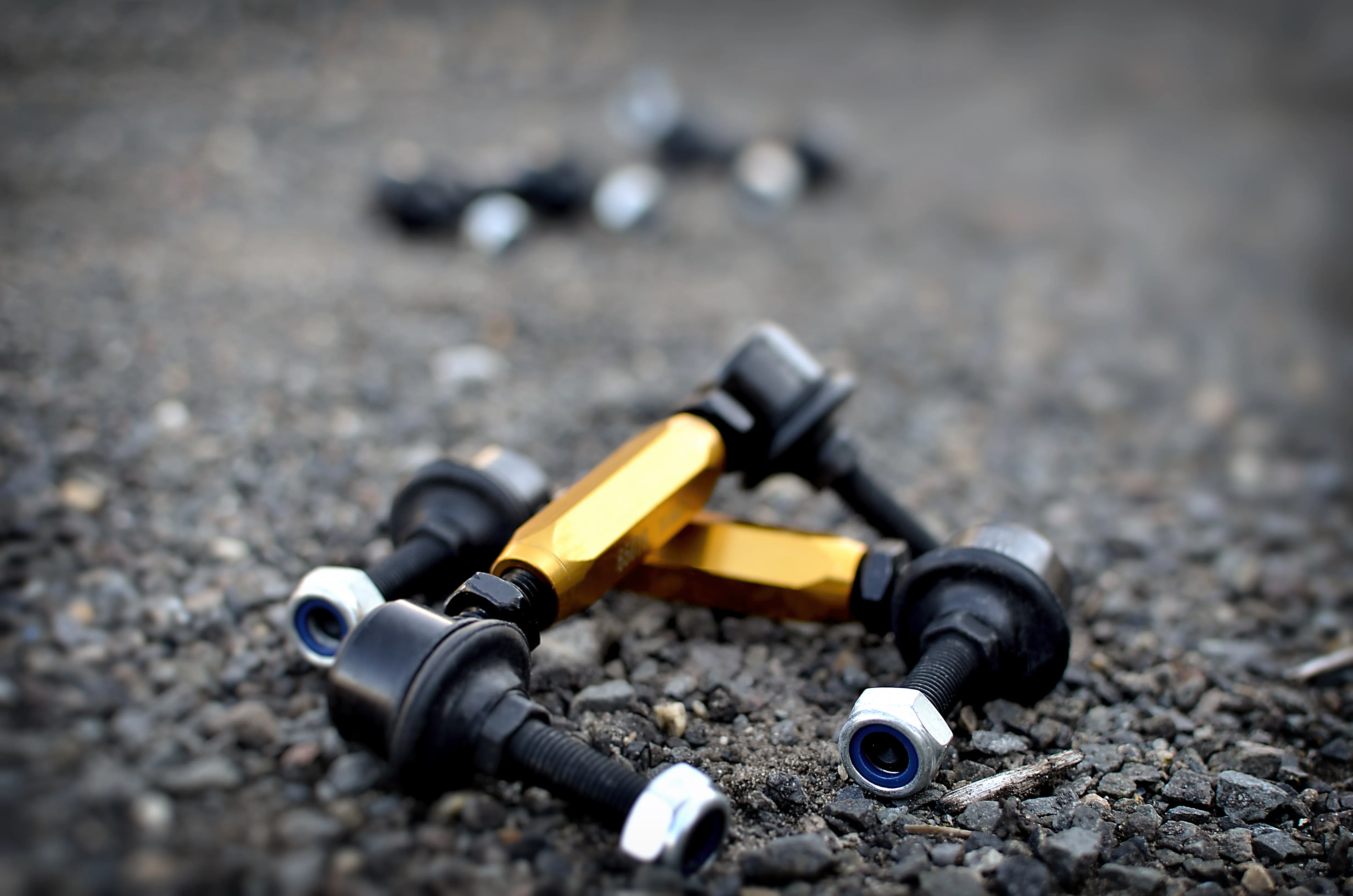

Sway bar links connect each end of the sway bar to the suspension, so the bar can twist and resist body roll when the car corners. When they’re worn, flexible or the wrong length, the bar reacts late, the car leans more and you’ll often hear a clunk over bumps. Strong, tight links let the sway bar start working from the very first degree of roll.
Everyone talks about sway bars, but the humble sway bar link is what makes the bar useful. It’s the connection between the bar and the suspension, and if it’s tired, the best sway bar in the world can’t do its job properly. Here’s what sway bar links do, why their quality and length matter, and how our sway bar links get the most out of your sway bar.
What is a sway bar link?
A sway bar link is a short rod with a joint at each end. The top usually connects to the sway bar’s arm, and the bottom connects to a control arm or the strut body. Most cars, utes and 4x4s have one link on each side of every sway bar.
Joints are usually small ball joints or bushes. Some links use ball joints at both ends, others use bushes at both ends, and some combine one of each.
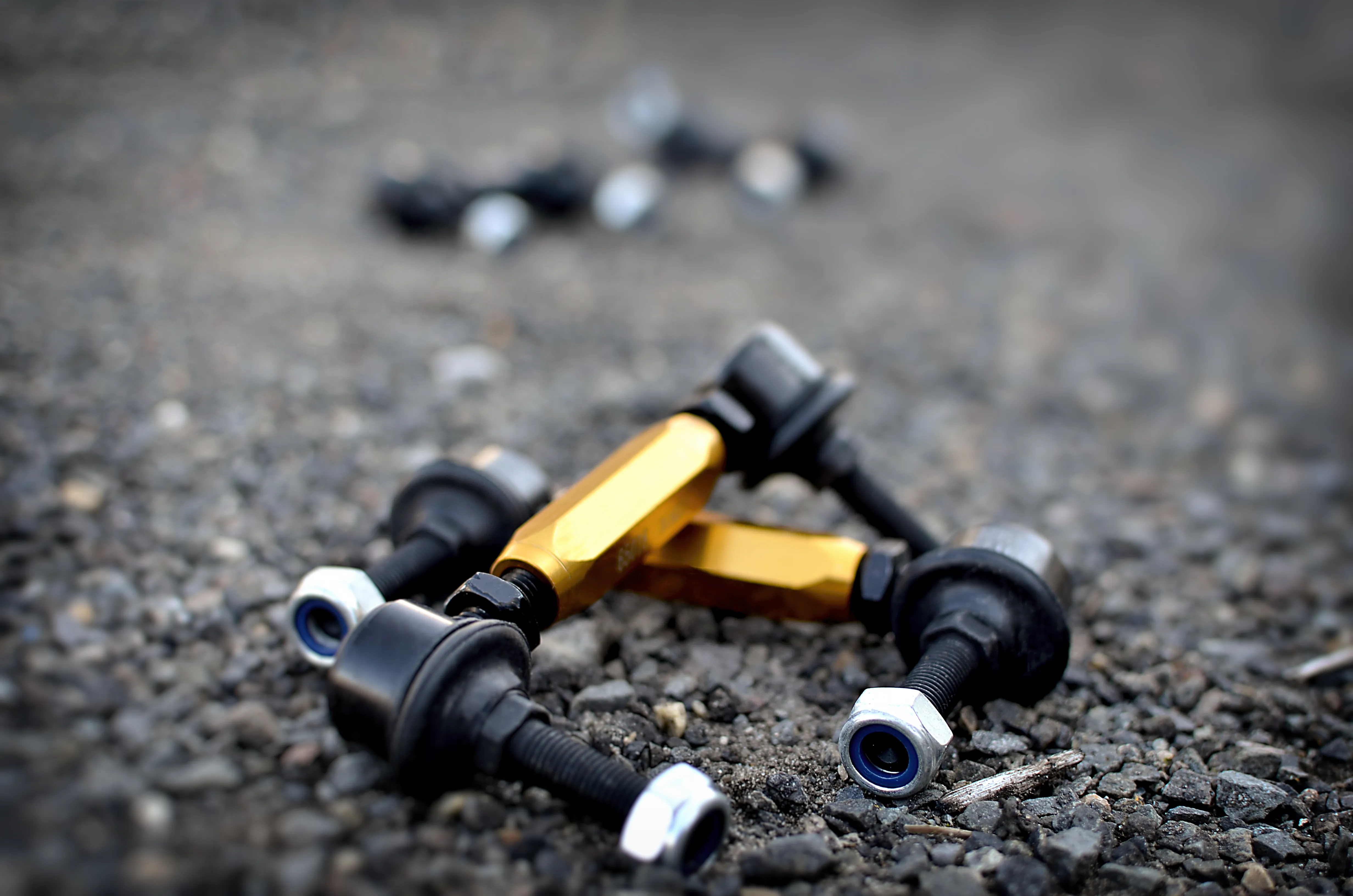
How sway bar links work
When you turn into a corner, the body leans and the suspension on each side moves by a different amount. The links carry that difference into the sway bar’s arms, twisting the bar. The bar resists the twist and pushes back through the links into the suspension, counteracting the lean.
That makes the links part of the sway bar’s load path. Any flex or free play in them means some of the suspension movement is lost before the bar starts working.
Why link quality and length matter
Instant response
Tight joints with no free play let the bar react the moment the body begins to lean.
Full stiffness
Strong link bodies don’t flex, so the bar’s full stiffness reaches the suspension.
Correct geometry
The right length keeps the link at a good angle and the bar sitting neutral at ride height, which is especially important on lowered or lifted vehicles.
No clunks
Healthy joints eliminate the knocks that worn links produce over potholes and driveway lips.
Factory links vs Whiteline links
|
Factor |
Typical factory links |
Whiteline sway bar links |
|
Body |
Often plastic or light steel |
High-strength alloy |
|
Joints |
Ball or rubber bush |
Precision ball joints or bushes for the application |
|
Hardware |
Standard |
Upgraded high-tensile hardware on many kits |
|
Length |
Fixed |
Fixed or adjustable options |
|
Corrosion resistance |
Varies |
Corrosion-resistant finishes |
Can better links improve how the sway bar works?
They can, because better links remove free play and flex, so the bar starts working sooner. Some of our link designs go further by improving the geometry. One kit, for example, is designed to deliver up to 25 percent more effective bar rate at lower wheel deflection points. It doesn’t increase the bar’s rate itself, but it makes the bar act earlier, which you feel as crisper response.
When to replace or upgrade your links
Replace links when they’re clunking, have torn dust boots or show play. Upgrade them when you fit an aftermarket sway bar, change ride height, or want the sharpest possible response from your existing bar. Many of our sway bar vehicle kits include matching links, and we offer adjustable links for lowered cars, performance builds and 4x4s.
Sway bar links on Australian roads
Australian conditions are tough on sway bar links. Corrugated gravel, deep potholes, beach runs and long highway kilometres all keep the joints working, while dust and water attack the boots. Utes and 4x4s that tow or carry heavy loads add more stress again. That’s why links are one of the most commonly replaced suspension parts here, and why corrosion-resistant finishes and sealed joints make a real difference to how long they last.
FAQs
Looking for more information about sway bar links? Below we answer the most commonly asked questions
What do sway bar links do?
What happens when sway bar links wear out?
Are sway bar links the same as drop links?
Do I need new links with a new sway bar?
What are adjustable sway bar links for?
How many sway bar links does a car have?
Get the most from your sway bar with our sway bar links.


