
 AU
 United Kingdom
 Europe
 United States

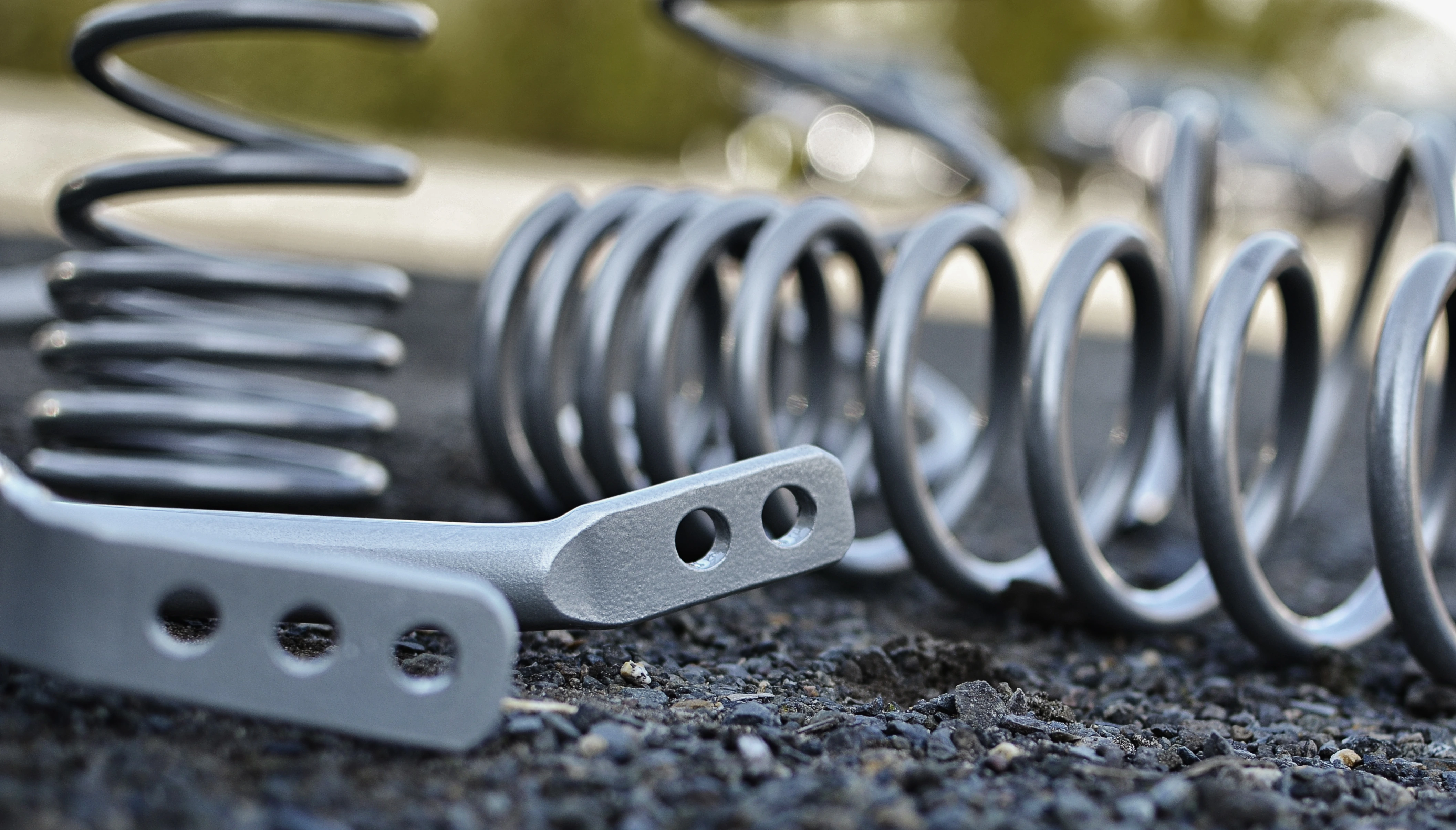

For most street cars, a drop of around 20 to 35mm is the sweet spot. It lowers the centre of gravity enough to reduce body roll and sharpen handling, keeps enough suspension travel for rough roads, clears most driveways and speed humps, and stays comfortably within Australia’s national 50mm guideline for total height change.
How low is too low? It’s the first question anyone asks when they start shopping for springs. Go too little and you’ll barely notice the change. Go too far and the car scrapes, crashes over bumps and can handle worse than it did before. The right drop depends on your car, your roads and what you want from it. Here’s how to choose, and why our lowering springs are engineered around modest, platform-specific drops.
Why does the amount of drop matter so much?
Every millimetre you lower the car changes three things: the centre of gravity, the suspension travel and the geometry. A lower centre of gravity is good for handling. Less travel and altered geometry can be bad for it.
At a modest drop, the centre of gravity benefit wins clearly. As you go lower, the suspension has less room to absorb bumps, the car may start riding on its bump stops, and the control arm angles move further from their design position. Past a certain point, the downsides outweigh the gain.
What drop suits different types of driving?
|
Use |
Typical drop range |
Why |
|
Daily driver on mixed roads |
Around 20 to 30mm |
Better handling, stays comfortable, easy on driveways |
|
Weekend car on good roads |
Around 25 to 35mm |
Sharper response, still street friendly |
|
Track day car driven to events |
Around 30 to 40mm |
Lower centre of gravity, check clearance and legality |
|
Show or stance focus |
Lower than above |
Usually needs certification and compromises handling |
Treat these as general guides, because the right figure depends on the car’s factory ride height and suspension design.
How much do Whiteline springs lower a car?
Our drops are tuned for each platform rather than a single number. We list around 20mm front and rear for the 10th and 11th generation Honda Civic, around 30mm for the Ford Fiesta WS, WT and WZ, around 15mm front and 30mm rear for the Ford Focus RS LZ, and around 35mm front and 30mm rear for the Ford Mustang S550 GT without MagneRide. Each is chosen to suit that car’s suspension travel and geometry.
What should you check before choosing a drop?
Your driveway and local roads
Steep driveways, speed humps and rough country roads all favour a smaller drop. Think about where you drive every week, not just the best road on the weekend.
Ground clearance and the law
Australia’s national guidelines allow up to 50mm total height change without certification, with at least 100mm ground clearance. Body kits, low exhausts and front lips reduce clearance, so measure your car’s lowest point before choosing.
Your shocks
Healthy factory shocks work well with modest drops. Larger drops reduce shock travel and often need dampers designed for lowered cars.
Wheel and tyre fitment
Lowering brings the tyres closer to the guards. With wider or larger wheels, check clearance at full lock and under compression.
What happens if you go too low?
A car lowered too far can scrape on everyday obstacles, crash over potholes, wear tyres unevenly from excessive camber and lose grip on bumpy corners as it runs out of travel. It may also fall below the legal ground clearance limit. Correcting these problems usually costs more than choosing the right drop at the start.
Getting the most from a modest drop
A sensible drop combined with adjustable sway bars and polyurethane bushes delivers more handling than a big drop on its own. That’s the thinking behind our performance suspension kits, which pair modest drops with matched sway bars, links and bushes for each platform.
FAQs
Looking for more information about how much to lower your car? Below we answer the most commonly asked questions
How much should I lower my car?
Is 30mm a good drop for a daily driver?
Is 50mm too low?
Will a bigger drop make my car handle better?
Do I need new shocks for a bigger drop?
How do I measure how much my car has dropped?
Choose the right drop for your car with our platform-specific lowering springs.


