
 AU
 United Kingdom
 Europe
 United States

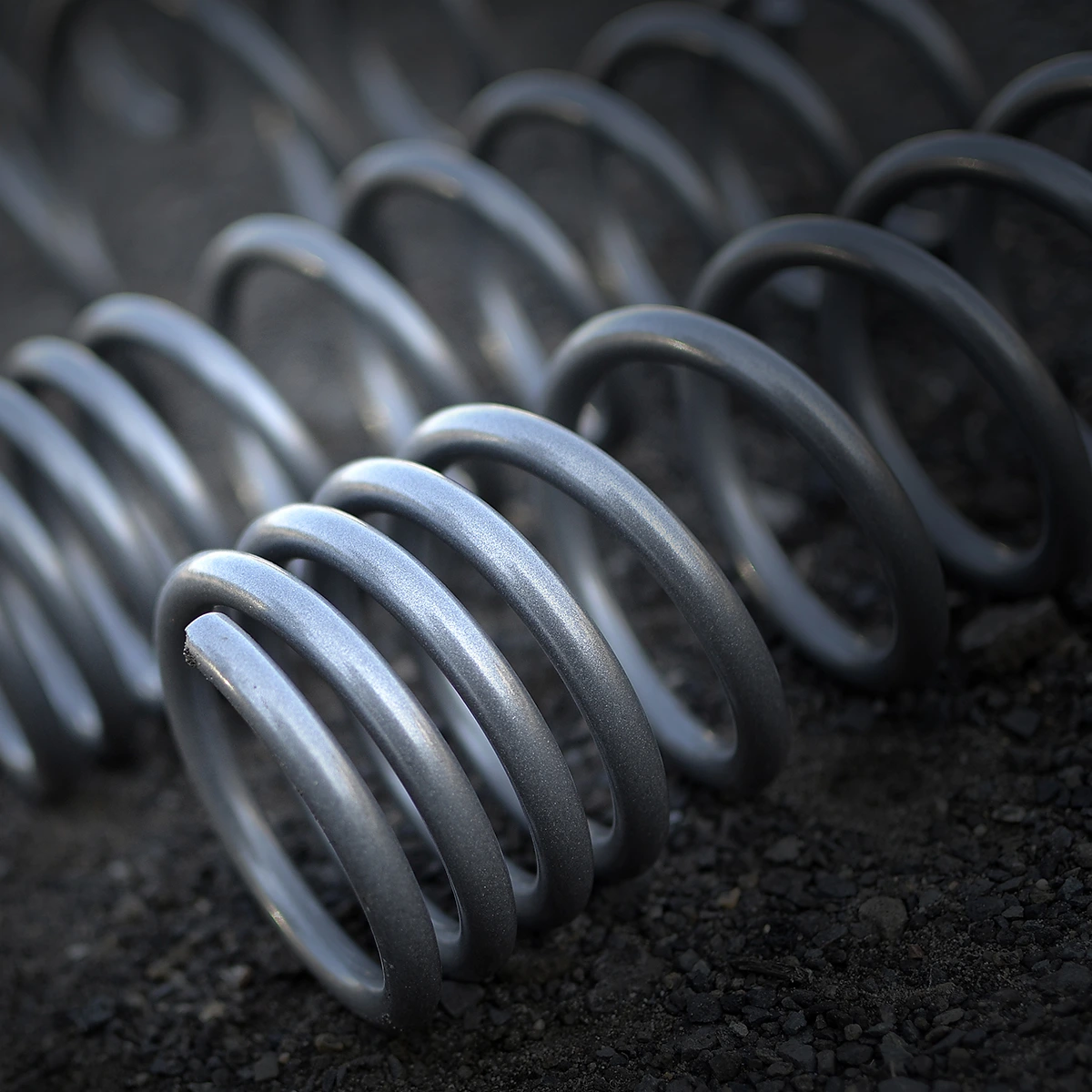

A linear spring has a constant rate, so it takes the same extra force to compress it each millimetre. A progressive spring gets stiffer as it compresses, starting softer for small bumps and firming up under bigger loads. Linear springs give predictable, consistent handling; progressive springs aim for more comfort over small bumps with control under load.
When you start comparing lowering springs, you’ll see the terms linear and progressive pop up. They describe how the spring’s stiffness changes as it compresses, and that has a real effect on how the car rides and handles. Neither type is automatically better than the other. Here’s how they differ, where each one shines, and what to look for when choosing lowering springs for your car.
What is spring rate?
Spring rate is how much force it takes to compress a spring by a set distance. It’s usually shown in kilograms per millimetre (kg/mm) or pounds per inch (lb/in). A spring rated at 3.5 kg/mm needs roughly 3.5kg of extra load for every millimetre it compresses.
A higher rate means a firmer spring that resists body roll and pitch more strongly. A lower rate means a softer spring that absorbs bumps more easily.

What is a linear spring?
A linear spring has a constant rate throughout its useful travel. The coils are usually evenly spaced, and each millimetre of compression needs the same extra force.
That consistency makes linear springs very predictable. The car responds the same way whether it’s rolling slightly on a gentle bend or heavily on a tight corner, which is why linear rates are common in performance and motorsport applications. The trade-off is that small bumps are felt at the full rate, so the ride can feel firmer over rough surfaces.
What is a progressive spring?
A progressive spring has a rate that increases as it compresses. It often has tighter coils at one end that close up first, leaving the stiffer section to take over as the load increases.
The idea is to give a softer initial feel over small bumps and road texture, while firming up under bigger loads like hard cornering or a large bump. Progressive springs can be a good choice for street cars that see a lot of rough roads, but the changing rate can make handling feel slightly less consistent at the limit.
Linear vs progressive lowering springs compared
|
Factor |
Linear springs |
Progressive springs |
|
Rate |
Constant |
Increases with compression |
|
Coil spacing |
Usually even |
Varies, tighter coils close first |
|
Small bump comfort |
Firmer |
Softer |
|
Handling consistency |
Very predictable |
Varies with load |
|
Typical use |
Performance, track, spirited street |
Daily drivers on rough roads |
|
Damper matching |
Straightforward |
Damper must suit a changing rate |
Which type is better for lowering springs?
It depends on your priorities and your car. If you want predictable, consistent handling and plan on spirited driving or track days, a well chosen linear rate is hard to beat. If your car spends most of its life on broken bitumen and you prioritise comfort, a progressive design can soften the edges.
What matters most is that the rate suits the car’s weight, suspension design and dampers. A poorly chosen spring of either type will ride and handle badly. That’s why we engineer our lowering springs for each platform and publish the front and rear rates on each listing, so you know exactly what you’re getting.
How to read spring rates on a listing
Look for the front and rear rates and compare them with what you know about the car. Rear-drive cars like the Mustang often run much higher rear rates than front, while front-drive hatches tend to be closer to balanced. For example, we list 3.5 kg/mm front and 11.8 kg/mm rear for our Mustang S550 GT springs, and 2.6 kg/mm front and 2.5 kg/mm rear for the Fiesta WS, WT and WZ. Those numbers reflect each car’s very different suspension layouts.
FAQs
Looking for more information about linear and progressive springs? Below we answer the most commonly asked questions
What is the difference between linear and progressive springs?
Are progressive springs more comfortable?
Are linear springs better for handling?
Can I tell a progressive spring by looking at it?
Do I need different shocks for progressive springs?
What spring rate should I choose?
Compare platform-specific rates in our lowering springs range.


