
 AU
 United Kingdom
 Europe
 United States

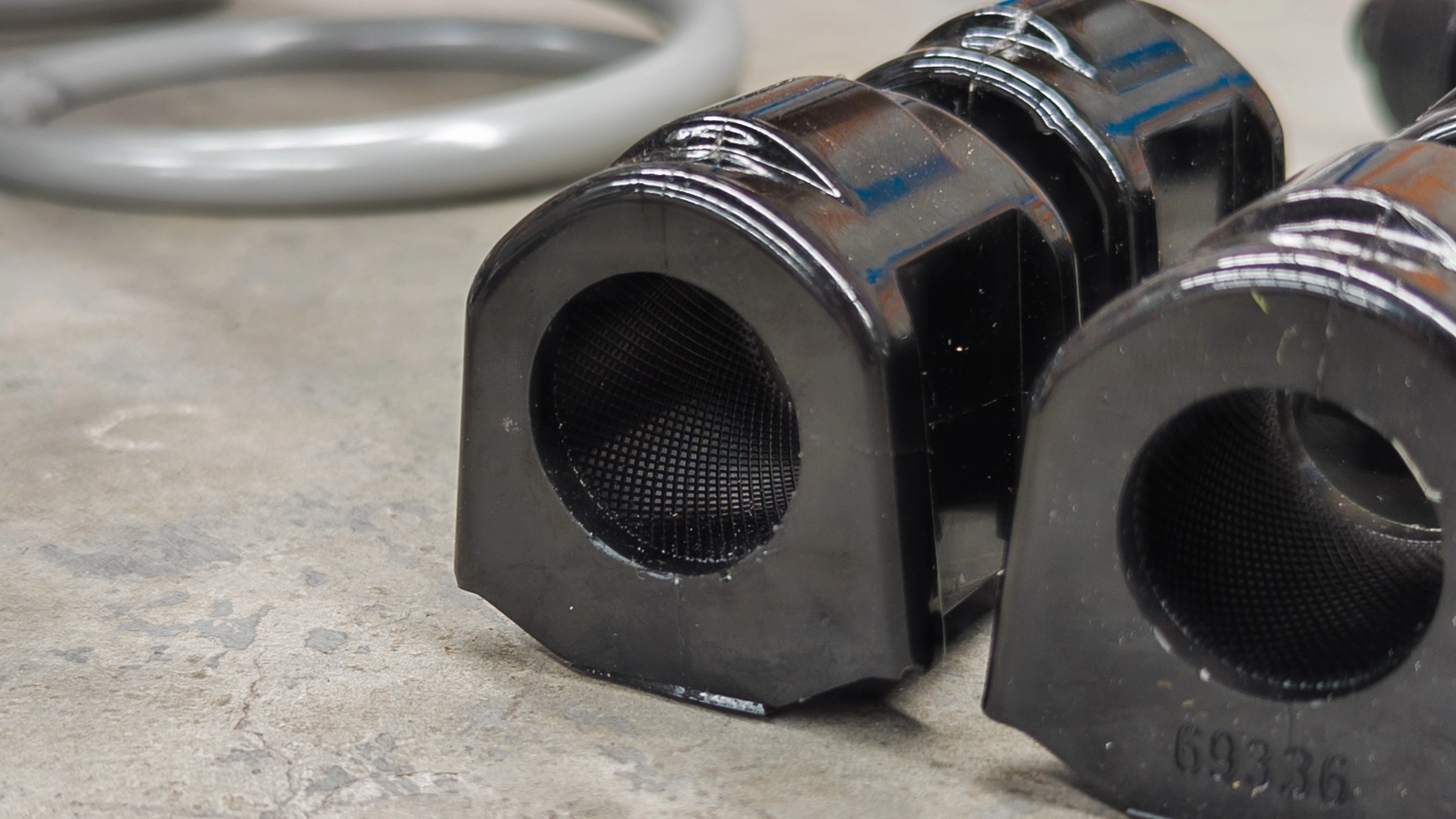

Sway bar bushes clamp the sway bar to the body or subframe and let it rotate as the suspension moves. When they wear, the bar can move in its mounts before it starts working, causing clunks over bumps, extra body roll and slower response. Polyurethane sway bar bushes hold the bar firmly, so it resists roll immediately, and they last much longer than rubber.
Sway bar bushes are some of the smallest, cheapest parts in your suspension, yet they have a big say in how well your sway bar does its job. They’re also one of the most common sources of front-end clunks on Aussie cars, utes and 4x4s. Here’s how they work, how to tell when they’re worn, and how our polyurethane suspension bushes improve on factory rubber.
What do sway bar bushes do?
A sway bar is a torsion bar that links the left and right sides of the suspension. When the car leans in a corner, the bar twists and pushes back, reducing body roll. To work, the bar has to be held firmly to the car while still being free to rotate as the suspension moves up and down. That’s the job of the sway bar bushes, which sit inside brackets that bolt to the body or subframe.
If the bushes are soft, worn or the wrong size, the bar can shift in its mounts before it starts to twist. That delay means the bar resists roll later and less effectively, and the movement often causes a clunk.
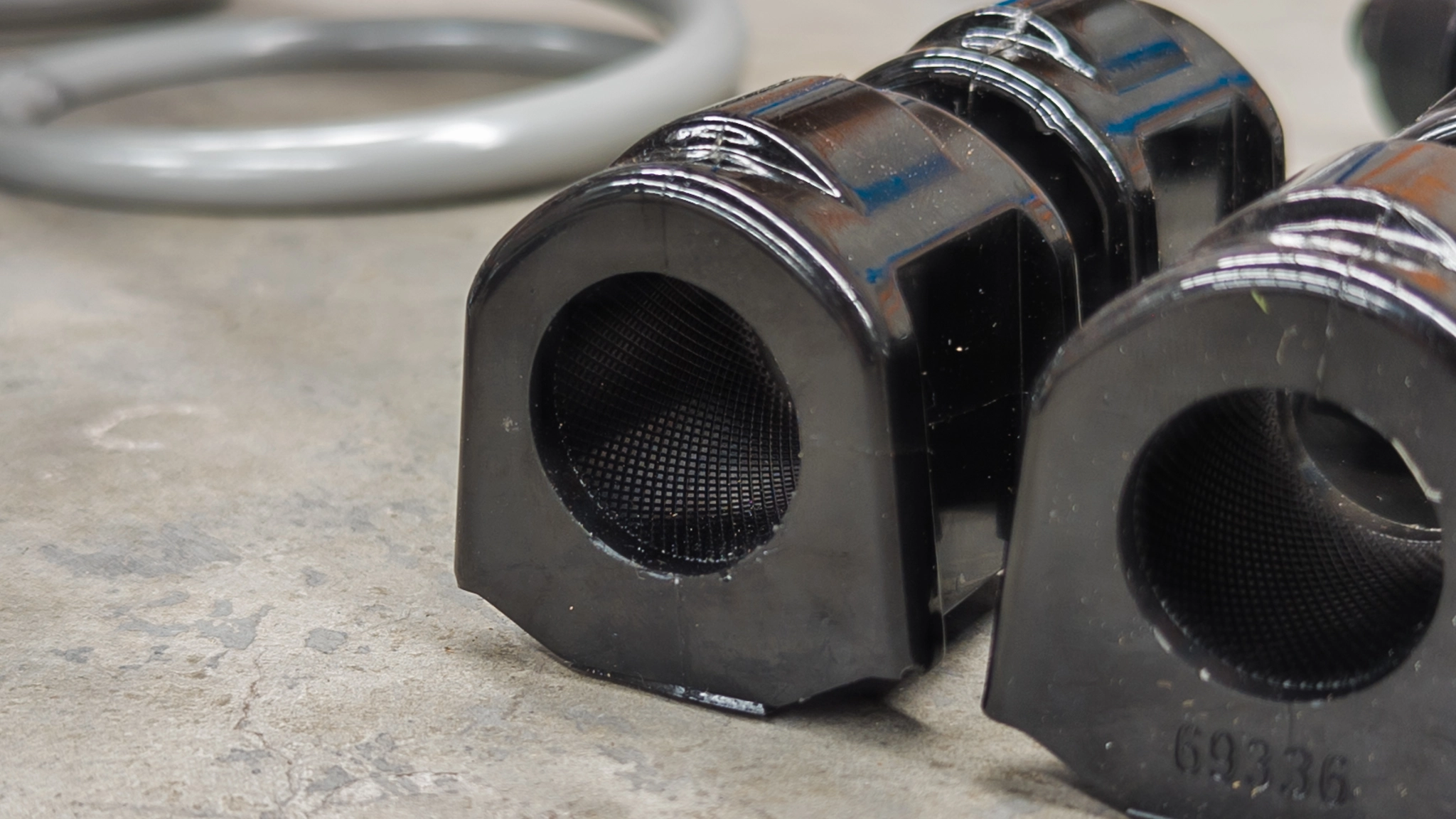
Signs your sway bar bushes are worn
Clunking over bumps
A knock from the front or rear when one wheel hits a bump, a pothole or a driveway lip is a classic sign. The bar is moving in a worn bush.
More body roll
When the bar can move before it twists, the car leans more in corners and feels less planted on twisty roads.
Squeaking
Dry or worn bushes can squeak as the bar rotates, especially on cold mornings.
Visible wear
Cracked, flattened or oval-shaped bushes, or a gap between the bar and the bush, mean replacement is due.
Rubber vs polyurethane sway bar bushes
|
Factor |
Factory rubber |
Whiteline polyurethane |
|
Bar movement in the mount |
Increases as rubber wears |
Minimal |
|
Response to body roll |
Delayed |
Immediate |
|
Clunk resistance |
Degrades over time |
Long lasting |
|
Resistance to heat, oil and UV |
Lower |
Higher |
|
Maintenance |
None |
Grease at fitting |
|
Warranty |
Varies |
Lifetime |
Why polyurethane sway bar bushes make a difference
Polyurethane holds the bar firmly, so it starts resisting roll the instant the body starts to lean. That gives you flatter cornering and sharper response from the bar you already have. On a car with a factory bar and worn rubber bushes, new polyurethane bushes alone can make a noticeable improvement.
They also resist the heat, oil, dust and UV that break rubber down, which matters on vehicles that spend time on dirt roads or in the summer heat.
Sway bar bushes on 4x4s and utes
Sway bar bushes on 4x4s and utes work hard, especially on vehicles that tow, carry loads or do plenty of corrugated roads. Worn bushes on these vehicles often show up as clunks over rough tracks and a vague, wallowy feel on the highway. Polyurethane bushes help keep the bar working properly, and they hold up far better to mud, water and grit when greased correctly.
Choosing the right size
Sway bar bushes must match the diameter of the bar. Factory bars can vary between trim levels and model years, and aftermarket bars are usually larger. Measure the bar where the bush sits, or search by vehicle for the correct part. When you fit one of our sway bars, correctly sized polyurethane bushes come with it.
How to replace sway bar bushes
On most vehicles the brackets are easy to reach from underneath. Support the car safely, unbolt the brackets, remove the old bushes and clean the bar where they sit. Apply a polyurethane-safe grease to the inside of the new bushes, fit them in the correct orientation, refit the brackets and torque them to specification. Check the sway bar links while you’re there, because worn link joints cause similar clunks.
FAQs
Looking for more information about sway bar bushes? Below we answer the most commonly asked questions
What do sway bar bushes do?
What are the signs of worn sway bar bushes?
Are polyurethane sway bar bushes better than rubber?
Do polyurethane sway bar bushes need grease?
Do I need a wheel alignment after replacing sway bar bushes?
How do I know what size sway bar bush I need?
Restore firm, immediate sway bar response with our polyurethane suspension bushes.


