
 AU
 United Kingdom
 Europe
 United States

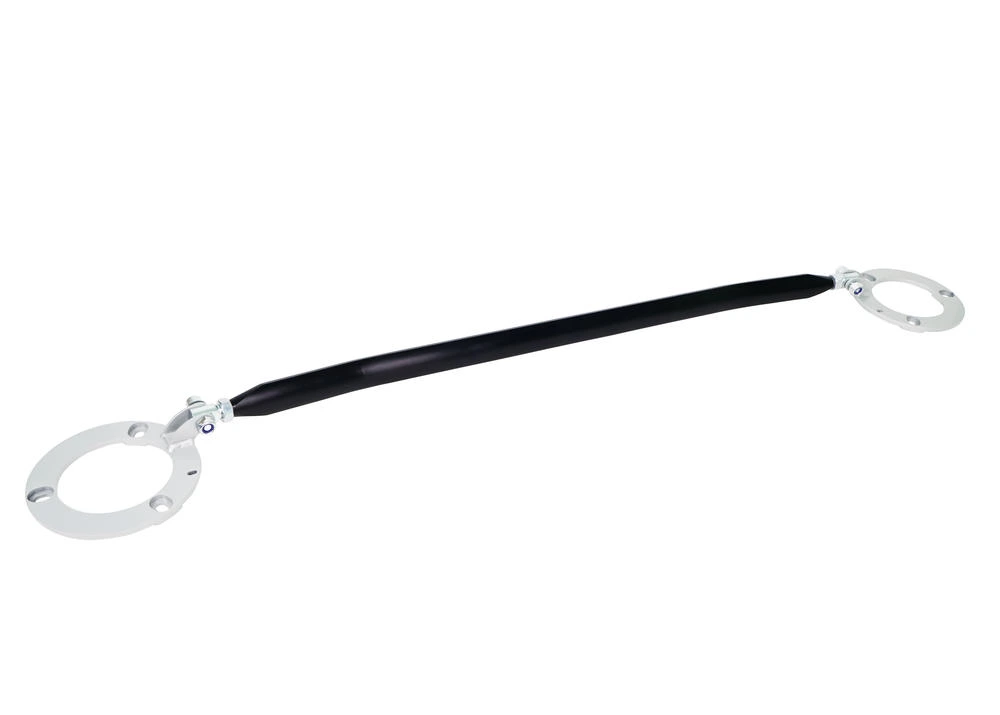

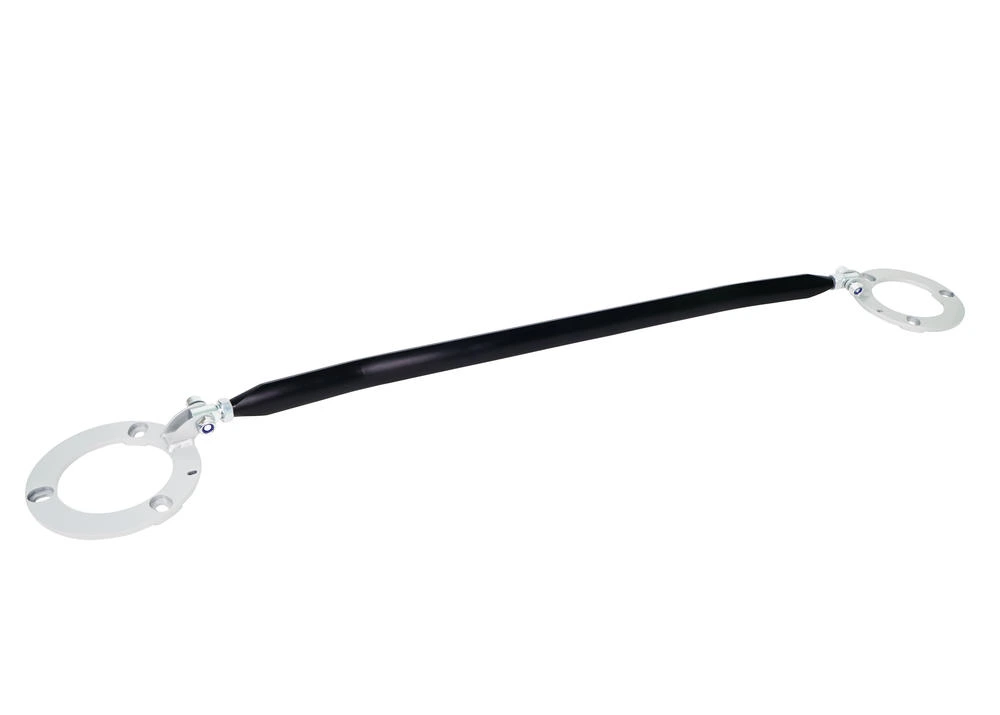
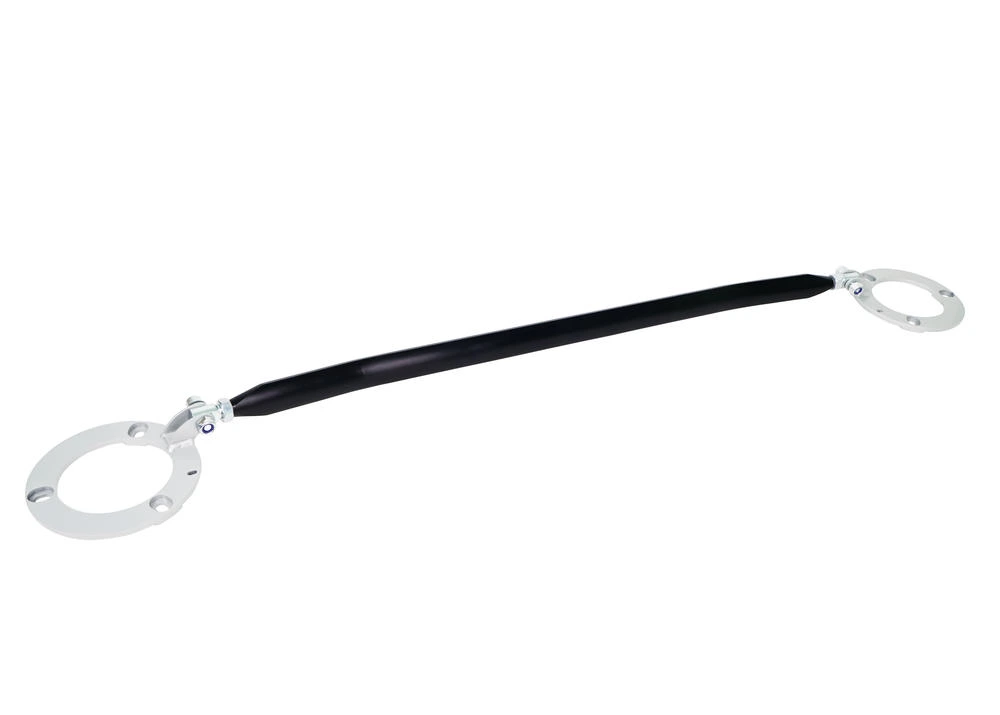
A strut brace connects the tops of the two strut towers so they can’t flex independently under cornering, braking and bumps. By holding the towers steady, it keeps the wheel’s camber closer to where it should be mid-corner, sharpens turn-in and makes the front end feel tighter, especially on older cars and cars running grippier tyres.
Open the bonnet on a modified Commodore, WRX or Evo and there’s a good chance you’ll spot a bar running across the engine bay between the strut tops. It’s one of the most recognisable bolt-on parts in the scene, and on the right car it does a genuinely useful job. Here’s what a strut brace actually does, which cars get the most from one, and how our strut braces are designed to suit specific vehicles.
Why do strut towers need support?
On a car with MacPherson strut suspension, the top of each strut bolts into a raised section of the body called the strut tower. That tower has to carry a huge share of the suspension’s load, and it does it from one of the least supported positions in the whole body shell, sitting high in the engine bay and joined to the rest of the car by relatively thin sheet metal.
Every time you turn in, brake hard or hit a pothole, load travels up through the strut and into that tower, and if the tower moves even slightly, the top of the strut moves with it.
What happens when the towers flex?
In a corner, the outside strut pushes sideways against its tower. If the tower gives a little, the wheel’s camber changes as the corner goes on, so the tyre rolls away from the angle it grips best at. Drivers feel this as a front end that loses a bit of bite through long sweepers, or turn-in that feels soft for the first moment before the car takes a set.
On cars with plenty of kilometres on the clock, or ones that have spent years being driven hard, that movement tends to be more noticeable.
How a strut brace fixes it
A strut brace ties the two towers together with a rigid link, so when one tower tries to move, the load is shared across to the other side and both towers move far less. The suspension geometry stays closer to where the engineers intended, camber holds steadier through the corner and the steering responds more cleanly when you turn the wheel.
Because it’s a structural upgrade, it works alongside your springs, sway bars and bushes rather than replacing any of them, and it doesn’t change ride comfort at all.
What a strut brace changes
|
Area |
Without a brace |
With a strut brace |
|
Tower movement |
Towers can flex independently |
Towers tied together |
|
Camber through long corners |
Can drift as towers move |
Holds steadier |
|
Turn-in |
Softer initial response |
Crisper, more immediate |
|
Older, high kilometre cars |
Can feel loose up front |
Tighter, more connected |
|
Ride quality |
Unchanged |
Unchanged |
Which cars get the most from a strut brace?
The biggest gains come on cars with MacPherson strut front ends, on older or high kilometre cars where the shell has softened, on cars running grippier tyres and upgraded suspension that push more load through the towers, and on platforms with a known weak point at the towers. On cars with very stiff modern structures, or double wishbone front suspension, the improvement is usually smaller.
That’s the reason we design our braces for specific vehicles rather than selling a one-size bar, because tower spacing, mounting points and bonnet clearance vary from car to car.
When should you fit a strut brace?
A brace pays off most once the rest of the suspension is sorted. Tyres, a proper wheel alignment, polyurethane bushes and sway bars all have a bigger effect on handling, so start there and let the brace sharpen the result. Our performance suspension kits take care of the springs, bars and bushes, and a strut brace is the natural finishing touch on a car that’s working its towers hard.
Do you need a wheel alignment after fitting one?
You don’t need an alignment just for a strut brace, because it doesn’t change the alignment settings when it’s fitted at ride height. On a car that’s clearly been flexing, a geometry check afterwards can still be worthwhile. Fit the brace with the car sitting on its wheels rather than hanging on a hoist, so the towers are locked in their normal loaded position.
FAQs
Looking for more information about strut braces? Below we answer the most commonly asked questions
What does a strut brace do?
Is a strut brace the same as a strut bar?
Will I notice a difference with a strut brace?
Does a strut brace make the ride harsher?
Do I need an alignment after fitting a strut brace?
Are Whiteline strut braces covered by warranty?
Tighten up the front end with a brace built for your car from our strut braces range.


