
 US
 Australia
 United Kingdom
 Europe

Spare Tire Carrier Mount
IMPROVE GRIP, HANDLING & PERFORMANCE.
A spare wheel weighs upward of fifty pounds and it hangs off the back of the vehicle on a bracket. Everything that weight does over a corrugated road passes through the bushings mounting that bracket, which is why they are the part that fails rather than the carrier itself. What the Carrier Mount Carries A spare tire carrier holds the wheel clea... Read more
A spare wheel weighs upward of fifty pounds and it hangs off the back of the vehicle on a bracket.
Everything that weight does over a corrugated road passes through the bushings mounting that bracket, which is why they are the part that fails rather than the carrier itself.
What the Carrier Mount Carries
A spare tire carrier holds the wheel clear of the vehicle, either swung off the rear door, mounted to a bumper or hung underneath the floor.
Wherever it sits, the load is cantilevered outward. The weight acts at a distance from the mounting point, which multiplies the force that mounting sees compared with the wheel simply sitting on something.
Bushings at the mount are doing two jobs at once. They isolate the rattle and drumming that a heavy unsupported mass generates, and they allow the small amount of movement that stops the bracket and the body fighting each other as the vehicle flexes.
That second job matters on a body on frame vehicle, where the body moves relative to the chassis and anything rigidly linking the two takes the difference.
Why This Mounting Works So Hard
The loading here is unusual and it explains the failure rate.
A spare wheel is effectively dead weight with no suspension between it and the road. Every impact the rear suspension passes into the body arrives at the carrier undamped.
Corrugated roads are the worst case of all. Repeated high frequency input shakes a cantilevered mass continuously, and the bushings absorb every cycle.
The leverage involved then compounds the problem further. A wheel mounted further from its pivot applies more force to the mount for the same vertical movement, which is why swing out carriers work their mounts harder than underslung ones.
Larger tires make all of it worse again. A 35 inch tire and wheel can weigh double the factory spare, and the mounting was designed around the factory figure.
Add the fact that the carrier sits at the back of the vehicle where vertical movement is greatest, and the service life of a soft rubber bushing in that position is short.
The Rattle Everyone Chases
This is the symptom, and it is among the hardest noises to locate.
Worn carrier bushings produce a rattle or a clunk from the rear that changes with road surface rather than with speed or throttle.
Because it comes from behind the occupants and travels through the body, it sounds like it is coming from the tailgate, the trim, the exhaust or something loose in the back.
People pull interior panels, check exhaust mounts and tighten tailgate strikers while the noise is a bushing carrying fifty pounds of unsecured weight.
The test for it is straightforward enough to do. Remove the spare wheel and drive the same road. If the noise goes, the carrier is involved, and the bushings are the usual reason.
A carrier that can be moved by hand at the mount, with any perceptible play, has failed regardless of what the rubber looks like.
Swing Out, Bumper and Underslung
Three arrangements exist and they stress their mounts differently.
A swing out carrier pivots on a hinge so the wheel clears the door. The hinge and its bushings take the full cantilevered weight plus every impact, and the latch at the other end takes the rest.
A bumper or body mounted carrier bolts the wheel more directly to structure. Less leverage, though the mounting points still see the load and still need isolation.
An underslung carrier hangs the wheel beneath the floor on a winch or a cradle. Lower leverage again, and the trade is exposure, with the mount sitting in road spray and whatever the rear tires throw at it.
Each uses bushings at the attachment points, and each benefits from firmer material for the same reason.
Why Firmer Bushings Help Here
Unlike most suspension positions, this is not about geometry or handling.
A soft bushing lets the carrier move, and a moving carrier is a rattle, a worn hinge and eventually an elongated mounting hole.
A firmer bushing holds the carrier where it was bolted. The noise stops, the hinge stops wearing, and the load stays spread across the mount rather than concentrating as the bushing deflects.
Polyurethane holds its shape under sustained load far better than rubber, which matters when the load is permanent rather than intermittent.
It also resists the perishing that ends a rubber bushing exposed to UV and road chemicals at the rear of a vehicle.
The usual NVH trade is smaller here than elsewhere, since the thing being isolated is a dead weight rather than a drivetrain.
Oversized Spares and What Changes
Fitting a larger spare is common on a built vehicle and the mounting rarely gets reconsidered.
Weight is the obvious change of the two factors. A factory spare on a steel rim might weigh forty pounds, while a 33 or 35 inch tire on an alloy can approach double that.
The leverage changes along with the weight as well. A larger diameter tire sits further from its mounting point, so the force at the mount rises by more than the weight alone suggests.
The carrier itself is usually rated for more than the factory spare, since manufacturers build margin in. The bushings are the part sized closest to the original load.
That is why a vehicle fitted with oversized tires starts rattling at the rear within a year while everything else is fine, and why the bushings are the first thing to address rather than the carrier.
Where the spare has gone up substantially, a heavy duty carrier is worth considering alongside the bushings rather than loading the original beyond what it was designed for.
Protecting the Body Behind It
The consequence of leaving a loose carrier is structural rather than just annoying.
A carrier mounted to a rear door puts its load into the door hinges and the door frame, neither of which was designed for a permanently attached fifty pound cantilever.
Loose bushings mean that weight shifts on every bump, working at the hinges and eventually at the body panel the carrier bolts to.
Cracked body metal around a carrier mounting is a repair rather than a parts purchase, and it happens on vehicles where the rattle was tolerated for years.
Door sag is the earlier warning sign to watch for. A rear door that has dropped or become harder to close is describing load it has been carrying badly.
Addressing the bushings while the symptom is still a noise is considerably cheaper than addressing it once the structure has moved.
Checking the Mount
A few minutes of checking finds most problems.
Grab the carrier at its outer end and try to move it in every direction. Any play at the mounting is a bushing that has gone.
Look at the mounting holes closely for any elongation. Once a hole has gone oval, a new bushing will not hold the carrier and the bracket needs attention.
Check the hinge on a swing out design separately, since hinge wear and bushing wear feel similar by hand and need different parts.
Inspect the latch or catch at the closing end. A carrier that is not latching firmly moves regardless of how good the hinge bushings are.
Look at the body or bumper structure behind the mount for cracking, which is what happens when a loose carrier has been working at it for years.
Fitting and Keeping It Right
Support the carrier before releasing anything, since it is heavy and awkward and it will swing.
Take the spare wheel off the carrier first. Working on a mount with fifty pounds hanging off it is both harder and less safe than it needs to be.
Clean the mounting faces before assembly, since corrosion and paint buildup compress under load and let the joint go loose again.
Torque to the specified figure rather than by feel. These are clamped joints carrying a cantilevered load, and under torqued is what produces the elongated holes.
Recheck after a few hundred miles, and again after any trip on corrugated roads, which is when a mounting shows whether it was done properly.
On a vehicle carrying an oversized spare, check it more often than the service schedule suggests, since the load is higher than anything the original design assumed.
Find Spare Tire Carrier Mount Bushings for Your Vehicle
Spare tire carrier mounts are part of our universal auto parts lineup.
Select your vehicle to see the spare tire carrier mount bushings available for it. If the rear of the vehicle rattles over rough surfaces and removing the spare makes it stop, the carrier mounting is where to look before pulling any trim.
1 item
-
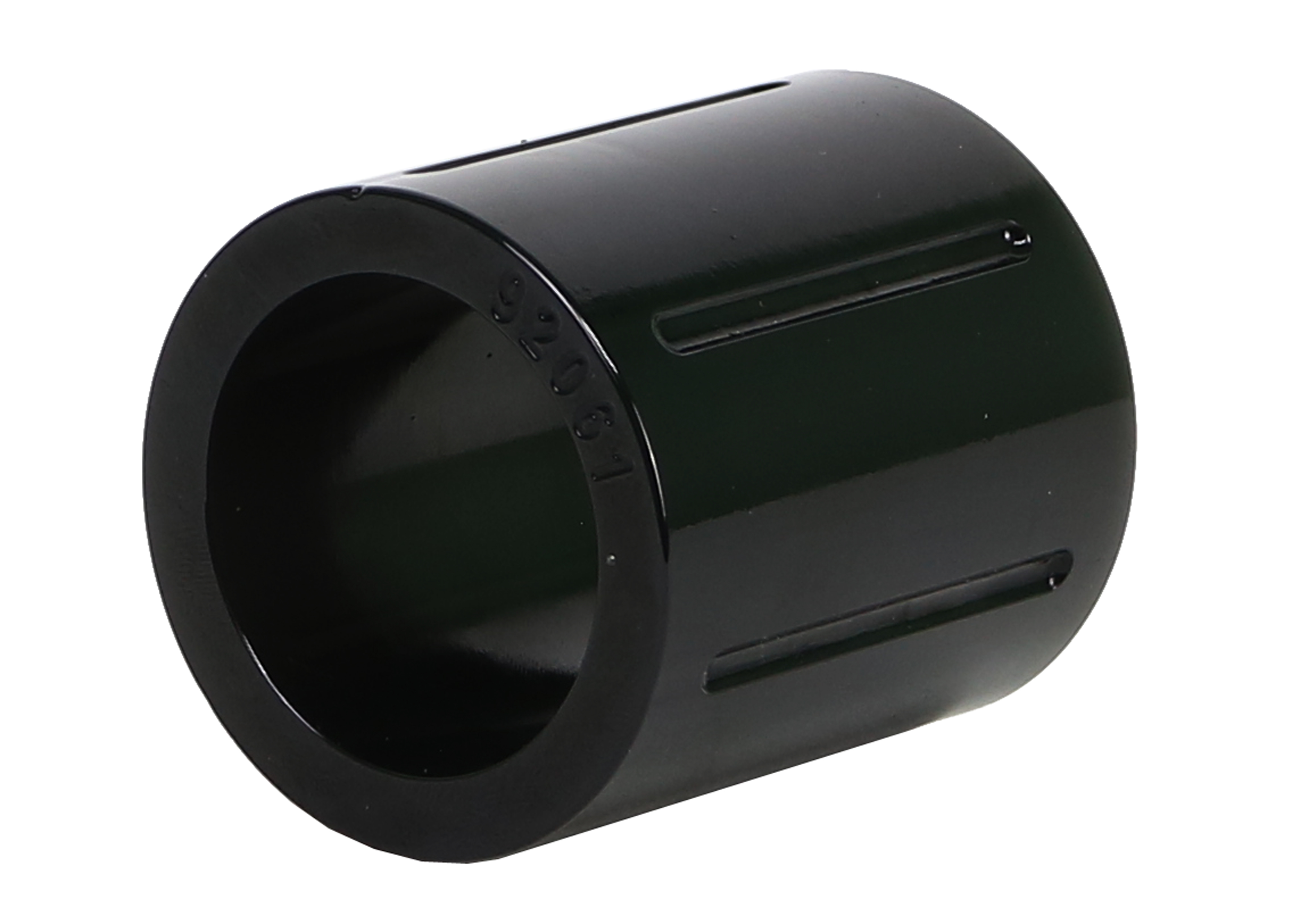 In StockShips within 24hrs.Ships within 24hrs.SKU: W93572
Tire Rack Bushing
In StockShips within 24hrs.Ships within 24hrs.Qty Required 1Kit Contents 1 Bushing$5.29
Your vehicle
Matching vehicles
No match — try selecting it below.
Refine your search
Clear all- Performance Suspension Kits 22
- Lowering Springs 36
- Sway Bar & Sway Bar Kits 464
- Sway Bar Bracket 7
- Sway Bar Lateral Lock 10
- Sway Bar Support Brace 3
- Sway Bar Link 104
- Leveling Kits 2
- Lift Kits 18
- Diff Drop Kit 2
- Strut Brace 23
- Bushings 1074
- Alignment Pins and Bushings 18
- Anti Roll Bar Mount 1
- Axle Bushings 5
- Body Mount Bushings 46
- C-Bushings 2
- Coil Spring Insulators 3
- Coil Spring Spacers 21
- Control Arm Bushings 387
- Differential Bushings 50
- Door Jamb Bushing 1
- Lateral Arm Bushings 6
- Leaf Spring Bushings 15
- Leaf Spring Pads 1
- Leaf Spring Shackle Bushing 31
- Master Bushing Kits 39
- Radiator Bushings 2
- Radius Arm Bushings 14
- Shock Bushings 28
- Steering Bushings 41
- Steering Column Bushing 1
- Strut Mount Bushing 4
- Strut Rod Bushing 6
- Subframe Bushing 29
- Sway Bar Bushings 234
- Sway Bar Link Bushings 25
- Toe Link Bushing 1
- Torsion Bar Bushing 1
- Track Bar Bushings 12
- Trailing Arm Bushing 48
- Transfer Case Bushings 1
- Watts Link Bushing Kit 1
- Control Arms 160
- Ball Joint 32
- Control Arm Brace 1
- Control Arm Kit 125
- Control Arm Assembly with Ball Joint 2
- Control Arm Kit - Lower 56
- Control Arm Kit - Upper 47
- Control Arm Relocation Brackets 1
- Radius Arm 1
- Alignment Parts 31
- Camber Bolts 8
- Caster Camber Plates 23
- Transmission Parts 22
- Shifter Bushing 3
- Transmission Mount 19
- Strut Mount 3
- Strut Mount 3
- Tie Rods 9
- Roll Center Kits 8
- Tie Rod Ends 1
- Track Bar 8
- Support Brace 1
- Engine Bushings 33
- Engine Mount Bushings 33
- Car Accessories 1
- Headlight Sensor Bracket 1
- Universal Auto Parts 49
- Bushing Grease 1
- Dust Covers 3
- Spare Tire Carrier Mount 1
- Strut Mount 1
- Universal Bump Stops 19
- Valve Stem Caps 1
- Nuts, Bolts & Screws 5
- Control Arm Bolt Kit 3
- Control Arm Washer 1
- Sway Bar Link Washer 1
- Merchandise 11
- Beanie 1
- Decals 5
- Gloves 1
- Key Chain 1
- T-Shirts 3
- Workshop Tools 2
- Bushing Press Kit 1
- Wheel Alignment Tool 1
No categories match.
Can’t find what you’re looking for?
Our team can help you find the right part — or tell us what was missing so we can improve the site.
Call Us +1 909-476-2860 Give Feedback (opens in a new tab)


